

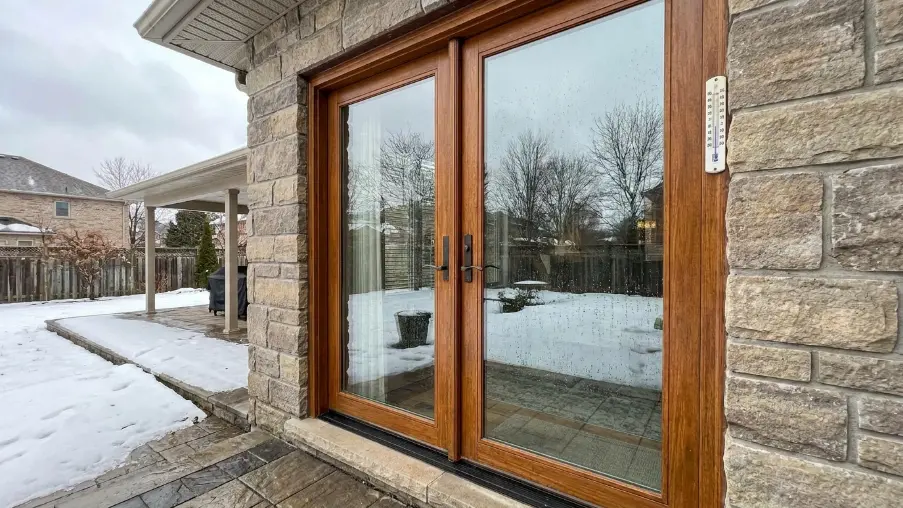
Choosing patio doors that withstand Ontario weather means selecting the right glass, frame, weather-resistant features, and professional installation to maximize comfort, energy efficiency, and long-term durability.
If your patio door feels drafty in winter or lets heat build up in summer, you’re not alone. Ontario’s changing weather can quickly expose weak insulation, worn seals, and outdated materials.
That’s why choosing the right patio door goes beyond style alone. The right investment improves comfort, lowers energy costs, and performs reliably through every season. Read on to learn exactly what to look for before making your decision.
How to Choose the Right Patio Door
After replacing patio doors across the GTA and surrounding communities, we’ve found that homeowners get the best long-term value by focusing on performance first and style second. Here are the features that matter most.
1. Select an Energy-Efficient Glass Package
As glass covers most of a patio door, it has the biggest influence on indoor comfort and energy bills. If your current patio door feels cold in winter or overheats the room during summer afternoons, the glazing system is often the reason.
| Glass Feature | Why It Matters |
| Triple-pane glass | Reduces heat loss and improves insulation. |
| Low-E glass coating | Reflects heat and blocks harmful UV rays. |
| Argon gas fill | Slows heat transfer between glass panes. |
| Warm-edge spacer | Reduces condensation and edge heat loss. |
i) Triple-Pane Glass
Many homes across Southern Ontario feature large patio doors that overlook decks, backyards, or walkout spaces. While they bring in natural light, they can also become the largest source of heat loss.
Triple-pane glass adds another insulating layer, helping reduce cold spots near the door and lower heating costs. The same technology found in energy-efficient triple-pane windows also delivers excellent performance in modern patio doors.
ii) Low-E Glass Coating
South- and west-facing patio doors often receive hours of direct afternoon sunlight. Low-E coatings help reduce unwanted solar heat gain during summer while reflecting indoor heat back inside during winter.
That means a more comfortable living space throughout the year. If you’d like to learn more, our guide to energy-efficient Low-E windows explains how this technology improves home efficiency.
iii) Argon Gas Fill
Argon gas sits between the glass panes to strengthen the insulating barrier. When combined with Low-E coatings and triple-pane glass, it helps maintain more consistent indoor temperatures while reducing the workload on your heating and cooling system. That’s especially valuable for homes with large open-concept living areas connected to the patio.
iv) Warm-Edge Spacer
Condensation often appears around the edge of the glass before homeowners notice any other issue. Warm-edge spacers help reduce heat loss around the perimeter of the insulated glass unit, keeping the interior glass surface warmer during colder months while improving the overall efficiency of the patio door.
2. Choose the Right Frame Material
Choosing the right material now can save you years of maintenance and higher energy costs later.
i) Vinyl Patio Doors
Vinyl remains one of the most popular choices for homeowners across the GTA because it offers excellent insulation with very little maintenance.
It won’t rot, peel, or absorb moisture, making it well-suited to changing seasonal conditions. Many homeowners comparing high-quality patio doors choose insulated vinyl frames for their long-term value and dependable energy performance.
ii) Fiberglass Patio Doors
Fiberglass is an excellent option if you’re planning to stay in your home for years. It resists warping, swelling, and expansion caused by seasonal temperature changes, helping maintain a tighter weather seal over time. Homeowners looking for long-lasting performance often compare these benefits with fiberglass doors before making their decision.
iii) Wood Patio Doors
Wood patio doors remain a favourite for custom and traditional homes because of their natural appearance and good insulation.
However, they require regular painting or staining to protect against moisture, especially in areas exposed to frequent rain, snow, and direct sunlight.
iv) Aluminum Patio Doors
Aluminum frames create slim sightlines and maximize natural light, making them popular in contemporary homes.
For better year-round performance, choose a model with thermal break technology. It reduces heat transfer through the frame and improves overall energy efficiency.
3. Check the Energy Performance Ratings
Energy ratings make it easier to compare patio doors beyond appearance or price. They show how efficiently the entire door performs and help you choose a model built for Southern Ontario’s changing climate.
| Rating | What It Measures | Better Performance |
| ENERGY STAR® Certification | Overall energy efficiency | Certified product |
| U-Factor | Heat loss through the door | Lower value |
| Air Leakage (AL) | Air entering around the frame | Lower value |
| Energy Rating (ER) | Overall seasonal performance | Higher value |
ENERGY STAR® Certification
ENERGY STAR® certification confirms the patio door meets Canada’s energy efficiency standards. It’s a reliable way to compare products designed for better comfort and lower energy use. Many energy-efficient windows and premium patio doors carry this certification.
Low U-Factor
The U-Factor measures how much heat passes through the patio door. A lower value means better insulation, helping reduce heat loss and maintain a more comfortable indoor temperature during colder months.
Air Leakage Ratings
Air Leakage measures how much outside air enters around the frame. A lower rating helps reduce drafts, improves comfort, and provide better protection against wind-driven rain and seasonal weather.
Energy Rating (ER)
The Energy Rating balances heat loss with useful solar heat gain. A higher ER often benefits homes with large south- or west-facing patio doors by improving year-round energy performance.
4. Prioritize Weather Resistance Features
A quality patio door should handle freeze-thaw cycles, heavy rain, and humid summers without compromising comfort. These features help keep drafts, moisture, and heat loss under control.
| Weather Feature | Why It Matters |
| High-quality weatherstripping | Seals out drafts, moisture, and dust. |
| Thermal break technology | Reduces heat transfer through the frame. |
| Insulated frames | Improves overall thermal efficiency. |
| Multi-chamber frame design | Adds strength and insulation. |
| Integrated drainage system | Directs water away from the frame. |
High-Quality Weatherstripping
Weatherstripping creates a tight seal between the door and frame. Quality materials stay flexible through repeated freeze-thaw cycles, helping reduce drafts and improve year-round comfort.
Thermal Break Technology
Thermal break technology places an insulating barrier inside the frame to reduce heat transfer. It’s especially important for aluminum patio doors, where metal naturally conducts heat.
Insulated Frames
An insulated frame reduces heat loss around the entire patio door, not just the glass. Combined with an efficient glazing system, it creates a more comfortable and energy-efficient home.
Multi-Chamber Frame Design
Multi-chamber vinyl frames trap insulating air inside the profile, improving thermal performance while increasing structural strength. They’re a common feature in high-performance patio door systems.
Integrated Water Drainage Systems
Spring snowmelt and heavy rainfall can test any patio door. Integrated drainage channels move water away from the frame, helping reduce leaks and protect the door system over time.
5. Choose Durable Hardware Built for Ontario’s Climate
Hardware affects how smoothly your patio door operates and how well it seals over time. Look for stainless steel rollers, reinforced tracks, and corrosion-resistant components designed for long-term reliability.
A multipoint lock system strengthens security while creating a tighter weather seal. If your current patio door still sticks, leaks, or feels drafty, a professional patio door replacement service in Barrie is often a smarter long-term investment than repeated repairs.
Read More: Best Window Styles for Maximum Insulation in Ontario Homes
Why Ontario’s Climate Demands a High-Performance Patio Door
Since patio doors are often the largest glass opening in a home, the right system can noticeably improve comfort, reduce energy loss, and withstand decades of changing weather.
Large Glass Areas Lose More Heat
Patio doors contain far more glass than standard exterior doors, making them a major source of energy loss. According to Natural Resources Canada, windows and doors can account for up to 35% of household heat loss, making high-performance glazing essential.
Freeze-Thaw Cycles Wear Down Patio Doors
Ontario’s frequent freeze-thaw cycles cause patio door frames, seals, rollers, and hardware to expand and contract. Over time, lower-quality doors can develop drafts, sticking panels, leaks, and failed seals.
Summer Sun Increases Indoor Heat
South- and west-facing patio doors receive intense afternoon sun during Ontario summers. Natural Resources Canada recommends managing solar heat gain with Low-E glass and an appropriate Solar Heat Gain Coefficient (SHGC) to improve comfort and reduce cooling costs.
Rain and Snow Test Weather Seals
Heavy rain, snow, and wind-driven storms can expose weak patio door seals. Quality weatherstripping, welded frames, raised sills, and proper drainage help keep moisture out and protect your home.
Aging Builder-Grade Doors Underperform
Many Ontario homes still have original builder-grade patio doors installed over 20 years ago. Condensation between panes, worn rollers, drafts, and rising energy bills often signal it’s time for a replacement.
Read More: Fiberglass vs. Steel Doors: Which Is Right for Your Ontario Home?
Types of Patio Doors for Ontario Homes
The best patio door depends on your home’s layout, backyard exposure, energy goals, and daily lifestyle. Here’s how the most popular patio door styles compare for homeowners across Southern Ontario.
Sliding Patio Doors
Sliding patio doors remain the preferred choice for many homes across Southern Ontario because they save space, maximize natural light, and provide excellent energy efficiency. They’re especially popular in suburban homes with decks and fenced backyards. Explore our patio doors to compare modern sliding systems designed for year-round performance.
French Patio Doors
French patio doors suit homeowners looking for a timeless appearance and a wider opening to the backyard. They’re a popular choice for traditional and custom-built homes, especially when paired with ENERGY STAR® glass and secure locking hardware. Learn more about our French doors for classic style with modern energy performance.
Folding (Bi-Fold) Patio Doors
Bi-fold patio doors create a smooth transition between indoor and outdoor living, making them ideal for custom homes and major renovations. Because they include multiple moving panels, professional installation is essential for long-term weather resistance. Our professional patio door installation service in Barrie helps ensure lasting performance.
Multi-Slide Patio Doors
Multi-slide patio doors feature expansive glass panels that maximize natural light and backyard views. Since larger glass areas can increase heat transfer, choosing high-performance glazing is essential. The same energy-saving technology found in our Low-E windows also improves modern patio door performance.
Common Mistakes Homeowners Make When Choosing Patio Doors That Withstand Ontario Weather
Even the best patio door can underperform if you overlook the details. Avoid these common buying mistakes before making your decision.
- Choosing a patio door based only on the lowest price.
- Ignoring ENERGY STAR®, U-Factor, and Air Leakage ratings.
- Selecting the wrong frame material for your home’s location and exposure.
- Choosing double glazing when triple glazing offers better long-term value.
- Overlooking weatherstripping, insulated frames, and water drainage systems.
- Prioritizing style over year-round comfort and energy efficiency.
- Assuming every patio door performs the same in Ontario’s climate.
- Repairing an aging patio door when replacement is the smarter investment.
- Skipping professional patio door installation for proper weather sealing. Learn about our professional patio door installation service in Barrie.
- Delaying a patio door replacement service in Barrie despite persistent drafts, condensation, or sticking panels.
Read More: 7 Clear Signs Your Door Needs Replacement in Ontario
How Much Does a Weather-Resistant Patio Door Cost in Ontario?
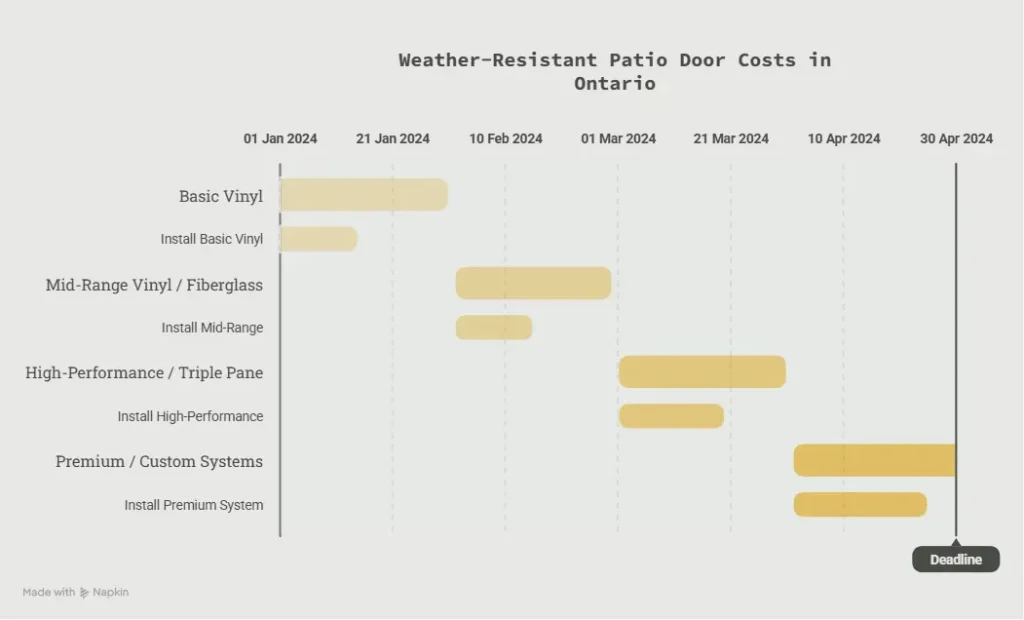
A weather-resistant patio door in Ontario typically costs between $1,500 and $5,500+ installed, depending on material, glass performance, and energy efficiency. Vinyl models are more affordable, while fiberglass and triple-pane systems offer better insulation and long-term durability against Ontario’s harsh climate.
| Patio Door Type | Installed Cost (Ontario) | Notes |
| Basic Vinyl | $1,500 to $2,500 | Budget option with standard efficiency |
| Mid-Range Vinyl / Fiberglass | $2,500 to $4,000 | Better insulation and durability |
| High-Performance / Triple Pane | $4,000 to $5,500+ | Strong energy efficiency, Low-E glass |
| Premium / Custom Systems | $5,500 to $7,000+ | Large sizes and advanced weather resistance |
Conclusion
Choosing a weather-resistant patio door in Ontario is only half the job, professional installation is what ensures long-term performance. Even the best door can fail if it’s not properly sealed, aligned, and insulated.
For best results, always invest in expert fitting and energy-efficient models designed for local climate conditions. If you’re planning an upgrade, get guidance from the team at Panorama Windows & Doors to ensure lasting comfort, efficiency, and value.
Frequently Asked Questions
1. What is the most energy-efficient patio door for Ontario homes?
Triple-pane fiberglass or vinyl doors with Low-E glass provide the best insulation, reduce heat loss, and improve year-round energy efficiency in Ontario’s changing climate conditions.
2. How long does a weather-resistant patio door last?
A high-quality weather-resistant patio door typically lasts 20 to 30 years when properly installed, maintained, and protected from harsh Ontario weather conditions and seasonal temperature changes.
3. Do patio doors reduce heating and cooling bills?
Yes, energy-efficient patio doors reduce heat loss in winter and limit heat gain in summer, helping lower overall heating and cooling costs throughout the year.
4. What features improve weather resistance in patio doors?
Strong weatherstripping, insulated frames, Low-E glass, durable seals, and proper drainage systems all work together to improve weather resistance and long-term performance.
Written by Alex Soroka, Senior Project Manager.