

A sliding patio door is usually the largest opening in the house, and it seals differently from every other door. A hinged door closes against its weatherstrip like a lid. A slider has to glide past its seals every time you open it, and its bottom track sits right where snow, slush and melt water collect. That makes it the door most likely to stick, leak air or freeze shut in an Ontario winter.
The good news is that most of what keeps a sliding door working through the cold is simple maintenance. Here is how to winterize a sliding patio door in about an hour, what to do if it freezes, and when it is time to stop fixing it.
Why Sliding Doors Struggle in Winter
- The track holds water. Rain and melted snow run into the bottom track. If the drain holes are blocked, that water stays there and can freeze around the rollers.
- The seals are brushes, not gaskets. Most sliders use pile weatherstripping, a strip of dense fibres that the panel slides against. Pile flattens and wears with use.
- Grit wears the rollers. Dirt in the track grinds the rollers down, so the panel drops, drags and stops sitting tight against its seals.
- Snow builds up against the sill. A deck or patio right outside the door means drifts and meltwater sit against the bottom of the frame.
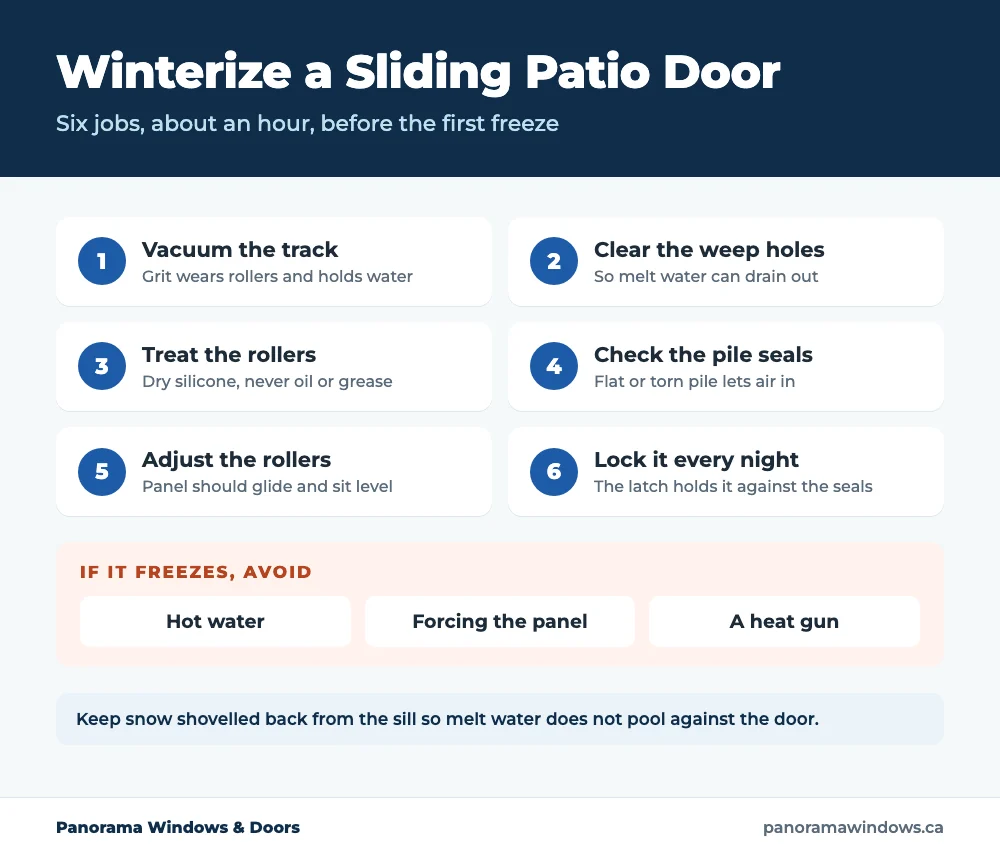
Six Jobs to Winterize a Sliding Patio Door
1. Vacuum and wipe the track
Open the panel fully and vacuum the bottom track with a crevice tool, then wipe it with a damp cloth. Get into the corners at each end, where grit and dead leaves collect. Do the same for the top track if you can reach it.
2. Clear the weep holes
Look on the outside face of the bottom frame for small slots or holes. These are weep holes, and they let water drain out of the track. Clear each one with a soft brush or a pipe cleaner, then pour a cup of water into the track to check that it drains outside rather than pooling.
3. Treat the rollers and track
Follow your door manufacturer's care instructions first. Where they do not say, a dry silicone spray on the track and rollers is the usual choice. Avoid oil and grease, which hold on to dirt and turn into a gritty paste that wears the rollers faster.
4. Check the pile weatherstripping
Look along the edges of the sliding panel, and especially where the two panels overlap in the middle, called the interlock. Pile that is flattened, torn or missing in sections lets cold air straight through. Replacement pile comes in different heights and widths, so match the old piece or order it for your door model.
5. Adjust the rollers
Most sliding doors have adjustment screws at the bottom corners of the panel, sometimes behind small caps. Turning them raises or lowers that corner. The panel should glide without scraping, sit level and close evenly against the frame from top to bottom. If it still drags after adjustment, the rollers may be worn out and need replacing.
6. Lock it every night
The latch holds the panel closed against its seals. A slider that is closed but not latched can drift open a few millimetres and leak air all night. Locking it is a two-second habit that makes a real difference to how the room feels.
Keep the Outside Clear
Shovel a clear strip in front of the door after each snowfall, so drifts do not pile against the glass and melt water does not run into the track. Keep the area in front of the sill clear and allow water a path to drain away from the door rather than toward it.
What to Do If Your Patio Door Freezes Shut
First, do not force it. Yanking on a frozen panel can bend the frame, pop the rollers off the track or break the latch.
- Warm the room, or point a hair dryer on a low setting at the bottom track from the inside, and give the ice time to soften.
- Clear any ice you can reach in the track with a plastic scraper, never a metal one.
- Do not pour hot water on it. The water ends up in the track and freezes again, often worse, and a sudden temperature change is hard on the glass.
- Do not use a heat gun or torch, which can warp vinyl and damage the seals.
Once it opens, dry the track and clear the weep holes. A door that keeps freezing usually has a drainage problem rather than a temperature problem.
Small Comforts for Big Glass
Even a well-sealed patio door is a lot of glass, and the room near it can feel cool on the coldest days. Heavy curtains drawn at night help keep that cold from reaching the room, as long as you open them during the day so warm air reaches the glass and condensation does not build up. A rug just inside the door helps too. For leaks you can feel, our guide to finding and fixing drafts in an Ontario home covers the tests that show where the air is coming in.
When to Replace a Sliding Patio Door
Maintenance helps a door that is still sound. It is time to consider a replacement when you see:
- fog or film between the glass panes
- a bent or cracked track, or rollers that grind even after replacement
- daylight at the interlock after new pile is fitted
- frost on the frame itself, which is common with older aluminum doors
- water leaking onto the floor inside during rain or thaw
A replacement does not have to be another slider. Hinged doors seal by pressing against a compression weatherstrip, so they are often tighter in winter, and they suit an opening where you have room for the door to swing. Our pages on sliding patio doors in Ontario, French doors in Ontario and garden doors in Ontario compare the options, and our guide on choosing patio doors that withstand Ontario weather explains what to look for in the glass and frame. If security is part of the decision, read whether French doors are secure for Ontario homes.
A single sliding door opening meets the minimum for the Home Renovation Savings rebate, as long as you also do at least one other qualifying upgrade. Our guide to Ontario window and door rebates in 2026 explains how it works, and our article on the cost to install a door in Ontario covers the budget.
Frequently Asked Questions
What is the best lubricant for a sliding patio door in winter?
Check the manufacturer's care guide first. If it does not say, a dry silicone spray is the usual choice for the track and rollers. Avoid oil and grease, because they collect dirt.
Why does my sliding door freeze shut?
Usually because water is sitting in the bottom track and freezing around the rollers. Clearing the weep holes and keeping snow away from the sill stops most of it.
Why is my sliding door so drafty?
The most common causes are worn pile weatherstripping, especially at the interlock, a panel that has dropped because the rollers are worn or out of adjustment, and a door that is closed but not latched.
Can a sliding patio door be replaced in winter?
Yes. The old door comes out and the new one goes in on the same day, so the opening is only exposed for a short time. Plan around the weather on install day.
Want a Professional Opinion?
If your patio door is past adjusting, book a free in-home consultation anywhere we serve in Ontario. We will tell you whether it needs new parts or a new door, and show you the options that suit the opening.
Written by Alex Soroka, Senior Project Manager.