

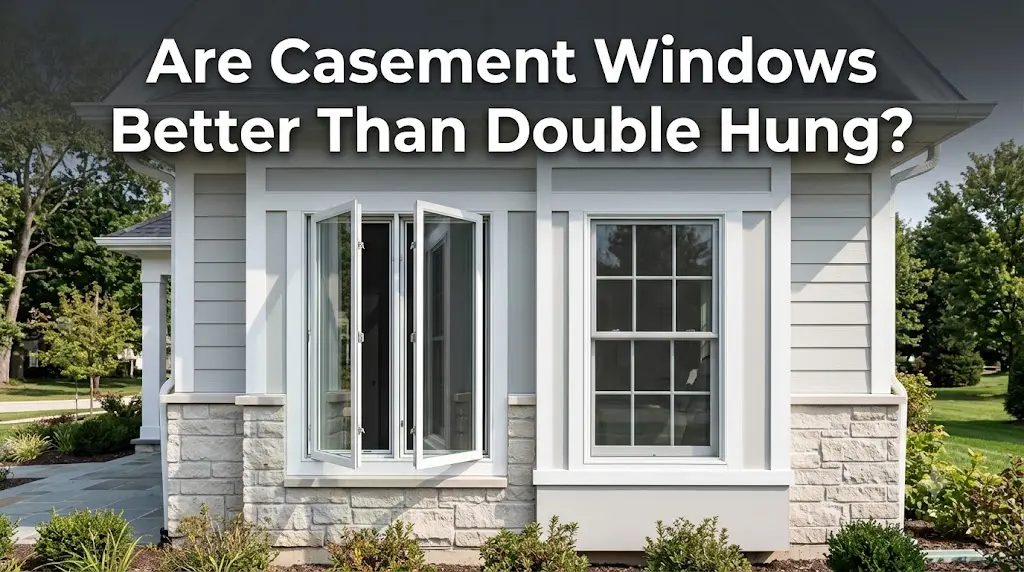
Yes, casement windows are generally better than double hung windows for energy efficiency, weather sealing, and ventilation. However, double hung windows remain a practical choice if you value easier cleaning, a traditional appearance, and a lower upfront investment.
Choosing the right window goes beyond appearance. It directly affects your home’s comfort, energy bills, and everyday living. Those differences become even more noticeable during freezing winters, humid summers, and unpredictable seasonal weather.
That’s why many homeowners compare these two window styles before investing in window replacement. The right choice often depends on your home’s age, layout, and exposure to the elements, not just personal preference.
In this guide, you’ll learn where each window performs best, the trade-offs that matter most, and which option offers better long-term value for your home.
Casement vs Double Hung Windows at a Glance
If your priority is better energy efficiency, weather protection, and ventilation, casement windows usually perform better. Double hung windows remain a great option for homeowners who prefer easy cleaning, classic style, and a lower upfront cost.
| Feature | Casement Windows | Double Hung Windows |
| Best For | Energy efficiency, modern homes, maximum airflow | Traditional homes, easy maintenance, affordability |
| Energy Efficiency | Excellent air seal | Very good insulation |
| Ventilation | Opens 100% to capture breezes | Opens top, bottom, or both |
| Weather Resistance | Tight compression seal | Quality weatherstripping protection |
| Ease of Operation | Smooth crank handle | Simple sliding sashes |
| Cleaning | Easy on ground floors | Tilt-in sashes simplify cleaning |
| Security | Multi-point locking system | Secure locking mechanism |
| Noise Reduction | Better sound insulation | Good with insulated glass |
| Durability | Durable hardware, periodic maintenance | Fewer moving parts |
| Upfront Cost | Higher investment | More budget-friendly |
| Curb Appeal | Clean, modern appearance | Timeless, traditional style |
What Are Casement Windows?
Casement windows are side-hinged windows that open outward with a crank handle. Their compression seal closes tightly against the frame, reducing air infiltration and improving thermal performance throughout the year.
Unlike sliding window styles, the entire sash opens to capture more natural airflow. That makes them a practical choice for homes exposed to strong seasonal winds. Many Ontario homeowners also choose high-performance casement windows to improve year-round comfort.
Modern designs combine Low-E glass, argon gas-filled insulated glass units (IGUs), and fusion-welded vinyl frames. Together, these features reduce heat loss during long winters and improve energy efficiency.
What Are Double Hung Windows?
Double hung windows feature two vertically sliding sashes that open independently. This classic design offers flexible ventilation, simple operation, and easy maintenance, making it one of the most popular window styles for residential homes.
One of their biggest advantages is everyday practicality. You can open the top sash, the bottom sash, or both to improve airflow.
Many Ontario homeowners also appreciate tilt-in sashes, especially on upper floors where exterior cleaning can be difficult. Modern energy-efficient double hung windows also feature Low-E glass, argon gas-filled insulated glass, and fusion-welded vinyl frames for better comfort throughout the year.
Read More: Benefits of Triple Pane Windows for Ontario Winters
What Are Double Hung Windows?
Double hung windows feature two vertically sliding sashes that open independently. This classic design offers flexible ventilation, simple operation, and easy maintenance, making it one of the most popular window styles for residential homes.
One of their biggest advantages is everyday practicality. You can open the top sash, the bottom sash, or both to improve airflow. Many Ontario homeowners also appreciate tilt-in sashes, especially on upper floors where exterior cleaning can be difficult.
Modern energy-efficient double hung windows also feature Low-E glass, argon gas-filled insulated glass, and fusion-welded vinyl frames for better comfort throughout the year.
Casement vs Double Hung Windows: Side-by-Side Comparison
1. Energy Efficiency
Casement windows create a tighter compression seal, reducing air infiltration during Ontario’s long heating season. Many homeowners choose Low-E glass and argon-filled IGUs because they improve indoor comfort, lower heating costs, and reduce cold drafts.
On the other hand, modern double hung windows deliver solid insulation with weatherstripping, Low-E glass, and fusion-welded vinyl frames. They perform well in most homes, although their sliding sashes generally allow slightly more air leakage than casement windows.
2. Ventilation
Casement windows open fully, allowing the entire sash to capture cross-ventilation. That makes them ideal for humid summer days when natural airflow matters most. Many homeowners choose professional casement window installation to improve indoor air circulation without relying heavily on air conditioning.
Meanwhile, double hung windows provide flexible ventilation by opening the top sash, bottom sash, or both. This helps release warm indoor air while drawing in cooler air below. They work especially well in bedrooms and older family homes where controlled airflow is a priority.
3. Ease of Operation
Casement windows open with a smooth crank handle instead of lifting a sash. That makes them easier to operate for many older adults and homeowners with limited mobility. They’re also a practical choice above kitchen sinks or deep countertops where reaching can be difficult.
By comparison, double hung windows slide vertically using balanced sashes that most homeowners already know how to operate. They don’t project outward, making them a convenient option beside walkways, patios, decks, and other high-traffic outdoor spaces.
4. Cleaning and Maintenance
Keeping your windows clean shouldn’t become another household chore. Casement windows are fairly easy to maintain, especially on the ground floor. However, cleaning the exterior glass on upper levels can take more effort.
That’s one reason many homeowners choose professional casement window replacement with fusion-welded vinyl frames. They resist warping, require little upkeep, and stay looking newer for longer.
If easy maintenance is high on your list, double hung windows have a clear advantage. Their tilt-in sashes let you clean both sides of the glass from inside your home.
That means no stretching out of windows or climbing ladders for routine cleaning. It’s a feature many homeowners appreciate, especially in two-storey family homes.
5. Security
If security is high on your priority list, casement windows are often the stronger choice. Their multi-point locking system secures the sash at several points along the frame. That creates a tighter seal and makes forced entry more difficult.
It’s the same security principle used in doors with a multi-point lock system, giving homeowners added confidence without compromising everyday usability.
Double hung windows also provide dependable security when equipped with modern locking hardware and reinforced vinyl frames.
For many homeowners, that level of protection is more than enough for everyday use. However, because the sashes slide instead of compressing against the frame, they generally don’t create the same secure seal as casement windows.
6. Durability
A quality window should perform well for years, not just look good after installation. Casement windows are built with durable hardware and tightly sealed frames. With regular maintenance, they hold up well against Ontario’s freeze-thaw cycles, wind, and seasonal weather.
Many homeowners also choose vinyl windows because they resist warping, peeling, and moisture damage.
Meanwhile, double hung windows are known for their long-term reliability. Their simpler sliding design has fewer operating components than a crank system, which can reduce maintenance over time.
When built with fusion-welded vinyl frames and quality hardware, they provide dependable performance for decades with minimal upkeep.
Read More: Best Window Styles For Victorian Style Homes
7. Noise Reduction
Outside noise can quickly affect your comfort, especially if you live near busy roads or growing neighbourhoods. Casement windows create a tighter seal when closed, helping block more outside noise. Many homeowners also upgrade to triple-pane windows for even better sound insulation and year-round comfort.
On the other hand, double hung windows also reduce outside noise when paired with quality insulated glass. They can noticeably improve a quieter indoor environment compared to older windows. However, because their sliding sashes don’t seal as tightly, they generally don’t match the acoustic performance of well-installed casement windows.
8. Noise Reduction
If outside noise is becoming a daily distraction, your window choice can make a real difference. Casement windows create a tighter compression seal, reducing sound transmission through the frame.
Many homeowners also upgrade to triple-pane windows with laminated glass to improve acoustic insulation, especially near busy roads and high-traffic neighbourhoods.
Meanwhile, double hung windows also improve indoor quietness when paired with double-pane insulated glass and quality weatherstripping. They noticeably reduce everyday outdoor noise compared to older windows.
However, because the sliding sashes don’t compress tightly against the frame, they typically offer slightly lower soundproofing performance than casement windows.
9. Cost
Casement windows typically cost CAD $800 to $1,800 per window, including professional installation, depending on the size, frame material, glazing, and hardware. The higher price reflects features like crank hardware, multi-point locking systems, and better energy performance.
If you’re replacing aging windows, professional window replacement services in Barrie can help you compare options based on your home’s needs and budget.
For homeowners with a tighter renovation budget, double hung windows are usually the more affordable option. Most double hung window replacements in Ontario range from CAD $700 to $1,500 per window, including installation. Their simpler design often lowers both manufacturing and labour costs, making them a practical choice for larger whole-home window replacement projects.
Casement windows offer strong performance, but they are not the perfect choice for every home. Understanding their advantages and limitations can help you decide if they match your space, lifestyle, and renovation goals.
Pros and Cons of Casement Windows
Pros of Casement Windows
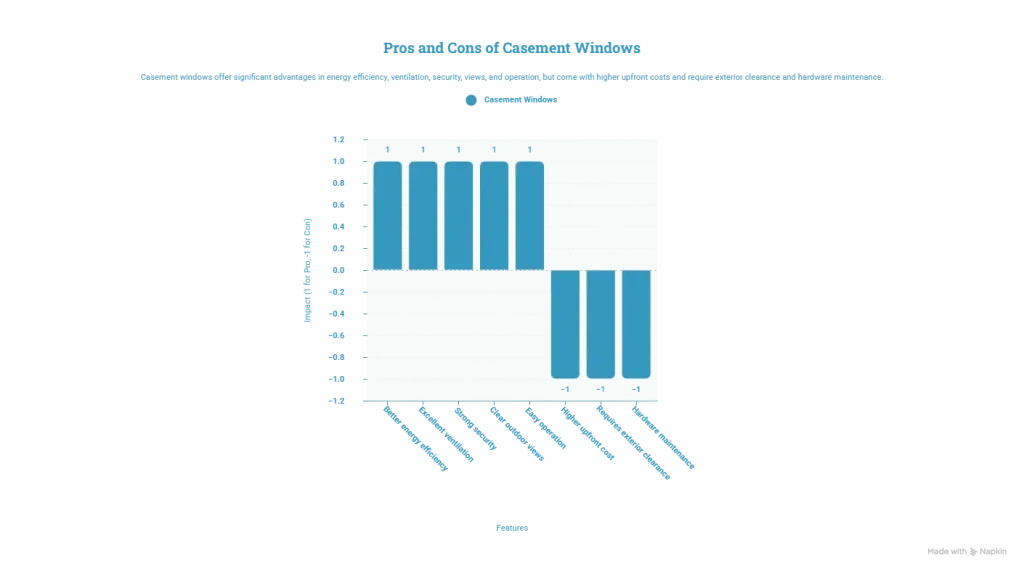
- Better energy efficiency: Their tight compression seal reduces air leakage and helps maintain indoor temperatures during Ontario’s cold winters and warm summers.
- Excellent ventilation: The full-opening sash catches outdoor breezes and improves natural airflow, making them useful in kitchens, bathrooms, and living areas.
- Strong security: Modern casement windows often include multi-point locking systems, making them harder to force open.
- Clear outdoor views: With fewer frame sections than some window styles, they provide wider glass areas and better sightlines.
- Easy operation: A crank handle makes opening simple, especially in hard-to-reach locations like above kitchen sinks.
Cons of Casement Windows
- Higher upfront cost: Casement windows usually cost more because of advanced hardware, locking mechanisms, and installation requirements.
- Requires exterior clearance: Since they open outward, nearby trees, walkways, patios, or landscaping can limit where they work best.
- Hardware maintenance: Hinges and crank mechanisms may need occasional adjustment after years of regular use.
Pros and Cons of Double Hung Windows
Double hung windows remain one of the most popular choices for Ontario homes because they combine traditional appearance with modern performance. However, like any window style, they come with both benefits and limitations.
Pros of Double Hung Windows
- Easy cleaning: Their tilt-in sashes allow homeowners to clean both sides of the glass from inside. This is especially useful for second-storey windows.
- Flexible ventilation: You can open the top sash, bottom sash, or both. This creates better airflow control and helps release warm indoor air.
- Classic appearance: Double hung windows suit many traditional homes, including older properties across Ontario neighbourhoods where homeowners want to maintain original character.
- Lower replacement cost: They are often more affordable than casement windows because of their simpler design and installation process.
- Space-saving design: Since they open vertically, they work well near patios, walkways, decks, and landscaping where outward-opening windows may not fit.
Cons of Double Hung Windows
- Slightly lower airtightness: Sliding sashes generally create more opportunities for air movement compared to the tight compression seal of casement windows.
- Reduced ventilation reach: They may not capture outdoor airflow as effectively because the sash does not open outward into the breeze.
- More moving parts: Tracks, balances, and sash components require occasional cleaning and maintenance to keep smooth operation.
Best Rooms for Casement Windows
Casement windows work best in rooms where homeowners want stronger airflow, better energy performance, and easier operation. Their outward-opening design makes them especially useful in spaces where ventilation and natural light matter most.
Kitchens
Casement windows are a popular choice above kitchen sinks because the crank handle makes them easier to operate. You don’t need to reach behind a faucet or countertop to open them. Their wide opening also helps remove cooking odours and improve fresh air circulation.
Bathrooms
Bathrooms often need better moisture control to reduce humidity and condensation. Casement windows allow wider ventilation compared to many traditional styles. When combined with energy-efficient windows, they help maintain comfort during Ontario’s colder months.
Living Rooms
Living rooms benefit from the larger glass area and wider outdoor views that casement windows provide. They bring in more natural light and create better airflow during warmer seasons. This makes them a good option for homeowners upgrading older, drafty windows.
Hard-to-Reach Areas
Casement windows are especially practical in hard-to-reach areas where operating a sliding sash may be inconvenient. The simple crank mechanism works well above countertops, cabinets, or furniture where regular window access is limited.
Best Rooms for Double Hung Windows
Double hung windows are a practical choice for rooms where homeowners want easy maintenance, flexible ventilation, and a traditional appearance. Their vertical opening design works well in many Ontario homes, especially where exterior clearance is limited.
Bedrooms
Double hung windows are often preferred in bedrooms because they provide controlled ventilation without taking up outdoor space. You can open the lower sash for fresh air or the upper sash to release warm air during summer nights. This makes them a comfortable choice for family homes.
Dining Rooms
In dining areas, double hung windows offer a balanced mix of natural light and classic style. Their traditional profile fits well with many Ontario homes, especially properties with brick exteriors or heritage-inspired designs. They also maintain clear outdoor views without extending into patios or landscaping.
Traditional Living Spaces
For living rooms and sitting areas, double hung windows complement homes where homeowners want a timeless appearance. Modern options with vinyl window frames provide better insulation while maintaining the classic look many homeowners prefer.
Upper Floors
Double hung windows are especially useful on upper floors because their tilt-in sashes make exterior cleaning safer and easier. Homeowners can maintain the glass from inside without climbing ladders, which is a major advantage for two-storey homes
Casement vs Double Hung Windows: Which Window Is Better for Ontario Weather?
Casement windows are generally better suited for Ontario weather because their tighter seal provides stronger protection against cold drafts, wind, and temperature changes. However, double hung windows remain a reliable choice with modern energy-efficient features.
Ontario homeowners deal with harsh winters, humid summers, and frequent temperature swings throughout the year. Casement windows perform well because their compression seal helps reduce air leakage during cold months.
However, high-quality triple-pane windows and Low-E glass can also make double hung windows highly efficient. The right choice depends on your home’s design, exposure, and comfort goals.
Casement vs Double Hung Windows: Which Window Adds More Home Value?
Neither window style guarantees a higher resale value, but energy-efficient replacements can improve buyer appeal, comfort, and overall home performance. The best choice depends on your property’s style, location, and renovation goals.
For Ontario homeowners, window upgrades are often viewed as a long-term investment rather than a simple cosmetic change.
According to Remodeling Magazine’s Cost vs. Value Report, replacement projects that improve exterior performance and appearance can recover a significant portion of their cost during resale. Casement windows may appeal to buyers seeking modern efficiency, while double hung windows remain popular for traditional homes across Ontario.
Choosing professional window installation services in Barrie with quality materials can improve curb appeal, comfort, and buyer confidence.
Common Mistakes When Choosing Between Casement and Double Hung Windows
Choosing between casement and double hung windows is not only about style. Many homeowners overlook important factors like window orientation, energy ratings, installation quality, and long-term maintenance needs.
Choosing Only Based on the Lowest Price
A cheaper window may reduce upfront costs, but it can affect long-term performance. Look beyond the price tag and compare U-factor, solar heat gain coefficient (SHGC), air leakage ratings, frame quality, and warranty coverage before making a decision.
Ignoring Your Home’s Window Placement
Every room has different ventilation and lighting needs. A casement window may work well in a kitchen or bathroom, while a double hung window may suit bedrooms and traditional living spaces better. Consider window exposure, prevailing winds, and available exterior clearance before choosing.
Overlooking Ontario’s Climate Conditions
Ontario homeowners deal with freeze-thaw cycles, cold winters, summer humidity, and changing temperatures. Choosing windows without considering thermal insulation, weather resistance, Low-E coatings, and insulated glass units (IGUs) can lead to drafts and uneven indoor temperatures.
Selecting the Wrong Glass Package
Glass technology plays a major role in window performance. Many homeowners overlook options like double-pane glass, triple-pane glazing, argon gas filling, warm-edge spacers, and laminated glass that improve insulation, comfort, and noise reduction.
Ignoring Installation Quality
Even a high-performance window can fail without proper installation. Poor measurements, incorrect flashing, weak sealing, or improper insulation around the frame can cause air infiltration, moisture issues, and reduced energy efficiency.
Choosing an experienced professional window installation service in Barrie helps ensure proper fitting, sealing, and long-term performance.
Focusing Only on Appearance
A window should complement your home’s architecture, but appearance should not be the only deciding factor. Consider ventilation control, security hardware, maintenance requirements, and daily usability before selecting a style.
Read More: How to Stop Ice Buildup on Windows: Ontario Winter Guide
Conclusion
Choosing between casement and double hung windows depends on your home’s design, comfort needs, and long-term goals. Casement windows offer stronger sealing and energy performance, while double hung windows provide classic style and easy maintenance.
Before replacing your windows, consider your room layout, Ontario weather conditions, and energy efficiency needs. Panorama Windows & Doors can help you choose and install the right window solution for your home.
Frequently Asked Questions
Are casement windows more energy efficient than double hung windows?
Yes, casement windows usually provide better energy efficiency because their compression seal reduces air leakage. However, modern double hung windows with Low-E glass, insulated frames, and quality installation can also deliver strong performance.
Which window type lasts longer, casement or double hung?
Both window styles can last for decades with proper maintenance and professional installation. Casement windows may require more attention to crank hardware, while double hung windows need regular care for tracks, balances, and moving sashes.
Are casement windows more expensive than double hung windows?
Yes, casement windows typically cost more because of their advanced hardware and locking systems. Double hung windows are often more budget-friendly, making them a popular choice for larger replacement projects.
Which windows are better for Ontario winters?
Casement windows often perform better in Ontario winters because their tighter seal helps reduce cold drafts. However, double hung windows with triple-pane glazing, argon gas-filled glass, and proper installation can also handle extreme temperatures.
Written by Alex Soroka, Senior Project Manager.