

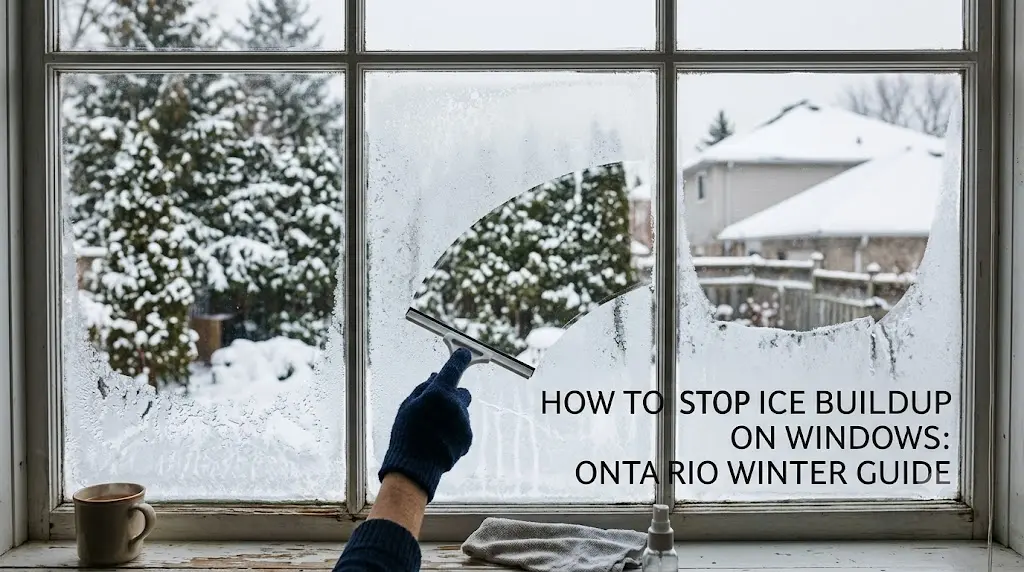
Ice builds up on your windows when warm, moist indoor air meets cold glass and freezes. To stop it, lower your indoor humidity, improve airflow, seal drafts, and replace aging windows.
If you scrape frost off the same window each winter, you are not alone. It clears for a moment, then returns by morning. The good news is that most cases are fixable. Sometimes a few small adjustments solve it.
Other times, the window has reached the end of its life. Panorama Windows & Doors has installed and replaced windows across the province since 2015. Read on to learn why ice forms, and how to stop it for good.
Why Does Ice Build Up on Windows?
Ice forms on windows when humid indoor air meets cold glass and freezes. High humidity, aging windows, weak airflow, and Ontario’s Arctic cold all make it worse. Once you know the cause in your home, the fix becomes much clearer. Below are the eight main reasons it happens.
High Indoor Humidity
High indoor humidity is the leading cause. Everyday tasks add moisture to the air, including showers, cooking, and drying laundry indoors.
In a sealed winter home, that moisture has nowhere to escape. It then settles on the coldest surface you have, the glass. In Barrie and Oshawa, the problem peaks on cold January mornings.
Poor Air Circulation
Poor air circulation makes the problem worse. When doors stay closed and vents sit blocked, warm air never reaches the pane.
Moisture then settles on the cold glass and freezes. You will often notice it first in spare bedrooms and basements. Older Greater Sudbury homes with closed-off rooms see this frequently.
Inefficient Windows
Old glass stays cold all season, even with the furnace running. Single-pane and worn-out units let cold reach the inner surface. That cold pane then draws moisture quickly.
If your home dates to the 1960s or 1970s, like many across Durham Region, this may sound familiar. Upgrading to energy-efficient windows keeps the interior glass warmer.
Failed Window Seals
Fog or ice trapped between the panes points to a blown seal. Your window is a sealed unit, known as an insulated glass unit, or IGU.
Think of it like a thermos: two or three panes trap a gas-filled space that blocks heat transfer. A spacer and a drying agent keep that space moisture-free. Over time, the seal breaks down. The insulating argon leaks out, and moisture works its way in.
Air Leaks Around Frames
Air leaks around the frame let cold air inside. That cold air chills both the glass and the wall beside it. Hamilton’s century homes near the Niagara Escarpment tend to leak the most. To find a leak yourself, run the hand test on a windy day. A noticeable draft marks the spot to seal.
Poor Home Insulation
Thin insulation lets the entire window area run cold. Colder surfaces then pull more moisture from the air. Many older Oshawa and Hamilton homes have weak wall insulation. As a result, frost forms sooner with each hard freeze.
Extremely Cold Outdoor Temperatures
Outdoor temperature has a direct effect on your glass. Barrie sits in the Georgian Bay snowbelt, right beside Lake Simcoe. Arctic air often pushes nights into the minus-twenties. Farther north, Greater Sudbury drops near minus-thirty. Environment Canada records these deep freezes each winter, and if you live through them, you already know how hard they are on windows.
HVAC System Imbalances
An unbalanced HVAC system leaves some rooms cold and stale. Blocked vents and a struggling furnace reduce airflow. Those colder rooms frost up first. A balanced system keeps warm air reaching every window in your home.
Read More: Window and Door Design Trends Homeowners Are Choosing in 2026
Is Ice on Windows Normal?
Ice on your windows is common during a cold snap, yet it is not normal. It signals high indoor humidity, cold glass, or both together.
After more than a decade across Simcoe County, Durham Region, and Greater Sudbury, we see this pattern each winter. Light morning fog is harmless. Thick, lasting ice is worth your attention. In most cases, it means excess indoor moisture, or a window past its prime. Either way, you can do something about it.
Where Is the Ice Forming?
The location of the ice reveals the cause. Ice inside the glass points to humidity. Ice between the panes points to a failed seal. Ice on the outside usually means the window performs well. A quick look tells you a lot.
Ice on the Inside of the Glass
Ice on the inside of the glass is the most common type. Warm, damp indoor air freezes on the cold pane. In most Barrie homes, lower humidity and better airflow clear it.
Ice Between Double or Triple Panes
Ice between the panes indicates seal failure. Cleaning has no effect on it. The sealed unit has reached the end of its life, so replacement is the right step.
Ice on the Outside of the Window
Ice on the outer glass is nothing to worry about. It often shows that your window holds heat inside well. The frost clears as outdoor temperatures rise.
Ice Around the Window
Ice on the frame or sill points to air leaks. Thin insulation around the opening lets cold inside. Sealing and insulating those gaps resolves it.
Can Ice Buildup Damage Your Home?
Yes, and it is worth taking seriously. Left alone, window ice can cause real damage. Melting ice pools on the sill and seeps into the frame.
Over several winters, that water rots wood, stains drywall, and peels paint. It can also lead to black mould along the sash. Mould affects both your indoor air quality and your family’s health. Handle the moisture early, and you protect your home and your budget.
How to Stop Ice Buildup on Windows
To stop ice buildup on windows, lower your indoor humidity first. Then improve airflow, seal drafts, add insulation, and replace failing glass. Many of these steps cost little and take only minutes. Here is what you can do this winter.
Lower Indoor Humidity
Lowering indoor humidity is the most effective first step. Health Canada recommends 30 to 35 percent indoor humidity in winter.
During deep cold, aim lower. A practical guide is 35 percent at zero, 30 percent at minus-ten, and 25 percent below minus-eighteen. A simple hygrometer helps you keep track.
Improve Air Circulation
Keep warm air moving over the glass. Open your blinds and curtains during the day. Run ceiling fans on their low winter setting. Move furniture away from heat vents. These small habits help warm air reach cold windows in Sudbury and Barrie.
Seal Air Leaks
Find and seal every draft you can. Fresh weatherstripping and a bead of caulk block cold air. Add door sweeps where needed. This low-cost fix protects older Oshawa and Hamilton homes from cold, leaky frames.
Improve Window Insulation
Add a barrier over cold glass for extra protection. Insulating film, thermal curtains, and storm windows all help in the short term. They slow heat loss and warm the surface. Film has its limits, though, when the window itself is failing.
Upgrade to Energy-Efficient Windows
When frost returns every winter, the window is the weak point. New glass fixes the root cause, not just the symptom. If you have tried everything else, this is usually the answer. The next section explains why warmer glass prevents ice.
Read More: Best Window Styles for Maximum Insulation in Ontario Homes
Why Energy-Efficient Windows Stop Winter Ice

Warmer inner glass is the key. Ice forms when the inside pane drops below the dew point. Energy-efficient windows keep that pane warmer, so condensation struggles to form. Industry data supports this.
Up to 25 percent of home heat escapes through windows. A triple-pane window ranks as the most efficient option available.
| Window feature | How it fights ice |
| Triple-pane glass | Keeps the interior surface warmer |
| Low-E coating | Reflects up to 96% of heat inside |
| Argon gas fill | Improves insulation by about 30% |
| Vinyl frames | Stop cold transfer and cut drafts |
A Low-E window reflects heat back into your room instead of losing it outside. One detail many guides overlook is the Condensation Resistance (CR) rating. A higher rating means stronger frost resistance on Arctic nights.
These windows also lower your heating costs. The Home Renovation Savings Program from Save on Energy offers Ontario rebates on ENERGY STAR windows, so the upgrade may cost less than you expect.
Should You Repair or Replace Your Windows?
You may be wondering whether to repair or replace. Repair the window if the glass is sound and ice appears only in deep cold. Replace it if you see fog between the panes, single-pane glass, drafts, or rot.
Wiping the same window every morning, year after year, points to a deeper issue. Failed seals and single panes never warm up. Many Oshawa and Sudbury homes still run 1970s windows. A professional assessment from a professional window replacement service in Barrie tells you which option fits your home.
Common Mistakes That Make Window Ice Worse
A few common habits quietly make window ice worse. Check whether any of these sound familiar.
Running Humidifiers Too High
A humidifier left on its summer setting adds too much moisture. That moisture then freezes on cold glass. Solution: lower the setting as outdoor temperatures fall.
Keeping Blinds Closed All Day
Closed blinds trap cold air against the glass. This holds moisture in place and speeds up frost. Solution: open the blinds during the day so warm air reaches the window.
Blocking Heat Registers
Furniture or long drapes over a vent block warm air. The room then fills with cold, still air that ices the pane. Solution: keep every heat register open and clear.
Ignoring Small Drafts
A small draft still chills the glass all winter. Minor leaks add up over time. Solution: seal the gaps with fresh weatherstripping and caulk.
Waiting Until Spring
Delay lets moisture rot frames and grow mould for months. The repair also grows larger and more costly. Solution: address icy windows now, before the next Arctic freeze.
How to Prevent Window Ice Next Winter
A little fall prep saves you a frosty January. Refresh weatherstripping, manage humidity, keep air moving, and book a window check before the cold arrives. These six habits keep your glass clear.
- Check weatherstripping early. Inspect every window seal in the fall. Replace cracked or flattened strips. Fresh seals block cold before Barrie’s first hard frost.
- Manage humidity by season. Adjust your humidifier as temperatures fall. Keep it at 30 percent or lower in deep cold. A hygrometer keeps the level in check.
- Keep air moving. Run ceiling fans on their low winter setting. Open the blinds each morning. Moving air stops moisture from settling in quiet rooms.
- Vent moisture outdoors. Use kitchen and bathroom exhaust fans daily. Confirm the dryer vents to the outside. This keeps excess moisture off the glass.
- Book a pre-winter window check. Schedule it before the first snowfall. A professional catches failing seals and drafts early. Fall service is easier than a winter repair.
- Plan an upgrade if needed. If the same windows iced up last year, consider replacement. Ontario rebates help lower the cost. Early action prevents another frozen January.
Conclusion
Now you know how to stop ice buildup on windows for good. Start with your indoor humidity and airflow. Seal every draft you find. And when aging glass keeps frosting over, replacement is the lasting solution.
Panorama Windows & Doors helps homeowners stay frost-free across Barrie, Oshawa, Greater Sudbury, Hamilton, Oakville, and Kitchener. Book your free in-home consultation today, and enjoy warmer glass and clearer winter views.
Frequently Asked Questions
What indoor humidity stops window condensation in winter? Aim for 30 to 35 percent in a typical Ontario winter. Drop to 20 to 25 percent during a deep freeze below minus-twenty.
How do I stop condensation on windows overnight? Lower your bedroom humidity, open the door for airflow, and raise the blinds. A small dehumidifier or a ceiling fan also helps.
Do new windows still get frost on the inside? They can, in extreme cold or very humid rooms. Still, triple-pane, low-e glass resists frost far better than old windows.
Are triple-pane windows worth it for Ontario winters? Yes. The third pane keeps the glass warmer, resists frost, and lowers heating bills. It suits our long, cold winters well.
Does Panorama Windows & Doors installs windows in the Sudbury area? Yes. Panorama Windows & Doors serves Greater Sudbury, along with Barrie, Oshawa, Hamilton, Oakville, and Kitchener. The team comes to your home.
Written by Alex Soroka, Senior Project Manager.