

Triple-pane windows help Ontario homes stay warmer, lose less heat, and resist condensation during winter by using three panes of glass and two insulated gas-filled chambers.
The benefits go beyond lower energy use. Most homeowners do not start looking at triple-pane windows because of a utility bill. They start looking because one room always feels colder than the rest of the house. The windows frost up during a cold snap. The chair by the window sits empty all winter. These are the comfort problems we hear about most often during Ontario winters.
After decades of installations across the GTA, one thing is clear: the colder the weather gets, the more noticeable the difference becomes. Read on to learn what a third pane improves, where the biggest benefits come from, and whether triple-pane windows are the right fit for your home.
What Are Triple Pane Windows?
Triple-pane windows are insulated windows made with three sheets of glass separated by two sealed chambers, usually filled with argon gas. Together, these components reduce heat transfer and improve energy efficiency compared to standard double-pane windows.
The glass itself is only part of the system. Much of the insulation comes from the gas-filled spaces between the panes. Argon slows heat transfer more effectively than air, and a triple-pane design creates two insulating chambers instead of one. Low-E coatings reflect heat back indoors, while warm-edge spacers reduce heat loss around the perimeter of the glass.
A properly built triple-pane window should include:
- Three panes of glass, not two
- Two sealed chambers, usually filled with argon gas
- Two or more Low-E coatings
- Warm-edge spacers around the perimeter
- Fusion-welded frame corners for a tighter seal
- About 1-3/8 inches of overall thickness on most casement and picture windows
12 Benefits of Triple Pane Windows for Ontario Winters
Triple pane windows lower heat loss, warm your interior glass, and reduce condensation. They also cut some noise, ease strain on your furnace, and let you run healthier humidity.
Here is what each one looks like in a GTA home.
1. Lower Heating Bills
Windows are one of the largest sources of heat loss in a home. Natural Resources Canada estimates that up to 25% of household heat loss can occur through windows, while space heating accounts for roughly 60% of residential energy use. Triple-pane windows slow that heat transfer by combining multiple panes, insulated air spaces, Low-E coatings, and argon gas fills.
The benefit is often greatest during Ontario’s coldest months, when heating systems work hardest to replace the heat escaping through the building envelope. Better-insulated windows reduce that demand, helping maintain indoor comfort with less energy throughout the heating season.
2. Warmer Indoor Temperatures
A comfortable room depends on more than the thermostat reading. It also depends on mean radiant temperature, which is the average temperature of the surfaces around you. When a large window stays cold, it lowers that average and makes the room feel cooler than the air temperature suggests.
Triple-pane windows keep the inner glass significantly warmer during winter. As the glass temperature rises, the room feels more evenly heated from wall to wall instead of concentrating warmth in the centre and leaving colder areas near the windows.
This difference is often most noticeable in older Ontario homes with large window openings and long exterior walls. The effect is even greater with large picture windows, where the larger glass area has a bigger influence on overall room comfort.
Read More: How to Choose Patio Doors That Withstand Ontario Weather
3. Eliminate Cold Drafts
One of the biggest comfort upgrades from triple-pane windows is the reduction in cold drafts around the glass. By keeping the inner surface warmer, they make the area near the window feel noticeably more comfortable during winter.
The reason is that many window “drafts” are not actually air leaks. They are convection loops. When cold glass cools the air beside it, that air becomes denser and sinks toward the floor. Warmer air moves in to replace it, creating a continuous circulation that feels like a draft.
Triple-pane windows weaken this cycle by raising the glass temperature, reducing the amount of cold air that forms along the window surface.
It is still important to distinguish convection chill from true air leakage:
| Issue | What Causes It | Solution |
| Convection chill | Cold glass cooling nearby air | Triple-pane windows and warmer glass surfaces |
| Air leakage | Gaps in the frame, sash, or installation | Weatherstripping, hardware adjustments, or installation repairs |
4. Reduce Interior Condensation
Warmer glass naturally attracts less condensation. When warm indoor air meets a cold window surface, moisture turns into water. By keeping the glass warmer, triple-pane windows make condensation much less likely during Ontario winters.
One performance measure worth knowing is Condensation Resistance (CR). The higher the rating, the better a window resists interior condensation. Many triple-pane windows achieve CR ratings above 70, while standard double-pane units often fall in the 50 to 60 range, though performance varies by window design.
If condensation does appear, the location usually tells you the cause:
| Where It Forms | What It Means | What to Do |
| Inside surface of the glass | Indoor humidity is too high for the glass temperature | Reduce humidity or improve ventilation |
| Outside surface of the glass | The window is insulating so well that the outer pane stays cold | Nothing. This is normal. |
| Between the panes | The sealed unit has failed | Replace the sealed glass unit |
Even newer Ontario homes can experience condensation. Modern construction keeps heat in more effectively, but it also traps moisture from showers, cooking, and everyday living.
5. Better Protection Against Ice Build-Up
Interior frost forms when condensation freezes on glass that has dropped below 0°C. During Ontario cold snaps, this is a common problem with older or less efficient windows.
Triple-pane windows help by keeping the inner glass warmer. Our advanced Low-E coatings reflect up to 96% of heat and light energy back into the room, making frost far less likely to form.
Frost usually appears around the edges first because traditional metal spacers transfer cold through the perimeter of the glass. Warm-edge spacers reduce that heat loss and help keep the entire window surface warmer.
That extra protection becomes especially valuable during extended winter weather, when cold temperatures can leave poorly insulated windows covered in frost while better-insulated units stay clear.
6. Improved Comfort Near Windows
For many homeowners, comfort is the main reason to choose triple-pane windows. You notice it most during Ontario’s coldest days, when a room feels chilly near the window even though the thermostat says otherwise.
This happens because comfort depends on more than air temperature. A cold window pulls heat from your body through radiant heat transfer, making the area beside the glass feel cooler than the rest of the room.
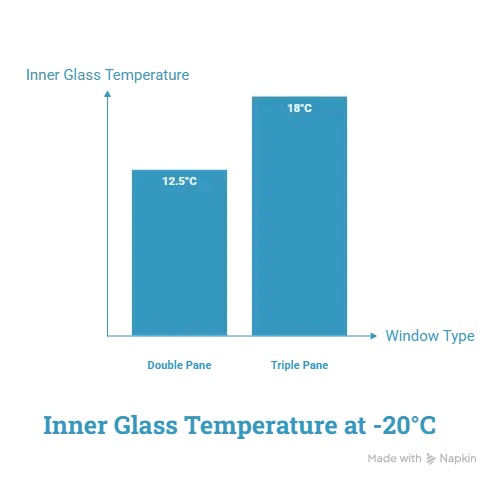
To see the difference, look at how warm the inner glass stays on a typical winter day:
| At -20°C Outside, 21°C Indoors | Inner Glass Temperature | Against the 12.8°C Comfort Threshold |
| Double-pane window | About 12 to 13°C | Right on the line |
| Triple-pane window | About 18°C | Comfortably above |
That warmer glass reduces the cold feeling near the window and makes the space more comfortable to use. The benefit stands out even more with bay and bow windows, which face the weather on multiple sides and lose heat faster than most other window styles.
Read More: Best Window Styles for Maximum Insulation in Ontario Homes
7. Better Sound Insulation During Winter
Triple-pane windows can make your home noticeably quieter, but the improvement depends on the glass package, not just the extra pane. The additional air space helps reduce higher-frequency sounds such as winter winds, neighbourhood activity, and distant road noise.
For homes near Ontario’s busiest transportation corridors, the type of glass matters even more. Traffic from highways such as the 401, 407, and QEW, along with aircraft noise near major flight paths, produces lower-frequency sound that travels farther and is harder to block.
In these situations, many homeowners choose triple-pane windows with laminated glass for stronger noise reduction.
8. Lower Carbon Footprint
Every bit of heat that escapes through a window has to be replaced by your heating system. By reducing heat loss, triple-pane windows lower the amount of energy needed to keep your home comfortable throughout Ontario’s five-month heating season.
That matters even more as heat pumps become more common across the province. While cold-climate models perform well in winter, they gradually lose heating capacity as outdoor temperatures fall.
Better-insulated windows reduce the heating load on the home, helping the system maintain indoor comfort with less energy use and fewer calls on backup heat.
The impact becomes more noticeable in homes with large glass areas, especially patio doors and oversized window units
9. Increased Home Value
Triple-pane windows can make a home more appealing to buyers, especially as energy efficiency becomes a bigger factor in purchasing decisions. According to CMHC’s Mortgage Consumer Survey, 61% of buyers consider energy efficiency when evaluating a home.
That matters in a competitive market, where buyers often view multiple properties in a single weekend. A room that feels cold near the windows leaves an impression. A comfortable, draft-free space does too.
Window replacement projects typically recover 50% to 75% of their cost at resale, depending on the property and market conditions. Buyers may not ask how many panes a window has, but they notice the results.
10. Longer HVAC Lifespan
Triple-pane windows can also reduce strain on your heating system. By keeping interior glass surfaces warmer, they help create more consistent room temperatures and reduce the cold spots that often develop near windows during winter.
That matters because HVAC equipment lasts longest when it runs in steady cycles. Large temperature swings can lead to more frequent starts and stops, a pattern known as short-cycling. Over time, those repeated cycles increase wear on key components.
The parts most affected include:
- The igniter, which activates every time the furnace starts
- The blower motor, which repeatedly spins up and down
- The heat exchanger, which expands and contracts with each heating cycle
By reducing heat loss and helping rooms stay more evenly heated, triple-pane windows can support longer, steadier heating cycles. Fewer starts mean less wear on the equipment, which may contribute to a longer service life over time.
11. Better Indoor Humidity Control
Ontario winters create a balancing act between comfort and condensation. Health Canada recommends maintaining indoor relative humidity between 30% and 50% during winter, but many homeowners cannot stay near the upper end of that range without moisture forming on their windows.
The reason is simple: colder glass attracts condensation. As outdoor temperatures fall, many homeowners lower their humidifier settings to keep their windows dry.
| Outdoor Temperature | Safe RH with Double-Pane Windows | Safe RH with Triple-Pane Windows |
| -10°C | 30 to 35% | 40 to 45% |
| -20°C | 25 to 30% | 35 to 40% |
Because triple-pane windows keep the inner glass warmer, they allow higher indoor humidity levels before condensation becomes a problem. That can make a noticeable difference during a long Ontario winter, helping reduce dry skin, static electricity, nosebleeds, and shrinking or cracking hardwood floors.
12. Greater Overall Winter Comfort
In the end, the benefits of triple-pane windows show up in the way your home feels throughout winter. Rather than solving one problem, they improve several parts of daily comfort at the same time.
You are more likely to notice:
- More even temperatures from the centre of the room to the window
- Less condensation during extended cold spells
- A comfortable seat beside the window in January
- Higher indoor humidity without moisture on the glass
- Longer, steadier heating cycles with fewer temperature swings
The thermostat may still read 21°C, but the room feels different. You stop noticing cold spots, drafts, and the discomfort that often comes with sitting near a window during an Ontario winter.
Read More: Fiberglass vs. Steel Doors: Which Is Right for Your Ontario Home?
Triple Pane vs Double Pane Windows in Ontario
Double-pane windows work well for smaller, sheltered openings. Triple-pane windows perform best on north-facing walls, large window openings, and areas exposed to winter weather. The biggest difference shows up in comfort and glass temperature, not dramatic reductions in your hydro bill.
The comparison below shows where triple-pane windows pull ahead:
| Feature | Double Pane | Triple Pane |
| Glass and chambers | 2 panes, 1 insulated chamber | 3 panes, 2 insulated chambers |
| Typical thickness | 7/8″ | 1-1/4″ to 1-3/8″ |
| Inner glass at -20°C | About 12 to 13°C | About 18°C |
| Condensation Resistance (CR) | Roughly 50 to 60 | Often above 70 |
| Traffic noise | Good | Slightly better, depending on glass package |
| Cost | Baseline | Typically 15% to 30% higher |
Where double pane is fine: small bathroom windows, sheltered side walls, and tight budgets. I say this to customers every week.
Where triple pane earns its keep: north-facing rooms, west walls catching wind off the lake, and any room you avoid in winter.
Are Triple Pane Windows Worth the Extra Cost?
Usually yes for large, exposed windows. Usually no for small, sheltered ones. In Ontario, triple-pane windows deliver the most value on north- and west-facing walls, large picture windows, and rooms that feel cold throughout winter. For smaller, protected openings, the extra cost is often harder to justify on energy savings alone.
The premium typically ranges from 15% to 30%, or roughly $80 to $500 per window, depending on the size, frame, and glass package. Whether that investment makes sense depends largely on what you are replacing.
| What You Replace | Typical Annual Savings | Typical Premium | Estimated Payback |
| Single-pane to double-pane | $200 to $350 | $3,000 to $4,500 | 10 to 18 years |
| Single-pane to triple-pane | $250 to $400 | $5,500 to $7,500 | 15 to 25 years |
| Double-pane to triple-pane | $50 to $100 | $2,000 to $3,000 | 20 to 50 years |
Features to Look for When Buying Triple Pane Windows
Look for ENERGY STAR certification, a low U-factor, Low-E coatings, and argon fill. Warm edge spacers matter too. Then check who installs them.
Most homeowners renovate once or twice in a lifetime. Unlike buying a car, no accumulated experience protects you at the kitchen table. Bring a checklist instead.
ENERGY STAR® Certification
Natural Resources Canada requires a U-factor of 1.22 W/m²·K or lower. An Energy Rating of 34 or higher also qualifies. Certification is what the Ontario rebate demands.
Canada harmonized its climate zones in January 2020. Anyone still selling “Zone 3 certified” windows is quoting a standard that no longer exists.
Low U-Factor
U-factor measures heat loss, so lower numbers beat higher ones. That runs opposite to R-value. ENERGY STAR Most Efficient demands 1.05 or lower. In practice, that tier usually means triple pane. Ask for the number in writing.
Low-E Glass
Low-E coatings reflect heat back where it belongs. They also stop roughly 40% of UV penetration, which slows fading on floors and furniture.
Ask about orientation. Natural Resources Canada cautions against high solar heat gain on south and west glass. But moderate gain on south-facing windows lowers your January heating load.
Argon or Krypton Gas
Argon suits GTA homes as the default fill. It improves insulation by about 30% over air. Krypton performs slightly better in narrow cavities. It also costs many times more per unit. Argon wins on value for almost every home here.
Quality Frame Materials
Frame material decides how the unit survives our freeze-thaw swings.
- Vinyl: best value for our climate. Multi-chambered profiles trap air and resist rot and warping.
- Fiberglass: excellent dimensional stability, higher price.
- Composite: strong performance, limited availability.
Look for fusion-welded corners on any vinyl unit you consider.
Warm Edge Spacers
The perimeter of the glass is where condensation starts. Metal spacers conduct cold straight through that edge. Warm edge spacers break the bridge. Skip them and your expensive glass sweats at the edges anyway.
Multi-Point Locking System
More locking points mean tighter compression against the weatherstripping. A single latch pulls the sash tight in one spot only. Multi-point hardware seals the whole edge. That matters most on large operable units, which is why our casement windows use it.
Professional Installation
A triple pane unit shimmed into a crooked opening underperforms a well-fitted double. The install decides whether you get the spec you paid for.
Older GTA homes settle. Brick veneer, plaster returns, and out-of-square openings are normal in Toronto’s pre-1980 stock. Ask what happens if the crew finds rot behind your trim. A written allowance beats a surprise invoice.
So our professional window replacement services across the GTA begin with a measure, not a quote.
Book a free consultation today to find out whether triple-pane windows are the right investment for your property and your winter comfort goals.
Frequently Asked Questions
How long do triple pane windows last?
Most quality triple-pane windows last 25 to 30 years or more. Lifespan depends on the seal quality, frame construction, installation, and exposure to weather. Warm-edge spacers and fusion-welded frames can help extend performance.
Are triple pane windows too heavy for older frames?
Not necessarily. Weight depends on the overall glass package and window size. Large operable windows may require upgraded hardware, but properly installed triple-pane windows work well in most older Ontario homes.
What are the disadvantages of triple pane windows?
The main drawbacks are higher upfront cost, increased sash weight, and slightly lower visible light transmission. On small, sheltered windows, the additional comfort and energy benefits may be less noticeable.
How much does window replacement cost in Ontario?
Most Ontario homeowners spend $9,000 to $28,000 for a full-house window replacement project. Triple-pane windows typically cost 15% to 30% more than comparable double-pane units, depending on size and specifications.
Can I replace only some windows with triple pane?
Yes. Many homeowners install triple-pane windows only on north-facing walls, large openings, or colder rooms. Mixing double- and triple-pane windows causes no performance issues and can improve overall project value.
Written by Alex Soroka, Senior Project Manager.