

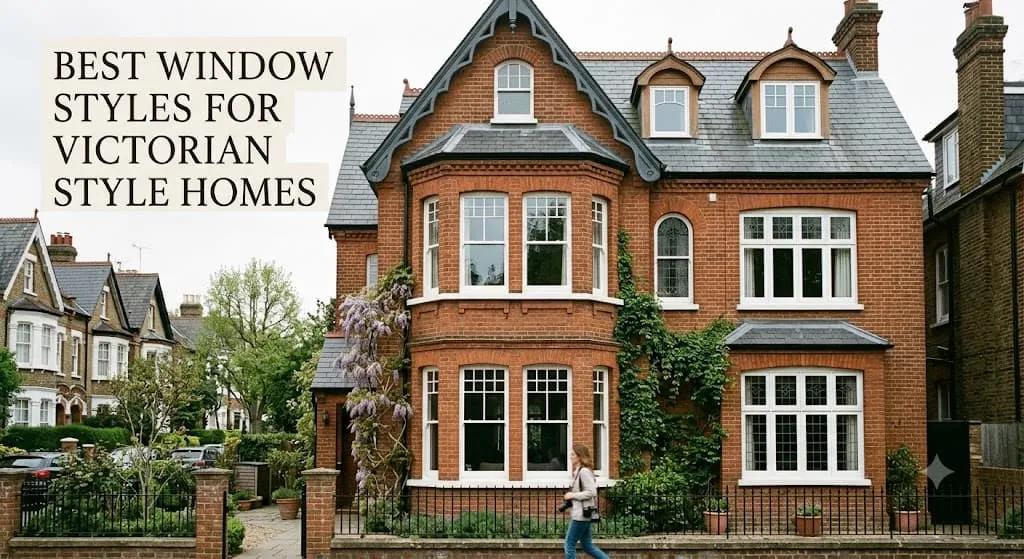
The best window styles for Victorian-style homes are double-hung, bay, bow, casement, picture, and arched windows, each with decorative grilles that match the era’s detailed look.
Older homes here have real charm. Sadly, they also come with drafts, high heating bills, and windows that stick shut. You likely want to keep the character and still fix the cold.
The good news is that the right style does both. It protects your home’s look and keeps it warm through our long winters. Read on to find the right match for your home.
What Makes Victorian Style Windows Unique?
Victorian windows stand out for their tall, narrow shape, decorative glass, and ornate grille patterns. These features reflect the craftsmanship and bold design of the late 1800s.
Here are the details that define the look:
- Tall, narrow proportions: Victorian windows rise tall and slim. This shape matches the sharp, high rooflines and tall ceilings of the period. It also makes a room feel taller and brighter. That tall look is one of the first things people notice on these homes.
- Two-over-two sashes: Most Victorian sash windows use a two-over-two design. That means two panes sit on top, and two sit below. By the late 1800s, glass was easier to make in bigger sheets. So larger panes replaced the small grids of earlier decades.
- Decorative grilles and muntins: Thin bars called muntins split the glass into a pattern. On many double-hung units, these bars sit only in the top sash. This small detail adds an instant old-home look. It is also one of the easiest ways to keep that period feel.
- Stained and art glass: Coloured glass was a common Victorian touch. You often see it above the door, in the top sash, or beside the entry. It adds warm, coloured light to a hallway or stairwell. Even a small panel can make an entryway feel special.
- Arched and half-round tops: Many Victorian homes include arched or half-round windows. These often sit at the top of towers, gables, and front rooms. The curved top softens the roofline. It also gives the front of the home a finished, pretty look.
- Ornate trim and woodwork: Deep frames and carved trim surround each opening. This detailing ties the windows to the rest of the home’s style. It also shows real craftsmanship. That is one reason buyers still pay more for these features today.
Best Window Styles for Victorian Style Homes
The best window styles for Victorian homes are double-hung, bay, bow, and casement windows, plus picture, awning, arched, and custom-shaped units. Each one supports the tall, ornate look of the era.
Double-Hung Windows
A double-hung window has two sashes that both slide up and down. It is the classic Victorian style, and you often see two or three side by side. Both sashes also tilt inward, which makes cleaning simple.
To keep the top-sash bar pattern right for the era, our double-hung window installation team in Barrie handles the fit and finish for you.
Bay Windows
A bay window sticks out from the wall in three angled sections. Victorians liked it as a main front-room feature. As a result, it brings in plenty of daylight. It also adds a bit of usable floor space to the room. Bay units work well on tall living-room walls and angled front rooms.
Bow Windows
A bow window curves outward using four or more panels. This creates the rounded shape Victorians often used on turrets. Because of that curve, it opens up the view. It also spreads light across a wider part of the room. Bow styles pair nicely with ornate trim and stained-glass accents.
Casement Windows
A casement window hinges on the side and swings open like a door. Early Victorian homes used casements for fresh air and ventilation. They also seal tightly when closed, so they perform well against the cold.
If you want that fresh air without losing the old look, expert casement window installation is the way to go.
Arched and Specialty Windows
An arched window has a curved or half-round top. It often sits above gables, towers, and front entries on Victorian homes.
These windows are usually fixed, so they do not open. Instead, they work as a bright decorative accent. Pointed tops and diamond panes also suit older Gothic-style Victorian homes.
Picture Windows
A picture window is a large fixed pane with no moving parts. It frames the view and lets more daylight into a larger room. Victorians often placed one between two sashes that open on each side. You can also add grille bars, so it matches your home’s original pattern. Many owners choose picture window installation for larger living rooms and bright stair landings.
Awning Windows
An awning window hinges at the top and opens outward. Because of that hinge, it lets in fresh air even during light Ontario rain.
This makes it a smart choice for bathrooms and kitchens. Awnings also use the same energy-saving seals as casements. So your home stays comfortable through the seasons.
Specialty and Custom-Shaped Windows
Specialty windows come in circles, diamonds, eyebrows, and other custom shapes. Victorians placed them in towers, gables, and stair landings.
They work well in spots where a standard shape simply will not fit. A custom unit also lets you copy an original detail on a one-off opening.
Read More: Window and Door Design Trends Homeowners Are Choosing in 2026
Which Window Style Matches Your Victorian Home?
Your ideal window style depends on your home’s specific Victorian sub-type. Here is a quick guide.
| Victorian sub-type | Best-fit window styles |
| Queen Anne | Elaborate upper-sash double-hung, bay windows, stained or art glass accents |
| Italianate | Tall, narrow double-hung windows, often with arched or curved tops |
| Gothic Revival | Pointed arched windows with diamond panes and coloured glass |
| Second Empire | Tall double-hung sashes that suit the mansard roof and formal front |
| Folk Victorian | Simple double-hung windows with modest grilles and restrained trim |
| Stick Style | Double-hung units with bold trim that echoes the exterior stickwork |
Older Ontario neighbourhoods show many of these sub-types. Italianate and Gothic Revival homes are especially common across the region.
Best Window Materials for Victorian Homes
The right frame material balances period looks, durability, and Ontario-winter performance. Four options work best.
Wood Windows
Wood gives you the most true-to-period Victorian look. It also holds paint well and shapes into fine detail. The trade-off is upkeep. Wood needs repainting and sealing over time to stop rot and moisture. So it suits owners who do not mind regular maintenance.
Fiberglass Windows
Fiberglass copies the look of painted wood with far less work. It also expands and shrinks with the glass as temperatures swing from warm to cold. Because of that, the seals stay tight for longer. This makes it a strong pick for cold Ontario winters.
Vinyl Windows
Vinyl is the most budget-friendly and low-maintenance choice. Modern frames can still carry bars for a period feel. So you do not have to give up the old-home look to save money. For that reason, our energy-efficient vinyl windows are a popular pick with budget-minded owners.
Aluminum-Clad Wood Windows
Clad windows pair a real wood interior with an aluminum outer shell. So you keep the warm wood look inside your home. At the same time, the outside stands up to rain, sun, and snow. This mix suits owners who want the wood look with less outdoor upkeep.
Wood vs. Fiberglass vs. Vinyl Windows for Victorian Homes
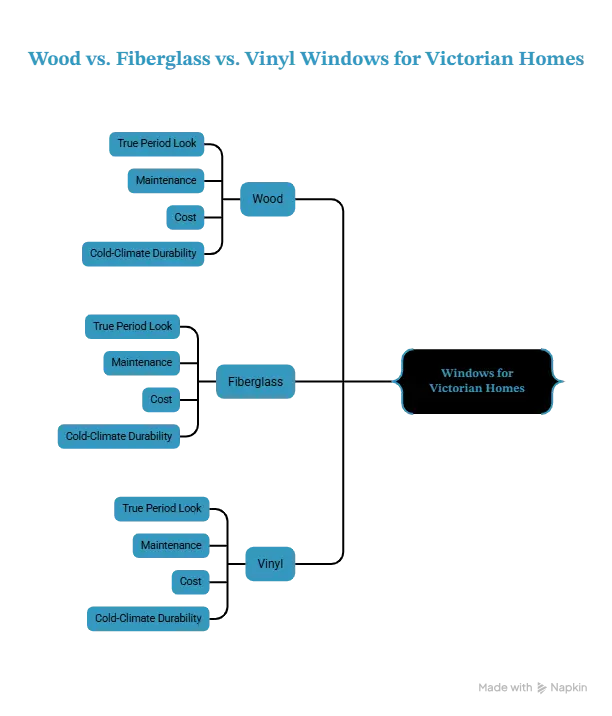
Still deciding? This side-by-side comparison makes the trade-offs clear.
| Feature | Wood | Fiberglass | Vinyl |
| True period look | Best | Very good | Good |
| Maintenance | High | Low | Lowest |
| Cost | Highest | Mid to high | Lowest |
| Cold-climate durability | Good | Excellent | Good |
| Best for | Faithful restorations | Long-term performance | Budget and low upkeep |
Read More: How to Choose Patio Doors That Withstand Ontario Weather
How to Choose the Best Windows for a Victorian Home
Choosing well means weighing looks, comfort, upkeep, and local rules together. Use these five steps.
Match Your Home’s Architectural Style
Start with your Victorian sub-type. Then pick styles and grille patterns that suit it. For example, a Queen Anne calls for ornate upper sashes. A Folk Victorian looks best with simpler, cleaner lines. In that case, single-hung window replacement gives the same traditional look for less.
Preserve Historic Character
Try to keep the original light pattern and proportions. In practice, that means matching a two-over-two as a two-over-two. Avoid swapping it for a plain square grid. These small details protect both your curb appeal and your resale value.
Balance Beauty With Energy Efficiency
Modern glass keeps the period look while stopping the draft. According to Natural Resources Canada, windows can cause up to 25% of a home’s heat loss. That is a large share for one part of the house. Low-E coatings and triple-pane glass cut that loss and keep rooms warmer. For our cold winters, our triple-pane windows are a smart upgrade.
Consider Maintenance Requirements
Think about long-term upkeep, not just install day. Wood, for instance, needs repainting every few years. Vinyl and fiberglass need very little care by comparison. So match the material to the time you can realistically give it.
Choose Windows That Meet Local Building or Heritage Guidelines: Some older homes sit inside heritage conservation districts. In those areas, a designated property may need a heritage permit before you change the windows. The Ontario Heritage Trust and your local municipality can confirm the rules before you order.
Common Mistakes to Avoid While Choosing the Best Window Styles For Victorian Style Homes
A few common mistakes can spoil the look and cost you money. Avoid these.
- Choosing flat plastic grilles trapped between the glass; they look fake up close.
- Changing the original pattern, like turning a two-over-two into a square grid.
- Picking a style that clashes with your home’s Victorian sub-type.
- Ignoring energy performance and living with drafts and high bills.
- Skipping a heritage-permit check before replacing windows on a designated home.
- Hiring on price alone; cheap quotes often hide rot repair and poor flashing.
Should You Restore or Replace Victorian Windows?
Restore when the originals are still solid. Replace them when they are rotten, drafty, or already swapped for cheap units. Either path can protect your home’s character, so the choice really depends on condition.
Original windows made from old, dense wood can last for decades with good care. Weatherstripping and storm windows also make them more comfortable in winter. However, some windows are painted shut, rotted, or simply worn out.
In those cases, restoration rarely pays off. Period-accurate replacements are the better move, because they fix comfort and cleaning at the same time. To help with that, our professional window replacement services in Barrie match the original style while adding modern efficiency.
Read More: Best Window Styles for Maximum Insulation in Ontario Homes
Victorian Window Experts Across Barrie & Beyond
Finding the best window styles for Victorian-style homes comes down to matching your sub-type, material, and glass to your goals. Start with the style that fits the front of your home.
Then choose efficient glass for our winters. For a true period look across Barrie, Oshawa, Hamilton, Kitchener, and Sudbury, book a free in-home window installation consultation with our team. We bring the samples to you.
Frequently Asked Questions
Are single-hung windows a good fit for Victorian homes?
Yes. Single-hung windows give the same traditional look for less money. They suit Folk Victorian and simpler home fronts well.
Do new windows stop condensation and ice on old glass?
Largely, yes. Low-E, triple-pane windows keep the interior glass warmer. Warmer glass sharply reduces winter condensation and interior ice.
Can I get energy-efficient windows without losing the historic look?
Yes. ENERGY STAR triple-pane windows come with period-style grilles. You keep the character and gain warmth and lower bills.
Do I need approval to replace windows on a heritage home in Ontario?
Sometimes. Designated heritage properties often need a permit first. Always check with your municipality before you start.
Are there rebates for replacing windows in Ontario?
Yes. Ontario’s Home Renovation Savings Program offers about $100 per ENERGY STAR window. It runs through late 2026.
Written by Alex Soroka, Senior Project Manager.