

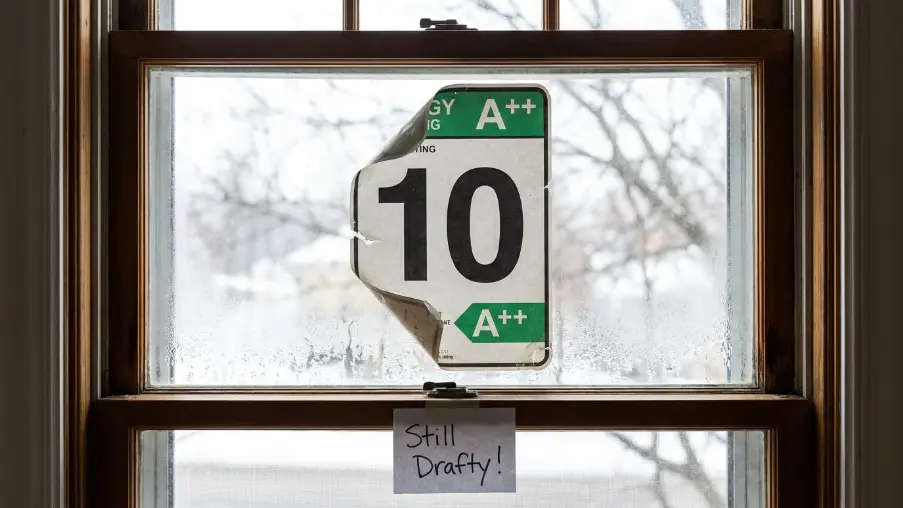
 When most homeowners start shopping for energy efficient windows in Southern Ontario, they look for one thing first: the Energy Rating, or ER. It seems simple enough. If one window has an ER of 34 and another sits at 24, the choice looks obvious. Higher must be better, right?
That is where many homeowners get a costly surprise. The truth is that the Energy Rating tells an important part of the story, but not the whole story. So before you commit to a window replacement, it helps to understand how that sticker actually works.
Get it right, and you could save yourself years of discomfort and thousands of dollars in future cooling costs.
Why Some Windows Score a Higher Energy Rating
Canada’s window energy rating system rewards two things: lower heat loss in winter and useful solar heat entering the home. The ER score, set under the CSA A440.2 standard, blends U-factor, Solar Heat Gain Coefficient, and air leakage into one number.
That second factor trips people up. Some glass packages, such as high-solar-gain Low-E, let more of the sun’s energy through. They add free solar heat on cold, sunny winter days. Because the ER formula rewards this passive solar gain, these windows post big scores on paper. For certain north-facing rooms or heavily shaded homes, a high-scoring set of vinyl windows can be a smart, budget-friendly choice.
But a window does not know what month it is.
The Same Sun That Helps in January Also Shines in July
The exact glass that welcomes solar heat in winter does the same thing in mid-July. If your home has large south-facing or west-facing windows, that solar gain turns into a problem during an Ontario summer.
You have likely felt it yourself. One room runs noticeably warmer than the rest of the house. The space near the glass gets uncomfortable on sunny afternoons. Meanwhile, your air conditioner seems to run far more than it should.
Here is the financial reality many homeowners miss-
i) When unwanted solar heat pours in during summer, your cooling costs climb. Modern air conditioners are efficient, yet they still v work harder when heat streams through sun-exposed glass. As a result, the more heat that enters, the more your cooling system has to fight to keep you comfortable. A professional window replacement in Barrie with the right glass can ease that load for good.
ii) Over time, the industry shifted its focus toward U-factor and climate-specific performance rather than the Energy Rating alone. As building design, air conditioning use, and energy standards changed, professionals recognized a simple truth. No single number describes how a window performs in every home.
Read More: Top Reasons To Replace Windows In Ontario
U-factor vs. SHGC: The Two Window Ratings That Actually Matter
Let’s be honest. Most homeowners do not buy windows to study technical datasheets. They buy them because they want their home to feel better. They want fewer drafts, steadier temperatures, and real comfort.
This is where balanced, solar-control glass packages like Low-E 272 or the advanced Low-E 366 enter the conversation. To see why they work better in the real world, look at two core metrics on the NFRC label:
- U-factor: This is your winter shield. It measures heat loss. A lower number means the window keeps your furnace’s heat inside, which matters in our climate zone.
- SHGC (Solar Heat Gain Coefficient): This is your summer shield. It measures how much solar heat gets through. A lower number means the glass blocks the harsh afternoon heat.
Glass like Low-E 366 rejects a large share of solar heat while holding strong insulating performance. Because it blocks that heat, its ER number can look lower than a high-solar-gain window. Yet in an air-conditioned home, it delivers a more balanced, year-round result. You get less overheating, fewer wild temperature swings, and a real break for your AC. That balance is the whole point of energy-efficient windows built for our climate.
A strong U-factor depends on more than the glass tint. For instance, argon gas fill, a warm-edge spacer, and a quality insulated glass unit all push that number down. For our coldest rooms, a well-built triple-pane window takes that insulation further still. So two windows with the same ER can still perform very differently in your living room.
How the Right Windows Protect Your Floors and Furniture from UV Fading
Windows affect far more than your energy bills. Sunlight carries heat, visible light, and damaging ultraviolet radiation.
During those bright afternoon hours, the sun does more than spike the temperature. Prolonged solar exposure fades and wears hardwood flooring, furniture, fabrics, artwork, and interior finishes.
Modern Low-E coatings offer baseline UV protection. Still, a specialized solar-control Low-E glass package changes how much total solar energy passes through the glass. For homeowners with large window openings and premium interiors, that extra layer of defence earns its keep.
Read More: How to Choose the Right Window Replacement Company in Ontario
Why Energy Rating Alone Is the Wrong Way to Choose Windows

You would never buy a vehicle on its highway MPG alone. That number says nothing about how it handles, how much it hauls, or whether it can tow your equipment.
Shopping for windows by the Energy Rating alone repeats the same mistake. A complete, professional window decision weighs the full picture:
- Home orientation (which rooms face south and west?)
- Window size and total glass area
- Shade from trees or neighbouring buildings
- Your HVAC setup and personal comfort preferences
A window built for a shaded, north-facing bedroom becomes a problem on a sun-drenched, west-facing patio door. In other words, the right answer depends on the wall, not the sticker.
This is also why frame material, window style, and proper installation matter. A great pane still leaks heat through a cheap frame or a sloppy fit. A tightly sealing casement window, by contrast, compresses against its weatherstripping to cut air leakage. Pair that with durable vinyl frames and a clean install, and you seal out the drafts that ratings never capture.
Get Expert Window Advice for Your Southern Ontario Home
The honest answer is that neither window wins automatically. A high-solar-gain package is an excellent tool for specific, low-sun areas of a house. A solar-control package, by contrast, rescues rooms that bake in the afternoon. The goal is energy-efficient windows matched room by room to how your home actually lives.
We do not just sell boxes of glass. We design comfort for Southern Ontario homes across Barrie, Oshawa, Sudbury, and the GTA. Every house is different, so your windows should match.
Contact Panorama Windows & Doors today and we will send a dedicated window specialist to your home. We will study your home’s orientation, measure your sun exposure, and recommend the exact glass configuration for every room. Start with a free, no-pressure window replacement consultation.
Because at the end of the day, you do not live inside an Energy Rating formula. You live inside your home.
Written by Alex Soroka, Senior Project Manager.