


Can You Cut a Steel Door to Size? Many GTA homeowners ask this after buying a door that is slightly too tall or wide for an older opening. A steel door is not a solid slab. It is usually two thin steel skins wrapped around a reinforced frame with foam insulation inside.
When you cut it, you can expose the core, weaken the edge, and create a spot where moisture can start rusting. Small trims are sometimes possible, but there are limits, and the tools and sealing steps matter.
This guide explains what can be trimmed, what should never be cut, and when ordering the correct size or replacing the unit is the safer move for your home and budget.
How Are Steel Exterior Doors Built and Why Does Construction Matter?
Before deciding to trim or resize anything, it helps to understand how steel doors are constructed. A steel exterior door is not a solid slab of metal. It is a layered system designed to balance strength, insulation, and weather resistance.
When homeowners look at the surface, they see painted steel. Inside, the steel door’s internal structure reveals multiple components working together.
Cutting into that system affects more than just size. It can impact insulation, durability, and long-term performance, especially in the GTA, where temperature swings and moisture exposure are constant.
Below is a breakdown of the key components and why each one matters.
| Component | Purpose | What Happens If Cut |
| Steel skin | Protects against weather and impact | Exposed edges can lead to rust and corrosion |
| Wood perimeter frame | Provides structural edge support and screw anchoring | Weakens stability and reduces fastening strength |
| Polyurethane foam core | Delivers thermal insulation and rigidity | Reduces energy efficiency and structural balance |
| Reinforcement block | Strengthens the lock and handle area | Compromises security and lock performance |
The outer steel skin is thin but protective. When cut improperly, it exposes raw metal edges. In the GTA climate, where snow, humidity, and freeze-thaw cycles are common, exposed metal can corrode quickly without proper sealing.
The wood perimeter frame inside the door gives it shape and strength. It allows hinges and locks to anchor securely. Removing too much material from the edge can reduce that support.
The polyurethane foam core improves insulation performance. Damaging it reduces thermal efficiency, similar to problems seen in poorly sealed energy-efficient windows.
Finally, the reinforcement block around the lock area supports security. If structural integrity is compromised, the door becomes easier to force open.
Understanding this construction helps explain why trimming steel doors requires caution and precise limits.
Can You Cut a Steel Door To Size?
A steel door can be resized in some cases, but the safe answer depends on the door type and how much material needs to come off. Most problems start when someone tries cutting a prehung steel door while it is still in the frame, or assumes they can trim the sides the same way they would with a wood slab.
A steel exterior door is usually a thin steel skin wrapped around a perimeter frame with an insulated core. Once you cut into that perimeter frame, you can weaken the door, expose insulation, and create a rust point that gets worse in GTA freeze-thaw conditions.
If the opening is significantly off, replacement or correct sizing is often smarter than forcing a trim.
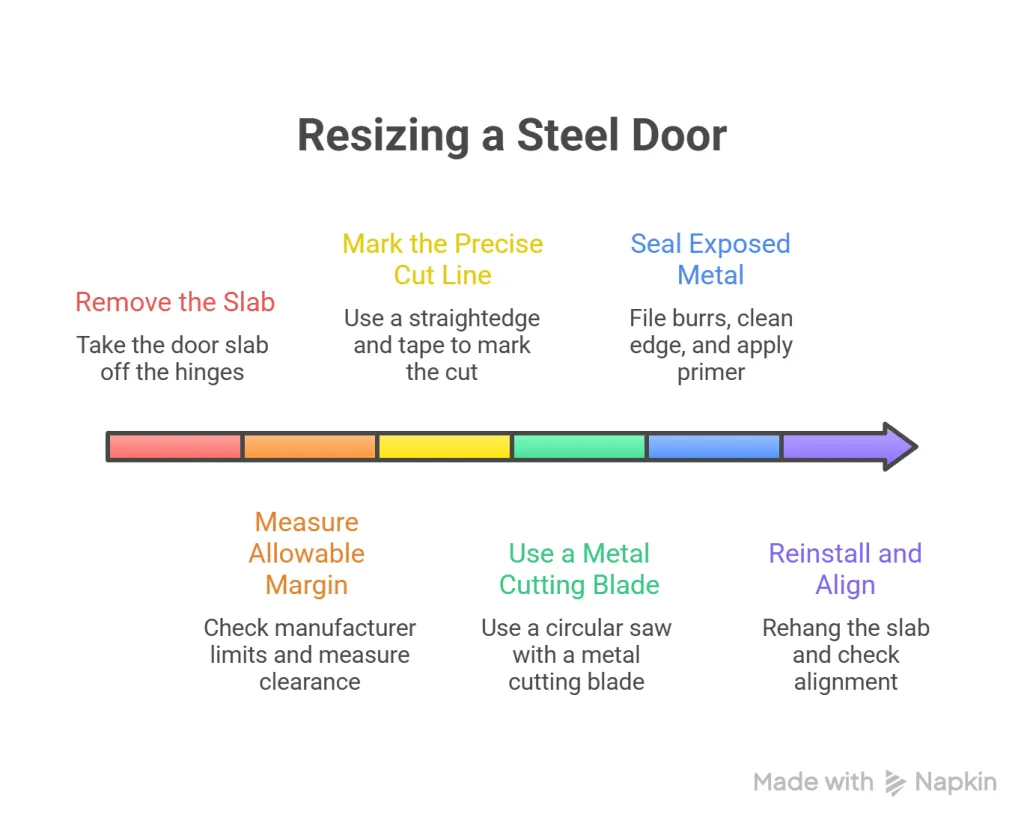
When a trim is truly minor and allowed by the door construction, this is the execution process professionals follow to resize a steel door in frame situations safely. The key is control, accuracy, and sealing.
Step 1: Remove the slab
Take the door slab off the hinges. Do not cut while it is hanging. Support the slab on sturdy sawhorses so it stays flat and does not flex. If it is a prehung unit, remove the slab first rather than trying to trim the slab and jamb together.
Step 2: Measure allowable margin
Check manufacturer limits if available. Measure how much clearance you actually need at the bottom or sides, then confirm the perimeter frame can handle that trim. Bottom trims are usually safer than side trims. Confirm threshold height and sweep clearance.
Step 3: Mark the precise cut line
Use a straightedge and painter’s tape to mark the cut. Tape helps reduce paint chipping on the steel skin. Mark from both faces of the door so the cut stays square.
Step 4: Use a metal cutting blade
Use a circular saw with a metal cutting blade designed for steel. Clamp a guide to keep the cut straight. Cut slowly to avoid overheating the metal edge. Expect sparks and sharp shavings. Safety gear is non-negotiable.
Step 5: Seal exposed metal
This is where most DIY jobs fail. File burrs, clean the edge, then apply rust-resistant primer and paint. If the foam core is exposed, it must be sealed and protected. Replace or reinstall the door sweep and confirm weather stripping coverage.
Step 6: Reinstall and align
Rehang the slab and check alignment. The door should latch smoothly without forcing. Test lock engagement, sweep contact, and weather seal compression. If the door rubs or does not seal evenly, trimming may need correction, or the frame may be out of square.
This is similar to the planning mindset behind what exactly does window replacement in Barrie involve, where the real success comes from measurement, structural checks, and finishing details, not just swapping parts. A steel door cut that is not sealed correctly often costs more later through rust, drafts, or lock issues.
How Much Can You Safely Cut Off a Steel Door Without Causing Damage?
Once you understand the internal structure and can you cut a steel door to size, the next question becomes practical: how much can you cut off a steel door without compromising strength or insulation?
The answer is not unlimited, and in many cases, it is less than homeowners expect. Steel door trimming limits the bottom and sides depend on how the door was manufactured and reinforced. Most residential steel doors allow only a small trim at the bottom, often around half an inch to one inch at most.
This area typically contains less structural reinforcement than the vertical edges. Even then, the exposed edge must be properly sealed to prevent moisture intrusion and corrosion.
Side trimming requires far more caution. The vertical edges usually contain the wood or composite perimeter frame that supports hinges and lock hardware. Removing too much material from the sides can weaken screw anchoring points and reduce overall rigidity.
In severe cases, the door can flex or lose proper latch alignment.
Unlike wood doors, steel doors are not designed for heavy reshaping along the hinge or strike side.
Fire-rated doors introduce another restriction. Cutting a fire-rated steel door can void its certification immediately. Once altered, it may no longer meet the safety standards required in certain properties. That risk alone often outweighs any benefit of resizing.
Warranty coverage is another concern. Most manufacturers clearly state that excessive trimming voids warranty protection. Even a minor modification beyond approved limits can eliminate future claims.
In the GTA climate, exposed steel edges face snow, humidity, and freeze-thaw cycles. If sealing is incomplete, rust can begin quickly, similar to long-term issues caused by unmanaged moisture around windows.
For these reasons, trimming must remain minimal and controlled. Beyond small bottom adjustments, replacing the door with the correct size is usually the safer and more durable solution.
What Problems Occur When You Cut a Steel Door Incorrectly?
Understanding the risks of cutting steel door systems improperly is critical before attempting any modification. A steel door may look rigid and durable from the outside, but once its perimeter structure is compromised, performance can decline quickly. Most cases of steel door damage after trimming are not immediate failures.
They show up months later through drafts, sticking locks, or visible corrosion. Below are the most common consequences homeowners face when a steel door is cut beyond safe limits or sealed poorly.
Exposed Insulation
When trimming cuts into the polyurethane foam core, the insulation becomes exposed to air and moisture. This reduces thermal performance and can allow internal degradation over time. In colder GTA winters, that loss of insulation becomes noticeable through drafts and heat transfer.
Edge Warping
Removing too much from the perimeter frame weakens structural balance. The steel skin may begin to flex or warp, especially with temperature changes. Warping affects latch alignment and overall door operation.
Loss of Weather Seal
The bottom sweep and side weather stripping rely on correct edge dimensions. Improper trimming can create gaps that allow air and moisture infiltration, similar to concerns homeowners raise when asking, are your windows safe, in relation to seal failure.
Rust Formation
Bare metal edges that are not primed and sealed properly become rust points. In the GTA climate, repeated exposure to snow, rain, and humidity accelerates corrosion.
Reduced Security
If reinforcement blocks near the lock area are compromised, the door becomes easier to force open. Structural trimming directly impacts security performance.
Frame Misalignment
Altering the slab without correcting the rough opening can cause uneven hinge pressure. This leads to sticking, sagging, or latch failure.
Cutting a steel door incorrectly may seem like a small adjustment, but the long-term consequences can outweigh the initial savings.
Why Professional Help Matters for Steel Door Modifications in the GTA
When a steel door does not fit correctly, the safest move is not always trimming. In many GTA homes, the real issue is not the slab size but the rough opening, frame alignment, or shifting structure around the entry. That is where professional assessment makes a measurable difference.
Panorama Windows & Doors approach steel door concerns with a structural first mindset. Instead of immediately cutting material, the team inspects the frame condition, hinge placement, threshold height, and surrounding wall alignment. In many cases, what appears to be a sizing issue is actually a framing or installation problem that can be corrected without compromising the door.
Homeowners working with Panorama Windows & Doors benefit from:
- Accurate measurement before any modification
- Evaluation of door frame stability and moisture exposure
- Guidance on manufacturer trim limits and warranty protection
- Proper sealing and rust prevention if minor trimming is approved
- Full replacement options when resizing are not safe
For older properties in the GTA, moisture damage and frame shifting are common. Panorama Windows & Doors identifies these hidden problems before installing or adjusting a door, preventing future drafts, corrosion, or security issues.
Rather than risking long term damage by cutting beyond safe limits, homeowners gain a durable solution built for Ontario’s climate. The result is proper alignment, strong insulation performance, and secure locking function.
If a steel door needs adjustment, the right solution is not guesswork. It is a precise evaluation and installation done the first time correctly.
What Tools and Safety Precautions Are Required to Cut a Steel Entry Door?
If trimming is within the manufacturer’s limits, the next step is preparation. Cutting a steel door is not the same as trimming wood. The outer steel skin is thin but strong, and improper tools can bend the metal, chip the finish, or leave jagged edges.
When homeowners search for tools to cut steel door panels or the best blade for cutting steel exterior door slabs, the focus should be on precision and safety, not speed.
Below are the essential tools and precautions required for controlled cutting.
Circular Saw with Metal Cutting Blade: A circular saw fitted with a fine-tooth metal cutting blade is the most common method for straight, controlled cuts. The blade must be rated for steel, not wood. Slow, steady pressure reduces heat buildup and edge distortion.
Angle Grinder: An angle grinder can help smooth rough edges after the main cut. It is also useful for minor trimming corrections, but it requires steady handling to avoid uneven edges.
Clamps: Heavy-duty clamps secure the door slab to sawhorses. Movement during cutting can lead to crooked lines or chipped steel.
Eye Protection and Gloves: Metal shavings and sparks are unavoidable. Protective eyewear and gloves are mandatory to prevent injury.
Rust Resistant Primer: Any exposed metal edge must be coated immediately after cutting. Primer protects against corrosion, especially in humid GTA conditions.
Edge Sealing Compound: Sealing compounds protect the foam core and restore moisture resistance along the trimmed edge.
These tools help ensure a clean cut, but preparation and sealing determine long-term durability. For more exterior upgrade guidance, homeowners often reference resources within the windows and doors blog to better understand structural impacts before modifying entry systems.
Is It Cheaper to Cut a Steel Door or Replace It in the GTA?
Cost is usually the main reason homeowners consider trimming in the first place. When comparing a custom steel door vs trimming cost, the upfront savings of cutting can look appealing. However, a realistic view of steel door replacement cost GTA projects should include risk, durability, and long-term performance.
A small mistake during trimming can lead to rust, seal failure, or misalignment that eventually requires replacement anyway. Looking at the options side by side makes the financial picture clearer.
| Option | Upfront Cost | Risk | Long Term Performance |
| Trim the existing door | Lower | Medium to High | Uncertain |
| Order a custom slab | Moderate | Low | High |
| Full replacement | Higher | Low | Maximum |
Trimming an existing steel door costs less initially because you avoid purchasing a new unit. However, the risk level rises if structural limits are exceeded or sealing is incomplete. Long-term durability becomes uncertain, especially in Ontario’s freeze-thaw climate.
Ordering a correctly sized custom slab costs more upfront but avoids structural compromise. Full replacement, including frame correction and proper installation, represents the highest investment but delivers the strongest durability and insulation performance.
This comparison is similar to how homeowners evaluate window replacement cost, where focusing only on initial price often overlooks long-term value.
In many GTA homes, replacing the correct size door proves more economical over time than repairing corrosion or security issues caused by improper trimming.
Final Thoughts
When asking can you safely resize a steel door, the honest answer is that small adjustments may be possible, but they come with clear limits. Steel doors are engineered systems, not solid metal slabs. Their internal frame, insulation core, and weather sealing all work together to provide strength and efficiency.
Cutting beyond safe margins weakens that system.
Ontario’s climate adds another layer of concern. Snow, humidity, and seasonal expansion place stress on exposed edges. Even minor sealing mistakes can lead to rust or insulation loss over time. What seems like a simple trim can turn into premature door failure.
For GTA homeowners, protecting structural integrity should always come first. If the door requires more than a minimal bottom adjustment, replacement is usually the safer path.
A properly sized steel door installed with precision maintains security, insulation, and long-term durability.
Written by Alex Soroka, Senior Project Manager.