


Moisture around windows is one of the most common issues homeowners in places like Oshawa, Barrie, Hamilton, and across Southern Ontario experience, especially during our cold winters and humid summers. We regularly get calls at Panorama Windows & Doors from Ontario homeowners about water droplets on glass or dampness around window sills, and many times, the cause isn’t the windows at all.
But before you jump to conclusions and blame your windows, it’s worth understanding that moisture doesn’t always mean there’s something wrong with your window installation in Barrie or the window unit itself.
In fact, moisture build-up often points to other issues inside your home, like excess humidity, poor ventilation, or even lifestyle habits. According to expert plumbers from Anta Plumbing in GTA, hidden plumbing leaks or inadequate ventilation can dramatically increase indoor humidity levels, often showing up as moisture around windows.
Let’s break down what really causes moisture around windows, why it spikes during certain seasons, and when it signals a window issue vs. a humidity problem inside the home.
What Causes Moisture Around Windows?
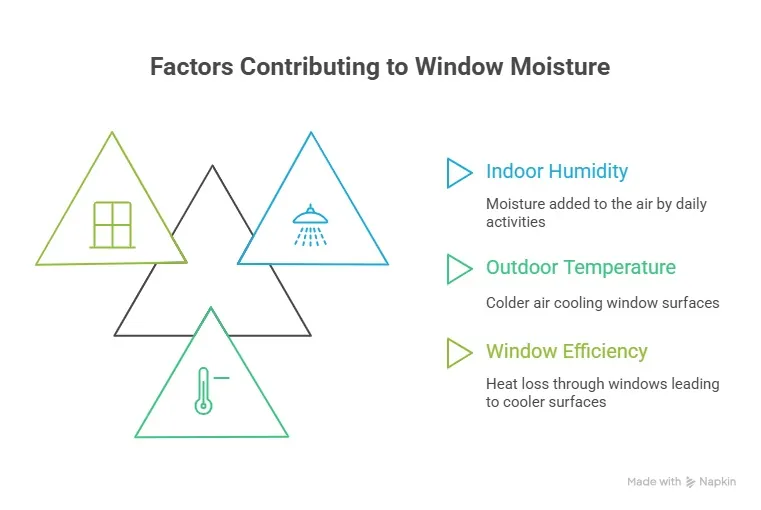
Moisture forms on your windows when warm, humid air inside your home hits the cooler surface of your glass. This results in condensation. The amount of condensation on windows depends on three main factors:
- Indoor Humidity Levels: Daily activities like cooking, showering, drying clothes, and even breathing add moisture to the air.
- Outside Temperature: Colder outdoor air makes window surfaces cooler, triggering condensation.
- Window Glass Efficiency: Single-pane or older windows lose more heat and are colder on the inside.
While condensation on the inside of windows can seem like a leak or seal failure, it’s often your home trying to release excess humidity.
Why It’s Not Always the Window’s Fault
Many homeowners assume they have a window leak or poor installation when they see water droplets forming. But here’s the reality:
- Modern energy-efficient windows like our triple-pane units are airtight. They keep heat inside and cold out, which increases the contrast in temperature between indoor air and the window surface, this encourages condensation if humidity isn’t controlled.
- Poor ventilation, especially in newer homes that are tightly sealed, traps moist air inside. Without proper airflow, moisture collects on the coldest surfaces, usually your windows.
- Indoor habits play a big role. Drying clothes indoors, using humidifiers too often, or not using exhaust fans can spike humidity levels, especially in winter.
How to Tell if the Problem is the Window or Your Home
Wondering if the moisture is from bad windows or indoor humidity? Here’s how to spot the difference, and when to call us for a local inspection.
- Condensation between the glass panes? That usually means the window seal is broken. In that case, it’s time to look at replacing your windows in Barrie.
- Only seeing moisture in bathrooms, kitchens, or laundry areas? That’s a ventilation red flag. These areas generate more humidity, so lack of airflow is often the culprit.
- Condensation showing up on several windows throughout the house? You’re likely dealing with high indoor humidity, not a window defect.
Still not sure? Our trusted team at Panorama Windows & Doors provides in-home inspections across Oshawa, Barrie, Hamilton, Oakville, and Kitchener. We’ll help you get to the root of the problem.
How to Reduce Window Moisture Without Replacing Windows

If your windows fog up often, replacement isn’t always the first fix. Start by controlling indoor humidity levels with a few simple changes:
- Turn on exhaust fans when cooking or showering. These rooms generate loads of moisture, so proper ventilation is key.
- Crack open windows daily, even just for 5-10 minutes, to help balance indoor air and prevent stale humidity.
- Run a dehumidifier, especially in closed-off areas like basements or bedrooms with limited airflow.
- Keep blinds and curtains open during the day. This allows air to move around the glass, minimizing moisture build-up.
- Unblock vents and avoid placing large furniture over heating or air return ducts.
These small adjustments can significantly cut down condensation and help create a more balanced and comfortable indoor environment. Learn more about how to choose the right windows for your climate.
When to Consider Window Replacement in Ontario
Spot window issues early. Learn the signs your windows need replacing, like drafts, foggy glass, and frame damage, that mean it’s time to upgrade to energy-efficient windows in Ontario.
Signs you need to replace your windows include:
- Condensation between panes: This usually means the seal is broken and your window’s insulation is compromised.
- Cold drafts: If you feel chilly air around your windows, even when shut, they’re likely leaking heat.
- Rotting or soft frames: Wood damage around the frame means moisture is getting in and staying there. Consider upgrading to vinyl vs wood windows.
- Persistent foggy glass: If you can’t wipe it clean, the problem is inside the window unit.
Panorama Windows & Doors helps homeowners across Ontario make the switch to energy-efficient vinyl windows. Popular styles like casement, awning, and double-slider windows offer strong insulation and help reduce future condensation issues.
Final Thoughts
Moisture around windows isn’t always the window’s fault. It’s often your home’s way of telling you the humidity is too high or that ventilation needs work. Still unsure? Let the experts at Panorama Windows & Doors take a look.
From inspection to full window replacements, we help homeowners across Ontario protect their homes from moisture, drafts, and high energy bills.
Book your free consultation today and discover why homeowners trust Panorama Windows & Doors for all their window and door needs.
People also ask
Do You Need A Permit To Replace Windows Or Doors In Ontario?
Find out if you need a building permit to replace windows or doors in Ontario. Learn the Ontario Building Code rules for like-for-like replacements, structural.
Are Your Windows Safe? What Most Homeowners Overlook About Window Security
Are your windows safe? Get secure window installation and replacement in Ontario. Upgrade locks, glass, and frames for maximum home protection.
What Should I Look for in a Window Replacement Company in Oshawa, ON?
Discover essential tips for choosing the right window replacement company in Oshawa. Get expert installation and quality service for your window and door needs!
Should I Replace Windows Before Selling My House?
Discover why replacing windows in older homes is a smart investment. Learn how new windows can boost value and enhance your home’s appeal before selling.
What Are the Benefits of Window Replacement in Hamilton
Discover the top benefits of window replacement in Hamilton, from energy savings and increased home value to enhanced security and comfort.