

Most energy efficient windows for Ontario climate are chosen incorrectly more often than homeowners realize. In cities like Toronto, Oshawa, Kitchener, Barrie, and Hamilton, many homes still rely on window styles that leak air, struggle with freeze-thaw cycles, and drive up heating and cooling costs.
This guide explains how window style directly impacts energy efficiency in Ontario. You will also get to know how to compare the real performance of different window styles and how homeowners can make smarter long-term decisions without overspending or falling for marketing claims.
Why Window Style Matters in Ontario Homes
In Ontario, window choices affect more than appearance. With long winters, strong winds, and constant heating demands, window style plays a major role in how comfortable a home feels year-round.
Many homeowners focus on glass type or energy labels, or they seek professional window replacement service in Barrie. But the way a window opens, closes, and seals often has a bigger impact on everyday comfort. In milder climates, small design flaws may go unnoticed. In Ontario homes, those same flaws show up as drafts, cold rooms, and uneven temperatures, especially during winter.
Here’s why style of window matters more in Ontario:
- Long winters make even small air leaks noticeable and costly
- Air leakage affects comfort before it affects energy ratings
- Certain window styles seal tighter against cold and wind
- Poorly sealing styles allow drafts even with good glass
- Window operation impacts how well seals stay tight over time
- Ontario homes often need stronger sealing due to age and exposure
Choosing the right window style helps maintain even indoor temperatures, reduces cold spots near windows, and makes heating systems work more efficiently without constant adjustment.
It also means fewer comfort complaints after installation and better long-term performance through changing seasons.
When homeowners understand how style of window influences sealing and airflow, they are better prepared to make informed decisions that actually suit Ontario living.
And once you start looking at how Ontario weather behaves throughout the year, it becomes clear why certain window designs struggle more than others when exposed to real winter conditions.
How Ontario Climate Exposes Inefficient Window Styles
Ontario’s weather has a way of revealing problems that might stay hidden elsewhere. Window styles that seem fine at first can start to underperform once they face a full winter cycle. This is not about extreme failures.
It is about small weaknesses becoming everyday discomfort.
- A long heating season magnifies small gaps
When heating runs for months, tiny openings around a window are no longer minor. Cold air slowly works its way inside, warm air escapes, and rooms begin to feel harder to keep comfortable, even though the system is running constantly. - Frequent temperature swings loosen weaker seals
Ontario’s regular shifts between freezing and milder days cause materials to expand and contract. Window styles with less secure closing systems can lose their tight seal over time, leading to drafts that were not there when the window was new. - Wind exposes poor sealing designs
Strong winter winds push cold air against windows. Styles that do not close firmly against the frame often allow air to pass through at the edges, making drafts more noticeable on colder or stormy days. - Older Ontario homes are less forgiving
Many homes were built before modern insulation standards. Window styles that depend on perfect alignment struggle more in these houses, where small imperfections are common.
Taken together, these conditions explain why some window styles age poorly in Ontario.
Once homeowners understand how climate pressure builds over time, the importance of choosing a style designed to handle these realities becomes much easier to see.
What Makes a Window Energy Efficient?
A window is energy efficient when it helps your home hold on to comfort instead of constantly losing it. That does not require understanding technical charts or performance labels.
It simply means the window slows down heat movement and blocks unwanted outdoor air. In Ontario, where heating and cooling work hard for much of the year, both of these functions matter equally.
You may see something called a U-factor when comparing windows. In simple terms, it shows how quickly heat can pass through the window. In Ontario’s cold climate, lower U-factor values generally mean better winter comfort.
Insulation through the glass is about controlling how quickly indoor heat escapes in winter and how much outdoor heat enters in summer.
Modern window glass is designed to act as a barrier rather than a thin sheet, helping rooms stay closer to the temperature you set. When glass performs well, spaces near windows feel more comfortable instead of noticeably colder.
Air sealing around the window is just as important. Even well-insulated glass cannot prevent drafts if air can slip through gaps in the frame or around the sash. This is where window style plays a major role.
Some designs naturally press tightly against the frame when closed, while others rely on sliding contact that allows more air movement over time.
In Ontario, these two elements work together. Good glass reduces heat transfer, and strong air sealing keeps winter winds out. Ignoring either one often leads to windows that look efficient on paper but never feel right in everyday use.
Common Window Styles Used in Ontario and How They Perform

Ontario homeowners usually choose between a few familiar window styles. While they may look similar at first glance, each one behaves very differently once exposed to cold winters, wind, and long heating seasons.
Understanding how these styles actually perform in Ontario conditions makes it easier to choose based on comfort and efficiency, not just appearance or price.
Casement Windows
Casement windows open outward using a hinge on the side, closing by pressing firmly against the frame. This closing action is important. Instead of sliding along a track, the sash compresses the weatherstripping when shut.
In Ontario’s cold and windy climate, this design helps reduce air leakage and drafts. Homes with casement windows often feel more stable in temperature near the window area, especially during winter storms. Because the seal tightens under wind pressure, performance tends to improve rather than weaken on harsher days.
Why homeowners choose casement windows
- Strong, compression-style seal that limits air leakage
- Excellent performance during windy Ontario winters
- Helps maintain even room temperatures near windows
Things to keep in mind
- Higher upfront cost compared to sliding styles
- Needs exterior clearance to open fully
Best for
- Main living areas
- Homes exposed to strong winds
- Homeowners prioritizing comfort and efficiency
Sliding Windows
Sliding windows operate by moving one sash horizontally along a track. Their popularity in Ontario comes from simplicity, affordability, and ease of use.
From a performance perspective, sliding windows rely on brushes or seals that run along the track. While this design can perform adequately, it does not create the same tight seal as compression-based styles. Over time, small amounts of air movement can become noticeable, particularly during colder months or in windy locations.
Why sliding windows are popular
- Lower initial cost
- Easy operation
- Suitable for wide window openings
Where they fall short in cold weather
- Track-based design allows more air movement
- Seals can wear over time
- Drafts are more noticeable in winter
Best for
- Budget-conscious projects
- Less exposed walls
- Secondary rooms
Awning Windows
Awning windows are hinged at the top and open outward from the bottom. When closed, the sash presses against the frame, creating a relatively secure seal.
This style of window is commonly used in basements, bathrooms, and utility spaces across Ontario. The design allows ventilation even during light rain, which is useful in rooms that need airflow without full exposure to the elements. In winter, a properly installed awning window holds its seal well and limits air infiltration.
Where awning windows perform well
- Good air sealing for their size
- Allows ventilation even during rain
- Works well in colder months when closed
Limitations to consider
- Smaller opening limits airflow
- Not ideal as a primary window style
Best for
- Basements
- Bathrooms
- Utility and laundry rooms
Fixed or Picture Windows
Fixed or picture windows do not open, which removes one of the biggest sources of air leakage in any window system. With no moving parts, the window remains permanently sealed within the frame.
In Ontario homes, this makes fixed windows highly efficient. They help maintain consistent indoor temperatures and are especially effective for large openings or areas exposed to cold winds. Rooms with fixed windows often feel more comfortable because there are fewer temperature swings near the glass.
Why are fixed windows highly efficient?
- No air leakage from the operation
- Excellent insulation performance
- Helps stabilize indoor temperatures
What to plan around
- No ventilation
- Must be paired with operable windows elsewhere
Best for
- Large window openings
- Living rooms and stairwells
- Areas where airflow is not needed
Double Hung Windows
Double hung windows feature two vertically sliding sashes and are often chosen for their traditional appearance. They are common in older Ontario homes and renovation projects where maintaining a classic look is important.
From an efficiency standpoint, double-hung windows have more potential points for air leakage due to multiple moving components and seals. While modern versions perform better than older models, they generally do not seal as tightly as compression-based styles.
Why homeowners still choose double-hung windows
- Classic appearance
- Familiar operation
- Works well in heritage-style homes
Energy efficiency trade-offs
- More potential air leakage points
- Less effective sealing than compression styles
Best for
- Older or heritage homes
- Areas with limited wind exposure
- Homeowners prioritizing aesthetics
Double-hung windows can work well in less exposed areas or heritage-style homes, but homeowners should understand the comfort trade-offs. They prioritize familiarity and aesthetics over maximum sealing performance.
Each style of window has strengths and limitations in Ontario’s climate. The right choice depends on where the window is located and how exposed it is to wind.
Plus, what matters most to the homeowner is comfort, budget, or appearance. Once these factors are clear, choosing the most suitable style becomes a practical decision rather than a confusing one.
Which Window Style Is Most Energy Efficient for Ontario Climate
When Ontario homeowners ask which style of window is the most energy efficient, they are usually looking for clarity, not marketing claims. The answer depends on how well a window style controls air leakage, how it responds to wind and temperature swings, and how consistently it performs through long winters. In Ontario, efficiency is felt before it is measured.
A window that looks good on paper but allows drafts will never feel efficient in real life.
Below is a practical way to compare window styles based on how they actually perform in Ontario homes, not how they are marketed.
Comparison of common window styles in Ontario climate
| Window style | Air sealing strength | Draft resistance | Winter performance | Overall efficiency |
| Casement | Very strong | Excellent | Consistent and reliable | High |
| Fixed / Picture | Airtight | Excellent | Highest possible | Very high |
| Awning | Strong | Very good | Reliable in smaller openings | High |
| Double hung | Moderate | Fair | Acceptable with trade-offs | Medium |
| Sliding | Weak to moderate | Low | Most affected by wind | Low |
This comparison is not about luxury or price. It reflects how each style behaves once winter sets in, when heating runs constantly and wind pressure exposes weak seals.
Over time, these differences become noticeable in comfort, draft control, and how evenly rooms hold temperature.
Homes with tighter-sealing styles tend to feel more stable, especially near windows. Rooms stay usable during cold spells instead of feeling like cold zones. This is why homeowners who upgrade from poorly sealing styles often notice immediate comfort improvements, even before seeing changes in energy use.
Why casement windows often perform best in Ontario
Casement windows consistently rank high because of how they close. When shut, the sash presses firmly against the frame, creating a compression seal.
This seal becomes tighter under wind pressure rather than looser, which is especially important during Ontario winters.
In real homes, this translates into fewer drafts, warmer window-adjacent spaces, and more even indoor temperatures. Over long heating seasons, these benefits add up.
Casement windows are commonly recommended for exposed walls, main living areas, and rooms where comfort matters more than saving a small amount upfront.
Where fixed windows outperform everything else
Fixed or picture windows remove the most common cause of air leakage: operation. With no moving parts, hinges, or tracks, they remain sealed year-round.
In Ontario homes, fixed windows offer the highest energy efficiency available, particularly for large openings or wind-facing walls. They help stabilize indoor temperatures and eliminate draft concerns entirely in those areas.
Their limitation is ventilation, which is why they are best paired with operable window styles elsewhere in the room.
This is why a room-by-room approach is recommended in guides like how to choose the right windows.
When sliding windows are acceptable in Ontario homes
Sliding windows are not inherently poor products, but they are the least efficient style in harsh climates. Their track-based design makes it difficult to achieve the same level of air sealing as compression-style windows.
That said, sliding windows can still make sense in certain situations:
- Budget-driven projects
- Walls with minimal wind exposure
- Secondary rooms where occasional drafts are less noticeable
The key is understanding the trade-off. Sliding windows prioritize affordability and simplicity over maximum energy efficiency. When homeowners know this upfront, they can place them strategically and avoid disappointment later.
The most energy-efficient window style for the Ontario climate is not about choosing the most expensive option. It is about choosing a style that seals tightly, handles wind pressure, and performs consistently through long winters, conditions that Ontario homes face every year.
Energy Performance Benchmarks for Ontario Homes
To understand why certain window styles outperform others in Ontario, it helps to look at a few real performance benchmarks used across Canada. These benchmarks are not marketing claims. They are based on how windows are tested and evaluated for cold-climate performance, including data referenced by Natural Resources Canada.
Ontario sits in one of Canada’s most heating-dominant climate zones, which means window performance during winter has a much larger impact on comfort and energy use than in milder regions.
Typical air leakage ranges in residential windows
Air leakage measures how much outdoor air can pass through a window under pressure. According to Natural Resources Canada guidance, well-performing residential windows fall into lower air leakage classifications, while poorly sealing designs allow significantly more air movement.
In practical terms:
- Tighter-sealing window styles consistently fall into lower air leakage ranges
- Track-based sliding designs tend to allow more air movement
- Even small differences become noticeable during long Ontario winters
This is why window style and sealing method play such a large role in real-world comfort, often more than glass alone.
Double pane vs triple pane performance in cold climates
Natural Resources Canada data shows that triple-pane windows provide better insulation than standard double-pane units, particularly in colder regions.
In Ontario conditions:
- Double pane windows reduce heat loss compared to older single-pane windows
- Triple pane windows further slow heat transfer and improve interior surface warmth
- The performance gap becomes more meaningful during extended cold periods
However, these gains are fully realized only when the window style itself seals well. Triple-pane glass in a poorly sealing frame will not perform as intended.
Heating loss and comfort impact over long winters
Heat loss through windows is not just about energy bills. It directly affects how rooms feel. Windows that allow air infiltration or rapid heat transfer often create cold zones near the glass, forcing heating systems to work harder to maintain comfort.
NRCan consistently emphasizes that:
- Reducing air leakage lowers heat loss more effectively than glass upgrades alone
- Windows designed for cold climates deliver more stable indoor temperatures
- Properly matched window styles and glazing reduce overall heating demand
For Ontario homeowners, this explains why some window replacements feel immediately more comfortable, while others look efficient on paper but disappoint in daily use.
Cost vs Efficiency: Choosing the Right Window Style for Your Budget
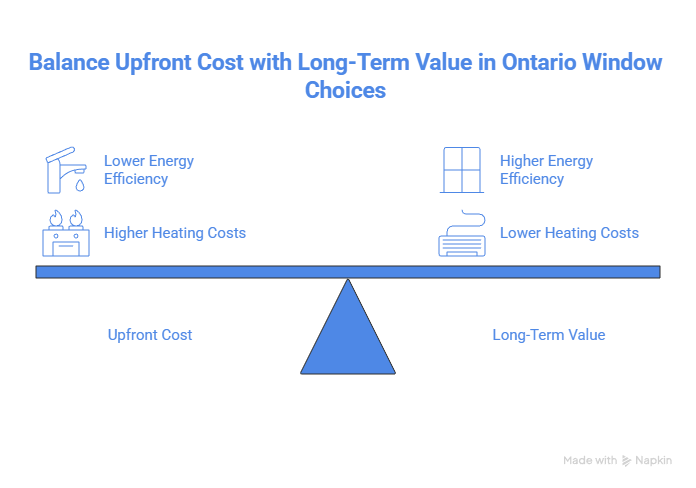
Budget is always part of the decision, but in Ontario, choosing purely on upfront cost often leads to regret.
The real question most homeowners should be asking is not which window is cheapest, but which window gives the best value over time. Cost and efficiency are closely linked, especially when winters are long, and heating systems run daily.
How common window styles compare on cost and long-term value:
| Window style | Typical upfront cost | Energy efficiency level | Long-term heating impact | Overall value in Ontario |
| Sliding windows | Lowest | Low | Higher heat loss over time | Fair for limited budgets |
| Double hung windows | Low to medium | Medium | Moderate heat loss | Fair to good |
| Awning windows | Medium | High | Lower heat loss | Good |
| Casement windows | Medium to high | Very high | Consistently lower heating demand | Excellent |
| Fixed or picture windows | Medium | Highest | Minimal heat loss | Excellent when paired correctly |
This comparison helps frame the real trade-off. Lower upfront cost often comes with higher long-term energy loss, while better sealing styles reduce heat loss year after year.
Cheapest window styles and what that really means
Sliding windows are usually the most affordable option at the time of purchase. This is why they are common in many Ontario homes, especially in older builds or budget renovations. However, their track-based design makes them more vulnerable to air leakage, particularly during windy winter conditions.
Over time, that leakage shows up as colder rooms and higher heating demand. The window itself may not fail, but comfort and efficiency are compromised sooner than with tighter-sealing styles.
Long-term heating cost impact in Ontario homes
Ontario’s extended heating season amplifies small efficiency differences. A window that leaks a little heat every day can cost significantly more to live with over ten or twenty years than a slightly more expensive window that seals well.
Homeowners often notice this most in rooms that feel harder to heat, areas near large windows, or spaces that never seem to stay comfortable during cold weather. These are usually signs that window style, not just insulation, is affecting performance.
Where spending a bit more pays off
Casement and awning windows usually cost more upfront than sliding windows, but their compression seals reduce drafts and improve comfort immediately. Over time, this can mean:
- More stable indoor temperatures
- Less strain on heating systems
- Fewer comfort complaints in winter
For many Ontario homeowners, this balance makes spending slightly more at the start a practical decision rather than an upgrade for its own sake.
Common Mistakes Homeowners Make Choosing The Best Style of Window in Most Energy Efficiency
Many Ontario homeowners replace windows once or twice in a lifetime, which makes it easy to repeat the same mistakes others have already learned the hard way. These issues rarely show up immediately, but they become obvious after the first full winter.
- Choosing the cheapest window style for highly exposed walls
Sliding windows placed on wind-facing sides of the home often lead to drafts and cold rooms. Budget styles perform best when exposure is limited, not where winter pressure is strongest.
- Assuming better glass alone will fix draft problems
Upgrading to double or triple-pane glass helps insulation, but it does not stop air leakage caused by poorly sealing window styles. This is a common reason homeowners feel disappointed after replacement.
We have explained in more detail what is window replacement is, where installation and style both matter.
- Ignoring how long they plan to stay in the home
Short-term savings often look appealing, but homeowners who stay long-term usually regret prioritizing upfront cost over comfort and efficiency. Over time, heating costs and daily comfort matter more than initial price differences.
- Using the same window style throughout the entire house
Different rooms face different exposures. A style that works in a sheltered bedroom may not perform well in a living room with large openings.
- Overlooking installation quality in favour of product features
Even an efficient window style can underperform if installation details are rushed or corners are cut. Gaps, poor insulation, and weak sealing negate product benefits.
- Replacing windows without addressing existing moisture issues
Condensation or moisture around windows often signals air leakage or insulation gaps. Replacing windows without understanding the cause can lead to repeated problems.
- Choosing window styles based only on appearance
Design matters, but performance should come first in Ontario climate. Modern styles can still be efficient, but only when the frame, sealing system, and placement support the design choice.
- Not seeking guidance from a climate-specific professional
Ontario’s weather demands different solutions than milder regions. Homeowners who rely on generic advice often miss important details that affect long-term comfort and energy performance.
Avoiding these mistakes does not require technical knowledge. Many of these issues are covered in the window replacement mistakes.
It simply requires understanding how window style, placement, and installation work together in Ontario conditions. When these factors are considered early, homeowners are far more likely to be satisfied long after the project is complete.
How Ontario Homeowners Choose the Right Window Style
Ontario homeowners who make the right window choice usually follow a practical decision path rather than chasing trends or sales claims. Instead of asking which window is “best,” they focus on how their home behaves during winter, where discomfort appears, and which rooms struggle the most.
Climate, layout, and usage all play a role, especially in a province where windows are tested for months at a time by cold, wind, and temperature swings.
The most reliable decisions are based on a few clear factors that directly influence real-world performance.
- Home construction and age influence window style selection
Older Ontario homes often have irregular openings, aging insulation, and settling that require window styles capable of sealing reliably even when conditions are less than perfect. - Wind exposure and orientation affect energy performance
Windows facing open areas or prevailing winds benefit from styles designed to resist air infiltration, while sheltered walls allow for more flexibility. - Room usage determines ventilation and comfort needs
Living spaces, bedrooms, basements, and bathrooms all demand different balances of airflow and insulation, making style choice room-specific rather than uniform. - Installation planning and professional evaluation improve outcomes
Matching window style to exposure and structure often requires local window installation in Barrieexperience rather than generic recommendations.
This is where working with an Ontario-focused window company becomes valuable. Panorama Windows & Doors approaches window selection as a performance decision, helping homeowners align style choices with climate conditions and room requirements instead of pushing a single solution.
That guidance often results in fewer compromises and better long-term comfort. Casement and fixed windows are typically the most energy efficient styles for Ontario because they create tighter seals and reduce air leakage during long heating seasons.
When window style decisions are made this way, homeowners gain confidence in their choices and avoid second-guessing once winter arrives.
Learn more about what exactly window replacement involves.
Final Verdict: Best Window Style for Ontario Climate
For Ontario homes, energy efficiency is less about labels and more about performance under pressure. Window styles that seal tightly, resist wind, and remain stable through long winters consistently deliver better comfort.
Casement windows provide the best overall balance for most homes, offering strong air sealing and reliable winter performance.
Fixed windows deliver the highest efficiency where ventilation is unnecessary, while awning windows serve specific spaces effectively. Sliding windows remain a budget-friendly option when placed carefully and expectations are clear.
The smartest choice is not universal. It is the one that fits the home’s exposure, layout, and long-term comfort goals. When homeowners understand how window styles behave in Ontario conditions, they are far more likely to make decisions they remain happy with over time.
Frequently Asked Questions
What window style keeps heat in best during Ontario winters?
Casement windows and fixed windows perform best because they limit air leakage and maintain tight seals during cold and windy conditions.
Are triple pane windows worth it in Ontario?
They can be, especially when paired with well-sealing window styles. Triple pane glass improves insulation but does not replace proper air sealing.
Which window style has the lowest air leakage?
Fixed or picture windows have the lowest air leakage. Among operable windows, casement styles generally perform the best.
What is the most affordable energy efficient window style?
Sliding windows are usually the least expensive upfront, but their efficiency depends heavily on placement and exposure.
Do window styles impact home resale value in Ontario?
Yes. Buyers often value homes with energy efficient window styles that improve comfort, reduce drafts, and lower heating concerns.
Written by Alex Soroka, Senior Project Manager.