


The difference between double and single hung windows is one of the most common questions homeowners ask when comparing window replacement in Barrie options.
At first glance, both styles look almost identical. They share the same vertical design and traditional appearance. The real differences appear in how they operate, how much ventilation they allow, how easy they are to clean, and how they perform in colder climates like Ontario.
If you are replacing old windows or choosing for a new build, understanding these differences can prevent costly mistakes. In this guide, you will see a clear side-by-side comparison of operation, airflow, energy efficiency, maintenance, cost, and resale value.
By the end, you will know exactly which option fits your home, budget, and long-term goals.
What Is a Single Hung Window?
A single hung window is a traditional window style made up of two vertically positioned sashes within one frame. While it may look similar to a double hung window, the key difference lies in movement. In this design, only one sash is operable.
The upper sash remains fixed in place, while the lower sash slides upward to allow ventilation. This simple structure makes single-hung windows a common choice in residential homes, especially in bedrooms, living rooms, and cost-conscious renovation projects.
Because of their straightforward design and fewer moving parts, they are often considered practical, durable, and budget-friendly for many homeowners.
To understand its performance better, it helps to look at how the operating system actually functions.
How Does a Single Hung Window Work?
If you are researching how single-hung windows operate, the mechanism is simple but effective. The window consists of two sashes set within a vertical frame. The upper sash is permanently fixed, while the lower sash is designed to move.
Here is how the system works in detail:
Movable Lower Sash
The bottom sash slides upward along built-in side tracks. These tracks guide the movement and keep the sash aligned within the frame.
Fixed Upper Sash
The top sash remains sealed and stationary. Because it does not move, it can contribute to a stable and secure upper section.
Vertical Sliding Mechanism
The lower sash operates through a balance system hidden inside the frame. This mechanism helps counterweight the sash, allowing it to lift smoothly and stay in place once opened.
Locking System
A latch located at the meeting rail secures the lower sash to the upper sash when closed. When locked properly, the two sashes press together to reduce air gaps.
Ventilation Function
Airflow enters through the opening created when the lower sash is raised. However, ventilation is limited to the bottom half of the window since the top sash does not move.
Seal and Insulation
Weather stripping around the sash edges helps reduce drafts. With proper installation and quality glazing, single-hung windows can offer solid insulation performance.
Maintenance and Operation
Cleaning the lower sash is easy from inside. The upper exterior glass may require outside access, depending on the model.
Because only one sash moves, the design remains mechanically simple. Fewer moving parts can mean reduced wear over time. For homeowners who want a straightforward, functional window without added complexity, the single hung design provides reliable operation and cost efficiency.
What Is a Double Hung Window?
If you’re asking what a double hung window is, it’s one of the most versatile and widely installed window styles in modern homes. At first glance, it looks similar to a single hung window because both feature two vertically stacked sashes.
The real difference lies in movement. In a double hung design, both the upper and lower sashes are operable. This added flexibility changes how the window ventilates, how it’s cleaned, and how it performs in everyday use.
Double hung windows are especially popular in residential properties because they combine traditional appearance with improved functionality. Homeowners often choose them for bedrooms, living rooms, and multi-story homes where cleaning and airflow control matter.
To see why they are preferred in many modern renovations, it helps to look closely at how they operate.
How Does a Double Hung Window Operate?
Understanding how double hung windows work starts with the sash system. Unlike single hung windows, both sashes in a double hung window move independently within the same vertical frame.
Here is how the system functions:
Two Movable Sashes
Both the upper and lower sashes slide vertically. This allows homeowners to open either section or both at the same time.
Vertical Sliding System
Each sash operates alongside tracks inside the frame. A concealed balance mechanism supports smooth movement and keeps the sash in position once opened.
Tilt In Cleaning Feature
Most modern double-hung windows include a tilt-in function. This allows both sashes to pivot inward, making it easier to clean the exterior glass from inside the home.
Airflow Flexibility
Ventilation is one of the biggest advantages. You can open the bottom sash to bring fresh air in or lower the top sash to let warm air escape. Opening both creates controlled airflow without fully exposing the entire window.
Modern Residential Use
Because of their cleaning convenience and ventilation control, double-hung windows are widely used in newer homes and renovation projects. They balance traditional design with improved practicality.
The added movement does mean more mechanical components compared to a single hung model.
However, when built with quality materials and installed properly, double hung windows provide durability, ease of maintenance, and better airflow control.
For homeowners who want flexibility without changing the classic vertical window look, double hung windows offer a practical and upgraded solution.
What Is the Difference Between Double and Single Hung Windows?
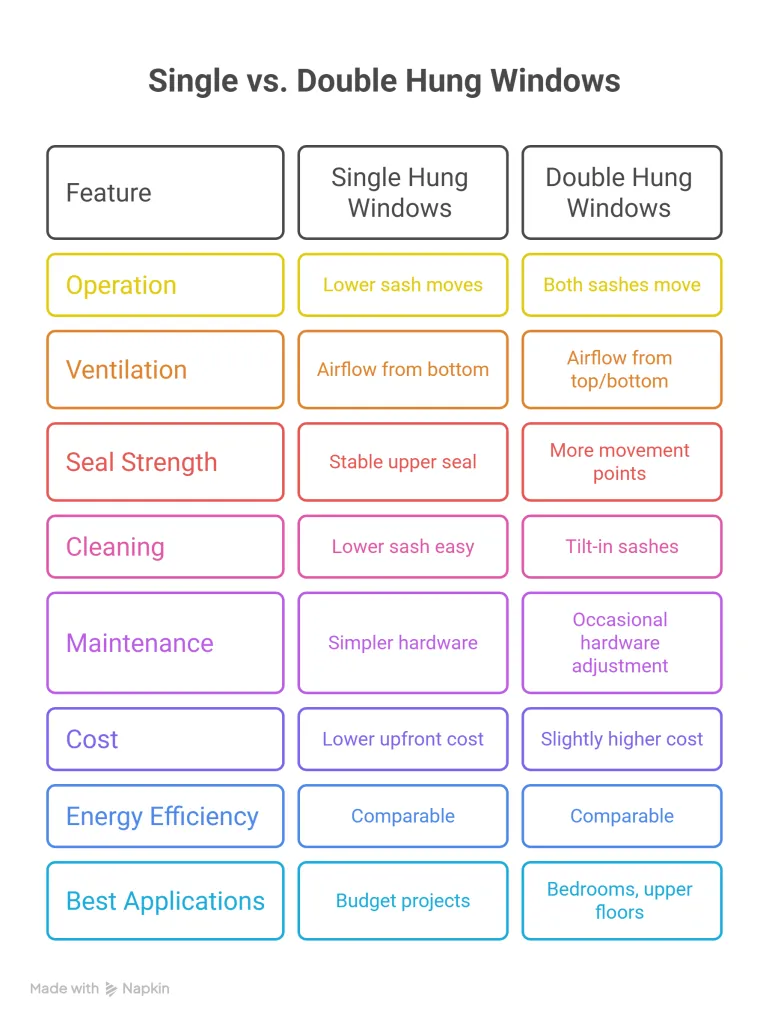
When homeowners in the GTA compare window replacement in Barrie options, the double vs single hung windows comparison becomes one of the most important decisions. At first glance, both styles look nearly identical. They share the same vertical frame design and traditional appearance.
The real distinction lies in movement, airflow control, maintenance requirements, and long-term value. Understanding the main differences between single and double hung windows helps prevent choosing the wrong style for your layout, budget, or climate needs.
Below is a clear, feature-by-feature comparison to make the differences easy to evaluate.
| Feature | Single Hung Windows | Double Hung Windows |
| Operation | Only the lower sash moves; the upper sash remains fixed. | Both upper and lower sashes move independently. |
| Ventilation | Airflow only through the bottom opening. | Flexible airflow from top, bottom, or both sashes. |
| Seal Strength | Slightly fewer moving parts may provide a stable upper seal. | Modern designs seal well, but two operable sashes mean more movement points. |
| Cleaning | Lower sash is easy to clean; upper exterior requires outside access. | Tilt in sashes allow interior cleaning of both panes. |
| Maintenance | Simpler hardware with fewer mechanical components. | More moving parts may require occasional hardware adjustment. |
| Cost | Typically, lower upfront installation cost. | Slightly higher cost due to dual operable sashes. |
| Energy Efficiency | Comparable when built with quality glazing and weather sealing. | Comparable when built with quality glazing and weather sealing. |
| Best Applications | Budget-conscious projects, traditional homes, and areas where full ventilation is not required. | Bedrooms, upper floors, and spaces where ventilation flexibility matters. |
In GTA homes, the decision often comes down to airflow control and cleaning convenience versus upfront budget. Both window types can perform well in Ontario’s climate when built with insulated frames, quality glass, and proper installation.
The difference is not about appearance. It is about function, flexibility, and how the window fits your daily living needs.
Which Windows Offer Better Ventilation and Airflow Control?
Ventilation is often the deciding factor in the airflow difference double vs single hung comparison. In many GTA homes, especially during warmer months, controlled airflow improves comfort without relying entirely on air conditioning.
While both window types allow fresh air into the home, their design directly affects how that air moves through the room. If you are searching for the best hung windows for ventilation, the difference becomes clear once you look at how each sash operates.
Here is how airflow performance compares in practical terms:
Top Down Airflow
Double hung windows allow the upper sash to slide downward while the lower sash remains closed. This creates an opening at the top, allowing warm indoor air to escape naturally. Single-hung windows cannot provide this function because the upper sash is fixed.
Cross Ventilation
With double hung windows, both sashes can open at the same time. Cool air enters from the bottom while warm air exits from the top, creating natural air circulation. Single hung windows only allow air in through the lower opening, limiting overall flow control.
Practical Room Examples
In bedrooms and living rooms, double hung windows allow flexible airflow during spring and summer. In kitchens, where heat rises quickly, the ability to vent from the top can improve air movement. Single hung windows still provide basic ventilation but are more limited in airflow adjustment.
For GTA homeowners looking to maximize natural air circulation, double hung windows offer greater flexibility. Single hung windows provide steady bottom ventilation, but they do not deliver the same level of airflow control.
Which Window Is More Energy Efficient for GTA Homes?
Energy performance matters more in the GTA than in milder climates. Winters are long, temperatures drop well below freezing, and heating costs add up quickly.
When comparing energy-efficient double vs single hung windows, the real question is not which style looks better, but which one controls heat loss more effectively.
The best hung windows for Ontario winters must handle air leakage, insulation performance, and repeated freeze and thaw cycles. Both window types can perform well when built with high-quality materials, but their design differences do affect sealing and airflow control.
Here is how they compare in key energy factors:
Seal Compression
Single hung windows have only one operable sash. Fewer moving components can slightly reduce potential air gaps. Double hung windows have two movable sashes, but modern compression seals and locking systems can create a tight closure when properly installed.
Air Leakage
Air leakage depends more on manufacturing quality and installation than sash count. Poorly installed windows of either type will draft. Professionally installed units with proper weather stripping minimize leakage in both styles.
Double and Triple Glazing
Both single and double-hung windows support double-pane and triple-pane glass. Triple glazing significantly improves insulation during Ontario winters by reducing heat transfer.
Low E Glass
Low-emissivity coatings reflect interior heat back into the home while reducing solar heat gain in summer. This feature matters far more than the sash configuration.
Argon Gas
Argon-filled glass units slow thermal movement between panes. Whether single or double hung, argon improves overall efficiency.
Cold Climate Suitability
In GTA conditions, frame material, insulation inside the sash, and proper sealing are critical. Vinyl multi-chamber frames combined with triple-pane glass perform exceptionally well in both designs.
In practical terms, energy efficiency is not determined solely by single or double sash movement. With high-performance glazing, insulated frames, and correct installation, both window types can meet the demands of Ontario winters.
The decision often comes down to ventilation preference rather than insulation capability.
Which Window Is Easier to Clean and Maintain?
Cleaning windows is rarely something homeowners think about during installation. It becomes important a year later, especially in two-story GTA homes where exterior glass is not easily reachable. When comparing cleaning double hung vs single hung windows, the difference shows up the first time you try to wipe down the outside pane from inside the house.
The biggest advantage double-hung windows have is the tilt-in-sash feature. Both the upper and lower sashes can tilt inward, allowing you to clean the exterior surface safely from inside the room.
For second-floor bedrooms or upper-level living areas, this makes a noticeable difference. No ladder. No leaning out.
No scheduling exterior cleaning.
Single-hung windows do not offer the same flexibility. The lower sash can be cleaned easily from inside, but the upper sash remains fixed. That means the outside portion of the top glass usually requires exterior access.
In a bungalow, this may not be a major issue. In a two-story home in Mississauga or Vaughan, it becomes inconvenient quickly.
There is also the question of moving parts. Double hung windows contain two balance systems and additional hardware to allow both sashes to operate smoothly. Over many years, these components may require minor adjustment. Single hung windows have fewer operable elements, which can slightly reduce mechanical wear.
From a practical standpoint, double-hung windows win in cleaning convenience. Single hung windows may have simpler hardware, but ease of maintenance over time often favors the added functionality of a double hung design, especially in multi-level GTA homes.
What Is the Cost Difference Between Single and Double Hung Windows?
For many homeowners, the decision between single and double-hung windows becomes financial before it becomes technical. When reviewing single vs double hung window cost, the difference is usually noticeable but not dramatic.
A proper window replacement cost comparison Ontario homeowners should consider should look beyond sticker price and examine the total project impact.
Let’s break this down clearly.
Price Tiers
Single hung windows typically fall into the lower price tier. Because only one sash operates, the manufacturing process is simpler. There are fewer balance systems, fewer moving components, and slightly less hardware involved.
Double hung windows sit one tier higher. Both sashes move. That means two balance mechanisms, additional locking systems, and more precision during assembly. On average, double hung units may cost 10 to 20 percent more per window, depending on frame material and glazing.
However, glass upgrades often influence pricing more than sash style. Triple pane glass, Low E coatings, and argon gas fills will increase cost regardless of single or double configuration.
Installation Complexity
Installation labor is generally similar for both styles, but calibration matters more with double-hung windows. Both sashes must align correctly to seal properly. Improper leveling can lead to air gaps or operational stiffness.
In larger GTA replacement projects, that slight difference can add up across 15 to 20 windows. The unit cost difference multiplies quickly.
Maintenance and Repair Costs
Single-hung windows have fewer mechanical parts. Over time, this can mean fewer hardware adjustments. Double hung windows contain additional balance systems and tilt mechanisms, which may eventually require servicing. That does not mean they fail frequently, but there are simply more components involved.
Long Term Value
This is where the conversation shifts.
Double hung windows often hold stronger resale appeal because buyers prefer the cleaning convenience and ventilation flexibility. In multi-story homes in places like Brampton or Markham, tilt-in sashes are seen as a practical advantage.
Single hung windows may save money upfront, but double hung windows can offer functional value over decades of use.
Energy Efficiency Impact
When built with identical glazing and frame quality, energy performance is similar. The real cost savings over time come from insulation quality, not sash count. Investing in triple-pane glass will impact heating bills more than choosing single or double hung.
So, Which Should You Choose for Your GTA Home?
In simple terms, single-hung windows cost less at the beginning. Double hung windows cost slightly more but offer added functionality. The gap is not extreme, but it becomes meaningful in full home replacements.
The better investment depends on your budget, how long you plan to stay in the home, and how much daily convenience matters to you.
At the end of the day, the question is not simply which is better, single or double hung windows. It is the option that fits your home, your lifestyle, and Ontario’s climate. Single-hung windows offer simplicity and a lower upfront cost.
Double hung windows provide greater ventilation flexibility and easier cleaning, especially in multi-level homes. Both can perform well in GTA conditions when built with quality materials and installed correctly.
What truly determines long-term performance is not just the sash design. It is the precision of installation, the insulation around the frame, and the overall build quality. Even the most energy-efficient window can draft or shift if it is not anchored and sealed properly.
This is where Panorama Windows & Doors stands apart.
Instead of pushing one style over another, Panorama Windows & Doors evaluates your home’s structure, layout, and exposure to recommend the right solution. Every installation is handled with detailed measurement, frame inspection, proper insulation, and careful sash alignment to ensure smooth operation and airtight performance.
Many older homes across the GTA have hidden framing issues or outdated window openings that require correction before new units are installed. Panorama Windows & Doors addresses these structural details first, preventing future air leakage and operational problems.
If you are replacing windows in your GTA home, the better choice is not just single or double hung. The better choice is a professionally selected and installed system designed for long-term durability. With the right guidance and precise installation, either style can perform exceptionally well.
The difference comes from the team behind the work.
Written by Alex Soroka, Senior Project Manager.