

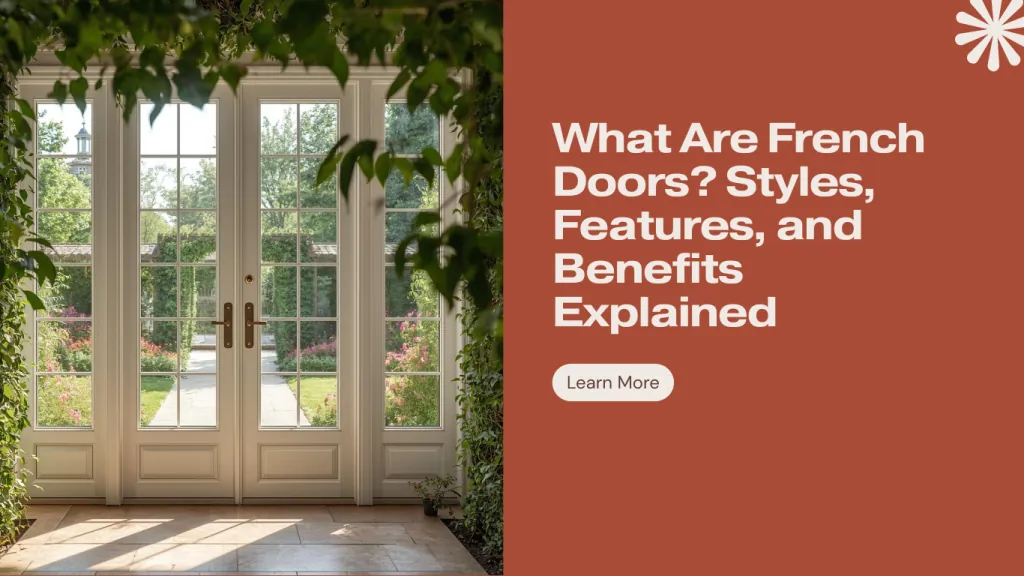
What Are French Doors? They are hinged double doors with large glass panels that create a wide, elegant opening between indoor and outdoor spaces. Many GTA homeowners consider them when upgrading patios, decks, or backyard access.
French doors are known for increasing natural light, improving ventilation, and adding architectural balance to a home’s exterior. However, choosing the right style, material, and locking system matters for energy efficiency and security in Ontario’s climate.
In this guide, you will learn how French doors work, the different styles available, the key structural features to look for, their benefits and limitations, and how professional installation ensures long-term durability and performance for modern residential properties.
What Are French Doors?
French doors are a pair of hinged doors designed with large glass panels that extend through most of the surface area. Instead of sliding along a track, they swing open from the center, creating a wide and symmetrical opening.
When homeowners ask what are French doors used for, the answer typically includes patio access, backyard entry, balcony transitions, and even interior room separation where natural light is desired.
Structurally, French doors operate as a double-hinged system. One panel acts as the active door, meaning it opens first and contains the primary handle and locking mechanism. The second panel is the passive door, secured with internal bolts at the top and bottom and opened only when a wider clearance is needed.
This configuration allows flexibility while maintaining structural stability.
The defining characteristic is the glass panel structure. Modern units use tempered or laminated glass, often insulated with double or triple glazing to improve thermal performance.
While traditionally associated with exterior patio openings, French doors are also installed inside homes to divide dining rooms, offices, or living spaces without blocking light. For a broader context on exterior upgrades and related systems, many homeowners consult the windows and doors blog before deciding.
How Do French Doors Work?
To understand how exterior French doors work, it helps to break the system down into mechanical stages. French doors are not just two slabs meeting in the middle. They rely on coordinated hardware, frame anchoring, and compression sealing to function properly, especially in exterior patio installations across the GTA.
Here is how the working process unfolds:
1. Active Panel Operation
The active door panel contains the main handle and locking mechanism. When the handle is turned, it retracts the latch or disengages the multi-point locking system. This allows the primary panel to swing open on heavy-duty hinges.
2. Passive Panel Securing System
The second panel remains fixed in place using flush bolts installed at the top and bottom. These bolts anchor into the head jamb and threshold. When released, the passive panel can also swing open, creating a full-width opening.
3. Multi-Point Lock Engagement
When closed, many modern exterior units use a multi-point locking system. Turning the handle engages locking hooks or bolts at multiple anchor points along the frame. This distributes pressure evenly and improves both security and seal compression.
4. Center Astragal Seal
Where the two panels meet, a vertical astragal system creates a tight seam. This prevents air leakage and reinforces the meeting point between both doors.
5. Threshold Compression
At the base, the door sweep compresses against the threshold. This blocks moisture intrusion and drafts, which is critical in Ontario winters.
6. Frame Anchoring and Alignment
All movement depends on precise installation. Hinges are secured into reinforced framing, and the entire system must remain square for smooth operation.
When installed correctly, French doors provide wide access, controlled ventilation, reliable locking, and consistent sealing performance.
After all components are aligned and sealed correctly, French doors operate smoothly while maintaining insulation and security. You must ensure proper measurement and professional installation, because even a small alignment error can affect performance for years to come.
What Are the Different Types of French Doors?
French doors are available in a wide range of configurations, materials, and design styles. While they all share the classic double-hinged layout with glass panels, the construction details, performance level, and visual appeal can vary significantly.
Choosing the right type depends on placement, climate exposure, privacy needs, and architectural style.
Below are ten common types of French doors used in residential properties.
1. Traditional Divided Lite French Doors
These features have multiple small glass panes separated by grilles or muntins. They offer a classic, timeless appearance and work well in traditional or colonial-style homes.
2. Full Glass Panel French Doors
Designed with large uninterrupted glass sections, these create a modern, clean look and maximize natural light. Ideal for backyard or patio installations.
3. Steel French Doors
Built with reinforced steel frames and insulated cores, these provide enhanced durability and security. They are well-suited for exterior use in harsh climates.
4. Fiberglass French Doors
Fiberglass models resist warping, moisture damage, and temperature changes. They are energy efficient and low maintenance, making them popular in Ontario homes.
5. Wood French Doors
Known for natural beauty and warmth, wood French doors offer a strong aesthetic appeal. However, they require regular maintenance to prevent moisture damage.
6. Aluminum French Doors
Lightweight and corrosion-resistant, aluminum frames are slim and modern. They are commonly used in contemporary designs with large glass areas.
7. Sliding French Style Doors
These mimic the look of French doors but operate on a sliding track. They save space while maintaining the visual symmetry of traditional hinged units.
8. Interior French Doors
Installed between rooms, these doors allow light to pass through while creating separation. They are often used for home offices, dining rooms, or sunrooms.
9. Exterior Patio French Doors
Specifically engineered for outdoor exposure, these include weather stripping, insulated glass, reinforced thresholds, and secure locking systems.
10. Custom French Doors
Custom units allow homeowners to select unique glass patterns, hardware finishes, frame colors, and sizing to match architectural preferences.
Each type serves a different purpose. The best choice depends on structural requirements, energy performance expectations, and the overall design direction of the home.
Before selecting a style, it is important to consider insulation ratings, locking systems, and long-term maintenance needs. A well-chosen French door enhances appearance and also improves comfort, durability, and overall property value.
What are the Differences Between French Doors and Double Doors?
Many homeowners assume French doors and double doors are the same thing. While they share a similar two-panel layout, they are not identical in structure, design intent, or application. The confusion usually comes from appearance.
Both consist of two hinged panels that meet in the center. The real difference lies in glass proportion, architectural purpose, and performance features.
French doors are traditionally defined by their large glass surface area. Double doors, on the other hand, describe a configuration rather than a style. A double door system simply means two hinged panels installed within one frame. Those panels may be solid, partially glazed, decorative, or fully glazed.
Below is a detailed comparison to clarify the distinctions.
| Feature
|
French Doors | Double Doors |
| Definition
|
A pair of hinged doors primarily made of glass panels | Any two hinged doors installed together in one frame |
| Primary Material Focus
|
Glass is dominant with narrow frames | Can be solid wood, steel, fiberglass, or partially glazed |
| Glass Coverage
|
Large continuous glass surface, often divided by grilles | May have small glass inserts or none at all |
| Purpose
|
Maximize light and create indoor outdoor flow | Provide a grand entry or wider access opening |
| Common Location
|
Patio, backyard, balcony, interior room divider | Front entrance, formal entryways, commercial access |
| Light Transmission
|
High natural light penetration | Low to moderate, depending on design |
| Ventilation
|
Both panels can open for wide airflow | Both panels can open, but airflow is not the design priority |
| Security Hardware
|
Often includes multi point locking system | Usually, a single or double deadbolt system |
| Energy Efficiency
|
Relies heavily on insulated glass performance | Depends on the door core and insulation material |
| Design Style
|
Symmetrical, glass-centered, elegant appearance | Can be traditional, modern, solid, decorative, or minimalist |
| Exterior View
|
Creates visual transparency | May create a solid, more private façade |
| Interior Application
|
Often used to divide rooms while maintaining light | Less common indoors unless decorative |
| Weight Distribution
|
Glass increases panel weight, requires reinforced hinges | Weight depends on the core material |
| Privacy Level
|
Lower unless frosted or textured glass is used | Higher if solid construction |
| Installation Complexity
|
Requires precise alignment for glass and seals | Depends on the material and locking configuration |
| Typical Cost Range
|
Moderate to high due to glazing | Varies widely based on material and finish |
In simple terms, all French doors are double doors, but not all double doors are French doors.
French doors prioritize visibility, natural light, and connection between spaces. Double doors prioritize width and presence, especially at main entrances. For patios and backyard transitions in GTA homes, French doors are often preferred because they brighten interiors and create a smooth flow.
For front entries requiring privacy and impact resistance, solid double doors may be more appropriate.
Understanding this distinction helps homeowners choose based on function, not just appearance.
As we know what are French doors now, let’s learn about some of their styles.
What Styles of Patio French Doors Are Available for GTA Homes?
When exploring the types of French door styles available today, it becomes clear that these glass patio doors are no longer limited to one traditional look. Homeowners across the GTA now choose from a range of materials, panel configurations, and swing directions depending on layout and climate exposure.
From classic divided glass designs to sleek contemporary models, modern exterior French doors for GTA properties are built for both style and performance.
Below are the most common style options to consider:
Traditional Divided Lite Design: Features multiple smaller glass panes separated by grilles. This style complements colonial, heritage, and classic brick homes.
Full Glass Panel Doors: Large uninterrupted glass sections provide maximum daylight and a clean, modern appearance. Ideal for backyard and deck access.
Steel Frame French Doors: Reinforced steel construction improves durability and security while maintaining slim sightlines.
Fiberglass Hinged Patio Doors: Fiberglass resists warping and moisture damage, making it suitable for Ontario’s seasonal temperature changes.
Solid Wood French Doors: Offer warmth and natural texture. Best suited for covered exterior spaces or interior transitions due to maintenance needs.
Inswing vs Outswing Configuration: Inswing doors open inward, common in residential applications. Outswing doors save interior space and may improve weather sealing depending on installation.
Selecting the right configuration should align with your wall opening, patio layout, and overall architectural direction. For homeowners comparing exterior upgrades with other fenestration options, reviewing types of windows can also help create a balanced and cohesive design across the home.
What Features Define Modern Exterior French Doors?
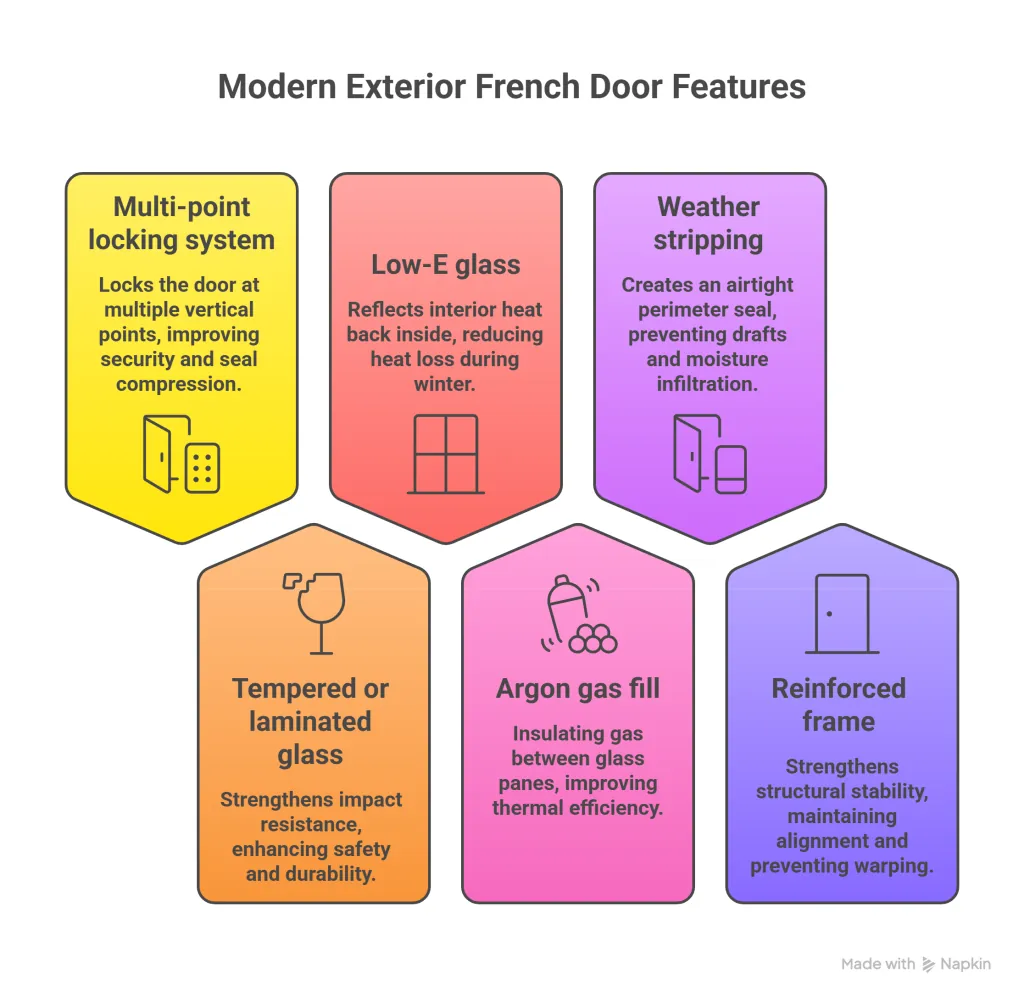
Today’s exterior hinged patio systems are engineered for far more than appearance. When reviewing French door features and components, homeowners should look beyond the glass layout and focus on structural strength, sealing performance, and hardware quality.
High-performance units are designed to handle seasonal expansion, moisture exposure, and daily operation without losing alignment. For energy-efficient French doors Ontario homes require insulation, and locking technology plays a critical role.
Below is a breakdown of the essential features that define modern exterior models:
| Feature
|
Function | Why It Matters in GTA Climate |
| Multi-point locking system
|
Locks the door at multiple vertical points | Improves security and increases seal compression |
| Tempered or laminated glass
|
Strengthens impact resistance | Enhances safety and durability |
| Low-E glass
|
Reflects interior heat back inside | Reduces heat loss during winter |
| Argon gas fill
|
Insulating gas between glass panes | Improves thermal efficiency |
| Weather stripping
|
Creates an airtight perimeter seal | Prevents drafts and moisture infiltration |
| Reinforced frame
|
Strengthens structural stability | Maintains alignment and prevents warping |
The combination of Low E coatings and argon-filled glazing significantly improves thermal control, similar to performance standards found in modern energy-efficient windows. Reinforced frames and multi-point locks also ensure the system remains secure and stable through Ontario’s freeze-thaw cycles.
When evaluating exterior patio doors, these components determine long-term durability more than visual design alone.
What Are the Main Benefits of Installing French Doors?
Understanding the benefits of French doors for homes helps clarify why they remain a popular upgrade across the GTA. These hinged glass doors do more than provide backyard access. They reshape how interior spaces feel and function.
For homeowners asking why install French patio doors, the answer often begins with light and ends with long-term value.
Large glass panels dramatically increase natural daylight inside living areas. Rooms feel brighter, more open, and visually connected to outdoor spaces. This expanded light exposure can make smaller rooms appear larger and more inviting.
French doors also enhance indoor-outdoor flow. When both panels are opened, the wide, clear span creates an easy transition to patios and decks. During warmer months, this design improves cross ventilation and allows fresh air to circulate more effectively than many sliding systems.
From a design standpoint, symmetrical glass doors improve curb appeal. They add architectural balance and a refined appearance that can enhance property perception. Similar to the benefits of installing a new front door, upgrading to well-designed patio doors improves exterior aesthetics and buyer appeal.
In resale terms, buyers often associate French doors with higher-end finishes. The combination of natural light, improved airflow, and visual elegance contributes to perceived luxury while still delivering functional performance.
Find Out: Are French Doors Secure for Ontario Homes in the GTA Or Not?
Are French Doors Energy Efficient for Ontario Winters?
So, you now know what are French doors and all the basic information around them.
But, yet you need to know that energy performance is one of the biggest concerns for homeowners researching French doors’ energy efficiency in Ontario standards. Large glass areas naturally raise questions about heat loss, especially during long winters in the GTA.
The good news is that modern systems are built with insulated glazing and reinforced frames that significantly reduce thermal transfer when properly selected and installed.
Double glazing is common, but triple glazing offers stronger insulation in colder regions. Triple pane units include an additional sealed air space, improving resistance to heat loss and outside noise.
Many homeowners reviewing the benefits of triple pane windows quickly realize the same glazing principles apply to patio doors. The more advanced the glass system, the better the thermal performance.
Seal compression is another key factor. When the panels close, quality weather stripping compresses tightly along the frame and center meeting point. This reduces air leakage, which is often the main source of winter drafts. Multi-point locking systems also improve compression by pulling the panels evenly into the frame.
Frame insulation matters just as much as glass. Fiberglass and insulated steel frames resist expansion and contraction caused by Ontario’s freeze-thaw cycles. Poorly insulated frames can create cold transfer points, even if the glass is high-performance.
When engineered correctly, French doors can deliver reliable winter efficiency. The focus should always remain on glazing quality, sealing strength, and structural stability rather than appearance alone.
What Mistakes Do Homeowners Make When Choosing French Doors?
Selecting patio doors is not just about appearance. Many of the common French door buying mistakes happen because homeowners focus on style first and performance second. In Ontario’s climate, that approach can lead to drafts, security concerns, and premature wear.
Choosing the wrong French door for home layout or climate conditions often results in costly corrections later. Below are the most frequent errors and how to avoid them.
Choosing Design Over Performance
Glass patterns and frame color matter, but insulation rating, structural strength, and sealing performance matter more. A door that looks elegant but lacks proper glazing or frame reinforcement will struggle during Ontario winters.
Ignoring Insulation Rating
Not all glass units are equal. Double-pane glazing may work in milder climates, but triple-pane insulated units with Low E coatings and argon gas significantly improve efficiency in the GTA. Overlooking thermal performance can increase heating costs.
Skipping Reinforced Locks
Basic single-point locks reduce security. Multi-point locking systems distribute force along the frame and improve both safety and seal compression. Reinforced strike plates and laminated glass further strengthen protection.
Poor Rough Opening Measurement
Inaccurate measurement is one of the most expensive mistakes. A misaligned opening leads to gaps, poor compression, and water infiltration. Many issues homeowners experience mirror common window replacement mistakes, where improper sizing creates long-term problems.
DIY Installation Without Alignment
French doors require precise leveling, hinge anchoring, and threshold adjustment. Even a slight shift affects sealing and lock engagement. Improper installation reduces energy efficiency and shortens lifespan.
This is where Panorama Windows & Doors makes a measurable difference.
Through panoramawindows.ca, homeowners receive professional consultation, accurate in-home measurements, and expert installation by licensed in-house technicians.
The company specializes in high-efficiency products, including Energy Star-certified systems with triple-pane glass and advanced sealing technology designed for Ontario conditions.
Instead of risking structural errors or insulation gaps, working with Panorama Windows & Doors ensures the door is selected for your layout, climate exposure, and security expectations. From consultation to final installation, the focus remains on long-term durability and energy performance, not just appearance.
Final Thoughts
What Are French Doors ultimately comes down to more than appearance. They are functional architectural features that combine light, access, and performance in one system. For homeowners asking if French doors are worth it, the value becomes clear when quality materials and proper installation are involved.
Well-built units with insulated glazing and reinforced frames can improve thermal control and reduce energy loss during Ontario winters.
Many also wonder, do French doors increase home value?
In competitive GTA markets, upgraded patio doors enhance curb appeal and interior brightness, both of which influence buyer perception. Wide glass panels create a stronger indoor-outdoor connection and improve the overall design of the home.
Long term durability depends on structural alignment, seal compression, and professional installation. When selected carefully and installed by experienced technicians, French doors provide lasting performance, visual impact, and measurable return on investment.
For additional guidance before making a decision, reviewing the buyer’s guide on window doors can help align design goals with energy and security priorities.
Written by Alex Soroka, Senior Project Manager.