

Choosing new windows often starts with a simple question, but the answer can shape how your home feels for years. What is a single hung window is one of the most common questions homeowners ask when they begin looking at replacement options.
It may seem like a basic window style, yet there is more to it than most people expect.
The way it opens, the materials used, and the quality of the seal can all affect comfort, airflow, maintenance, and energy performance.
In Ontario, where weather conditions shift through every season, those details matter.
That’s why we have decided today to break down each detail of single hung windows, so you can understand how they work, where they fit best, and what to consider before choosing them for your home.
We may not think about windows every day, but we should be sure of what we are choosing before making a decision. Let’s now get into it.
What Is a Single Hung Window?
Have you ever noticed how some window styles stay popular year after year, even as homeowner preferences change? Single-hung windows are one of them. Industry forecasts suggest this segment could grow from about USD 13.8 billion in 2025 to nearly USD 21.5 billion by 2035.

In simple terms, that points to steady demand over the next decade, with growth of around 6.2% each year. That kind of growth usually tells us one thing: homeowners are still choosing this style for practical reasons.
So, what is a single hung window?
It is a window with two sashes inside one frame, but only one of them moves. The name can be misleading at first. “Single hung” does not describe the size of the window or the amount of glass. It describes how the window works.
In this design, only one sash opens and closes. The top sash stays fixed, and the bottom sash moves vertically. That single operable sash is where the name comes from. It is a simple term, but an important one, especially in any broader buyer’s guide windows and doors discussion.
If you have seen this style before, that is because it is common in many homes. It has a familiar look, a straightforward operating system, and a design that feels easy to live with.
Well, you will definitely learn more about this, but let’s first learn how a single-hung window works.
Also Read: What Are the Different Types of Windows? Features, Benefits & Best Uses.
How Does a Single Hung Window Work?
Have you ever lifted a window and wondered what is actually happening inside the frame while it moves?
A single hung window may look straightforward from the room side, but its operation depends on a few working parts moving in the right sequence. The upper sash stays fixed, so all of the action happens in the lower sash.
When you unlock it, that bottom section begins to travel upward within the frame rather than swinging in or out. The motion is vertical, controlled, and contained.
That is the heart of how does a single hung window works as a window style. Its design is familiar in many homes, but the way it opens and seals is more deliberate than it first appears.
Here is how the full process works inside a single hung window.
1. It starts from a fully seated position
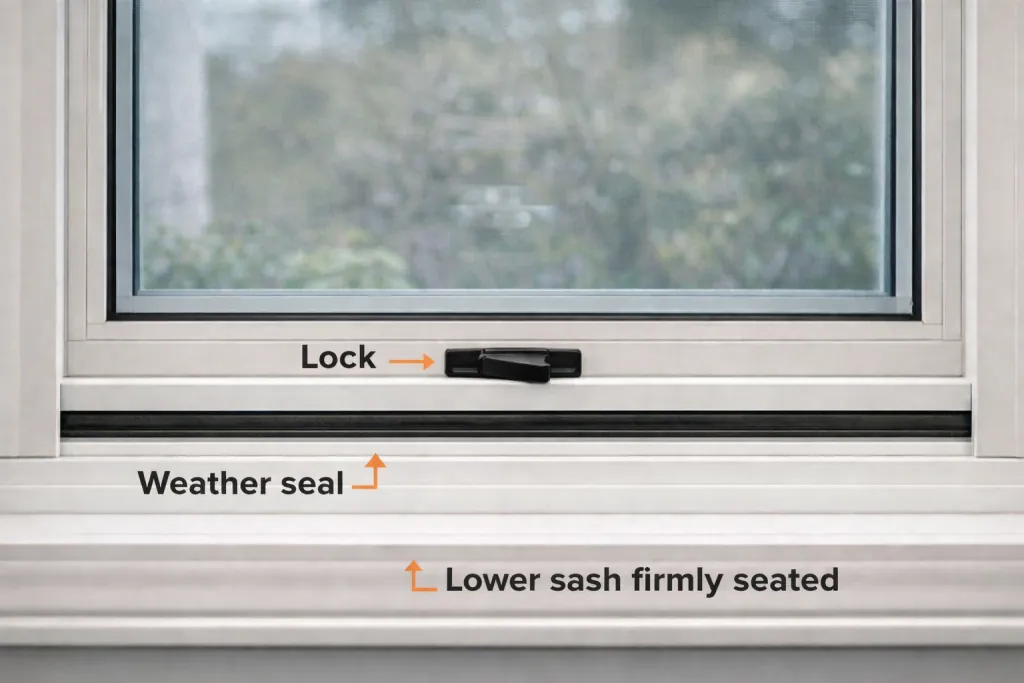
When the window is closed, the lower sash sits firmly in place against the frame. In that position, the sash is aligned with the lock, and the weather seal is compressed properly.
Once the lock is released, the sash is free to move.
2. The lower sash moves straight up inside the frame
As you raise the sash, it travels vertically through the side channels built into the frame. It does not tilt outward, project into the room, or swing away from the wall.
It follows a guided path, which keeps the movement controlled and helps the sash stay square as it rises. That straight-line movement is a key part of single-hung window operation, and it is one reason the design works well in many everyday spaces.
3. A balance system helps carry the sash weight
There is usually more happening here than you can see. Inside the frame, a balance mechanism helps offset the weight of the lower sash as it moves.
Without that support, the sash would feel much heavier in the hand and far less stable in use. A sash that drops too fast, resists lifting, or refuses to stay open is often showing early signs that the operating system is no longer working as it should.
4. The opening forms at the bottom of the window
As the sash rises, the opening appears between the bottom of the upper fixed sash and the top of the lower moving sash. That is where air enters the room.
Because only the lower sash opens, the airflow pattern stays concentrated through that lower section rather than being split between two operable sashes.
5. Closing the window is just as important as opening it
When the sash is lowered, it returns to its seated position against the frame. That final contact is not just about shutting the window. It affects alignment, locking, and sealing all at once.
If the sash does not settle properly, the lock may feel off, the seal may not sit tightly, and the window may lose some of the performance it is meant to deliver.
In older units, this is often where wear becomes most noticeable and where homeowners begin weighing a practical window replacement mistakes guide.
That is why a single hung window can look simple while still relying on a very specific operating system.
The movement itself is direct, but the quality of that movement depends on alignment, balance, support, and a clean closing seal. When those parts work together, the window opens smoothly, closes firmly, and performs the way homeowners expect over time.
What Are the Parts of a Single Hung Window?
At first glance, a single hung window can seem fairly simple. Yet each part has a specific job, and together they shape how the window opens, closes, seals, and holds up over time. That is why looking at the single hung window parts matters.
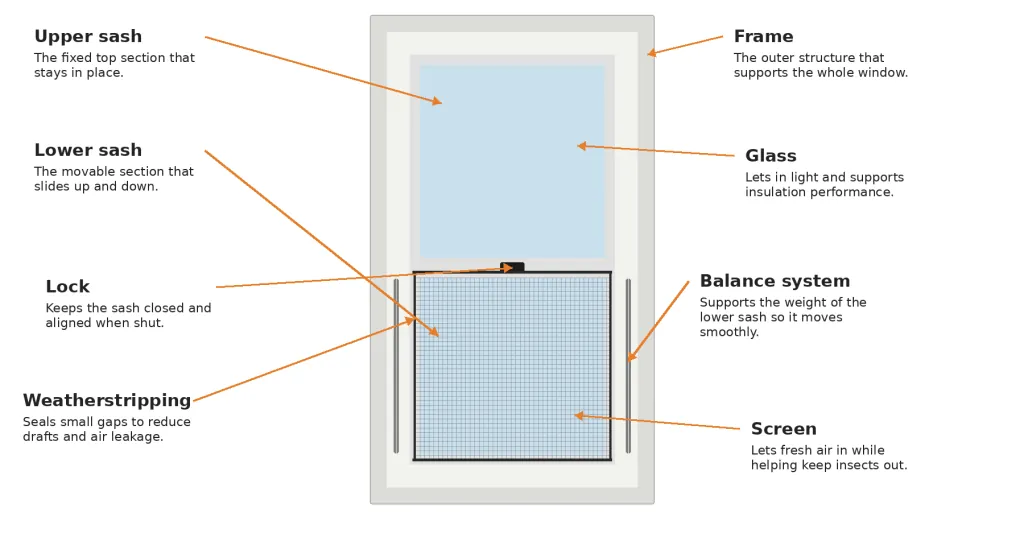
For homeowners, it is less about memorising terms and more about knowing which parts affect comfort, movement, and maintenance.
Once you know the main parts of a single hung window, it becomes much easier to spot where quality matters and where problems often begin.
Here are the main parts and what each one does:
Upper sash: Upper sash is the fixed top section that stays in place and completes the top half of the window.
Lower sash: The lower sash is the movable section that slides up and down to open and close the window.
Frame: A frame holds the entire window together and supports the sash, glass, and operating components.
Glass: The glass allows light while also playing a major role in insulation, comfort, and energy performance.
Balance system: Here, the balance system helps support the weight of the lower sash so it can move more smoothly and stay in position.
Lock: This lock secures the sash when the window is closed and helps keep the sash aligned against the frame.
Weatherstripping: Weatherstripping seals small gaps around the sash to reduce drafts, air leakage, and even moisture around windows.
Screen: The screen lets fresh air in when the window is open while helping keep insects and debris outside.
Each of these parts may seem minor on its own, but together they determine how the window performs in daily use. A single hung window does not rely on one feature alone. It depends on these working parts doing their job consistently, especially when the window is opened often or exposed to changing weather.
Also Read: Why Window Replacement is a Good Idea for Older Homes
Which Types of Single-Hung Windows Are Available?
You may look at a single hung window and think the category begins and ends with one basic design. In one sense, that is true. The fixed upper sash and the movable lower sash stay at the centre of every version.
But in practice, not every single hung window is made for the same situation. Some are built for straightforward daily use. Some make cleaning more manageable. Some are designed to slide into an existing opening during a renovation.
Others are made around measurements that are anything but standard. That is where the real difference lies. The style stays familiar, but the purpose shifts depending on the home, the opening, and the project itself.
Here are the main types of single hung windows by features that homeowners are most likely to come across:
Standard single hung windows
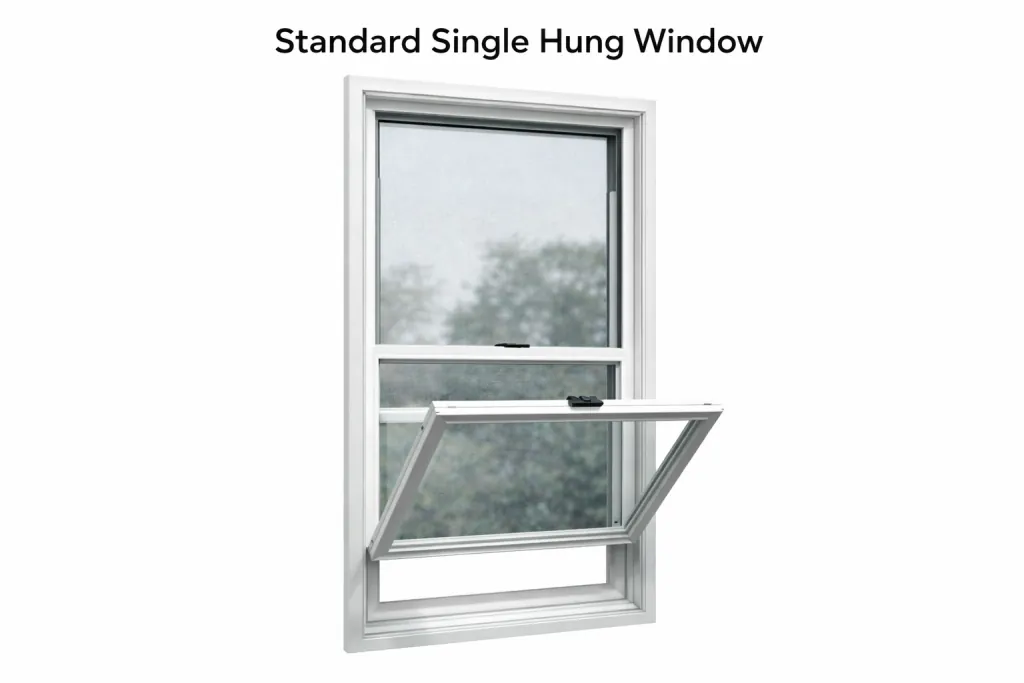
This is the baseline version most people picture first. It follows the traditional format: fixed top sash, movable bottom sash, and a straightforward operating system that suits many common residential openings.
Tilt-in single hung windows
The structure stays familiar, but the lower sash is designed to tilt inward. That one feature changes the cleaning experience quite a bit, especially in spaces where exterior access is less convenient.
Impact-Resistant:
Designed for coastal or storm-prone areas, featuring reinforced frames and strengthened glass.
Energy-Efficient:
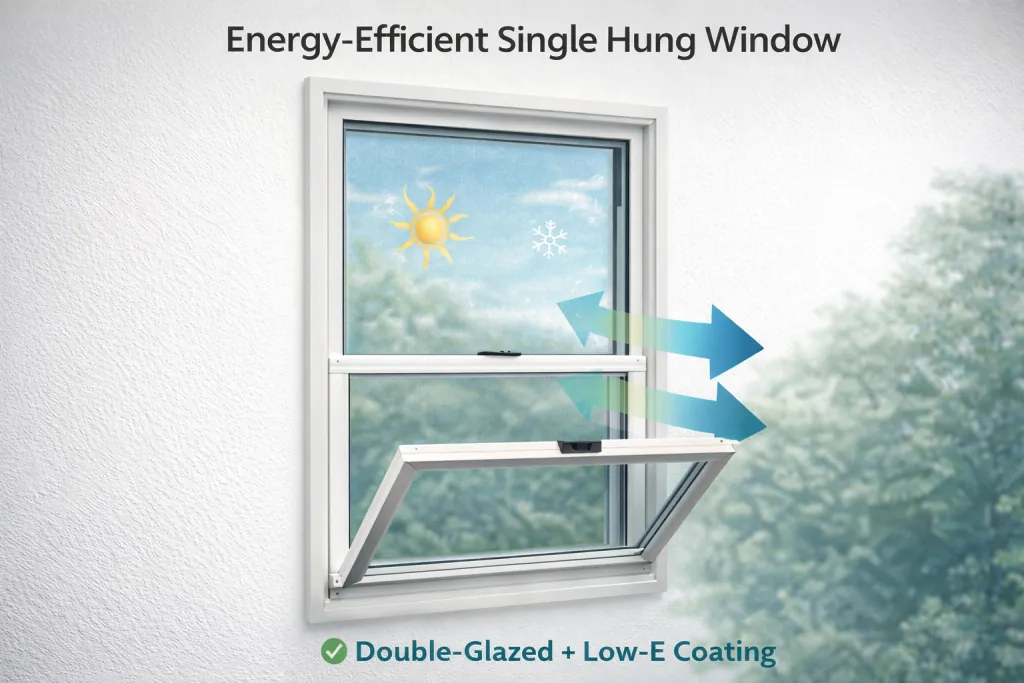
These often include Low-E glass coatings and Argon gas fills between panes to minimise heat transfer.
So while the operating style remains the same, the type you choose can shape how the window fits, how easy it is to maintain, and how smoothly the project comes together.
Now let’s learn about the materials.
What Materials Are Single Hung Windows Made From?
The frame material changes more than the look of the window. It affects how much upkeep you take on, how well the unit handles seasonal weather, and how long it keeps its shape under regular use.
That is why material choice deserves just as much attention as the operating style. For homeowners asking what is a single hung window, this is often the stage where the decision becomes more practical. Some materials are chosen for low maintenance. Others are picked for appearance, strength, or better thermal performance.
And in many replacement projects, vinyl single hung windows tend to come up quickly because they offer a balanced mix of cost, insulation, and everyday durability. The table below gives a clearer view.
| Material
|
Best For
|
Main Benefit
|
Main Drawback
|
| Vinyl
|
Homeowners who want a practical replacement option with less upkeep
|
Low maintenance, solid insulation, and good value for everyday use
|
Fewer premium finish options than some other materials
|
| Wood
|
Homes where interior warmth and traditional character matter most
|
Rich appearance and strong natural charm
|
Needs more upkeep to protect against moisture and wear
|
| Fiberglass
|
Homeowners looking for strength and long-term stability
|
Durable, resistant to warping, and performs well through temperature swings
|
Usually comes at a higher price point
|
| Aluminum
|
Projects that prioritise a slimmer frame and a more modern look
|
Clean appearance and good structural strength
|
Not as strong on insulation as other common window materials
|
| Composite
|
Homeowners who want a mix of durability and energy performance
|
Combines strength, stability, and weather resistance
|
Can be less familiar in the market and higher in cost
|
No material is right for every home. The better choice depends on what matters most to you: easier maintenance, stronger insulation, a certain finish, or longer-term durability. That is also why material debates, especially vinyl vs wood, keep coming up in real replacement decisions.
By now, you have a solid grasp of single hung windows. But one practical question still matters for anyone searching for what is a single hung window: where does this style work best in a home? That is where the next section comes in.
What Are the Pros and Cons of Single Hung Windows?
By this point, the real question is no longer what a single hung window is. It is whether this style makes sense for the way you live. That is where a balanced look matters.
A single hung window can be a very practical choice, but it is not the right fit for every room or every homeowner. Much depends on what you value most: price, maintenance, airflow, cleaning access, or long-term performance.
That is why the single hung window pros and cons deserve a closer look before any decision is made. Current manufacturer guidance and energy-efficiency references consistently frame the same trade-offs: simpler construction and lower cost on one side, more limited ventilation and performance sensitivity on the other.
Below are the strengths and trade-offs that matter most in everyday use.
| Pros
|
Cons
|
| Affordable: With fewer operable parts, this style is often positioned as a more budget-friendly option than more complex window designs.
|
Limited ventilation: Since only the lower sash opens, airflow is more restricted than in windows with two operable sections.
|
| Simple design: The operating system is straightforward, which appeals to homeowners who want something familiar and easy to manage.
|
Top sash stays fixed: That fixed upper section reduces flexibility in how the window can vent a room.
|
| Fewer moving parts: A simpler mechanism can mean fewer components to monitor over time.
|
Cleaning can be harder in some cases: This becomes more noticeable on upper floors or in spots where outside access is limited.
|
| Classic look: It fits naturally into many traditional home layouts without drawing too much attention to itself.
|
Not ideal for every room layout: Some rooms benefit more from wider airflow or easier cleaning access than this style can offer.
|
| Compact opening: The sash moves within the frame, so nothing swings outward or inward into nearby space.
|
Performance depends on build quality and installation: Seal quality, frame quality, and proper fit matter a great deal with this kind of operating design.
|
| Low-maintenance options: This is one reason vinyl single-hung windows remain a popular replacement choice, especially where upkeep is a concern.
|
Small mistakes show up faster: Poor fit, weak sealing, or lower-grade materials can become frustrating over time, which is why so many homeowners end up learning from common window replacement mistakes.
|
So, are single-hung windows good? In many homes, yes. They make strong sense when budget, simplicity, and a familiar look matter most.
But they become a weaker choice when a room needs more flexible airflow, easier cleaning access, or better performance from the window style alone.
Manufacturer comparisons and energy guidance both support that more measured view.
Conclusion
Alright, you have successfully learned what is a single hung window. You know what the best part is? Now, you have a much clearer view of how this window works, what parts support it, which materials shape its performance, where it is commonly used, and what trade-offs come with the design.
The next step for many homeowners may be deciding whether this style suits a new project or an upcoming replacement. But we do not think that choice should be rushed or based on surface-level information alone.
We believe homeowners should feel informed before making any window decision. That is why we gave our full effort to make this guide clear, practical, and genuinely useful for Ontario homes.
If you found it helpful, the next good step is to compare what you learned here with the condition of the windows already in your home.
In those cases, a professional window replacement service in Barrie can help some turn a basic question into a much smarter home decision.
Written by Alex Soroka, Senior Project Manager.