

Double-sided slider windows are a popular choice for many Ontario homeowners looking for wide ventilation and simple operation. These horizontal sliding windows allow both sashes to open, making them practical for bedrooms, basements, and wider wall openings.
However, climate performance matters in Ontario, where freeze-thaw cycles, heavy snow, and cold winters can impact window efficiency. Before selecting this style, homeowners should understand how they perform compared to casement or double-hung windows.
In this guide, you will learn how double slider windows work, their advantages and disadvantages, energy efficiency ratings, security considerations, installation factors, and overall suitability for Ontario homes, so you can make a confident and informed decision.
What Are Double Sided Slider Windows?
If you are asking what double slider windows are, they are a horizontal window style where both sashes move along a track, giving you ventilation from either side. Unlike a single slider, which has one fixed sash and one moving sash, a double-sided slider has two operable panels that glide left or right.
This design is popular in Ontario because it works well in wide wall openings and does not swing inward or outward, so it fits nicely behind furniture, counters, or tight exterior clearances.
To explain how double-sided slider windows work, think of a smooth track and roller system built into the frame. Each sash rides on rollers so it can slide with minimal effort.
At the center, an interlocking sash system helps the panels overlap tightly when closed, improving stability and reducing air movement at the meeting point. Many modern units also allow a removable or lift-out sash design, making cleaning and servicing easier from inside the home.
Ontario conditions make the track design more important than most homeowners realize. In winter, freeze-thaw cycles and wind-driven moisture can challenge lower-quality sliders.
A well-built double slider uses proper drainage channels and weep systems to move water out of the sill area instead of letting it sit and freeze. Track performance also depends on frame rigidity, quality rollers, and correct installation so the sashes stay aligned and do not drag.
If you are comparing window styles across your home, it helps to review types of windows to see where double sliders fit best versus casement, awning, or double hung options.
How Do Double-Sided Slider Windows Work in Ontario Homes?
Understanding how double-sided slider windows work requires looking at the operating sequence, sealing system, and drainage design. In Ontario, where temperature swings and moisture exposure are common, each component plays a role in performance. Below is the working process step by step.
Step 1: Sash Glides Along the Horizontal Track
Each operable sash sits on integrated rollers within the bottom track. When you push the panel, the rollers allow it to glide smoothly left or right without lifting. High-quality rollers reduce friction and prevent long-term track wear.
Step 2: Interlocking Meeting Rail Engages When Closed
When both sashes slide back to the center, the interlocking sash system overlaps tightly. This creates a more stable joint and helps reduce air infiltration at the meeting point.
Step 3: Locking Mechanism Secures Both Panels
A central locking system pulls the sashes together, increasing contact pressure between seals. Proper alignment ensures the lock engages evenly across the frame.
Step 4: Weather Stripping and Seals Compress
As the window locks, perimeter weather stripping compresses along the frame edges. While slider windows do not create the same compression seal as casement windows, modern designs improve airtightness with reinforced vinyl frames and multi-chamber construction.
Step 5: Drainage Channels Manage Water Flow
Ontario’s freeze-thaw cycles make drainage critical. Built-in weep holes and sill channels guide water out of the frame, preventing pooling that could freeze and interfere with track movement.
Step 6: Lift Out or Tilt Function for Maintenance
Many double sliders allow the sash to lift out for cleaning or servicing. This feature improves accessibility without requiring exterior access.
When properly manufactured and professionally installed, double sided slider windows provide smooth operation, controlled ventilation from both sides, and reliable winter performance in Ontario homes.
What Are the Main Pros and Cons of Double Slider Windows for the Ontario Climate?
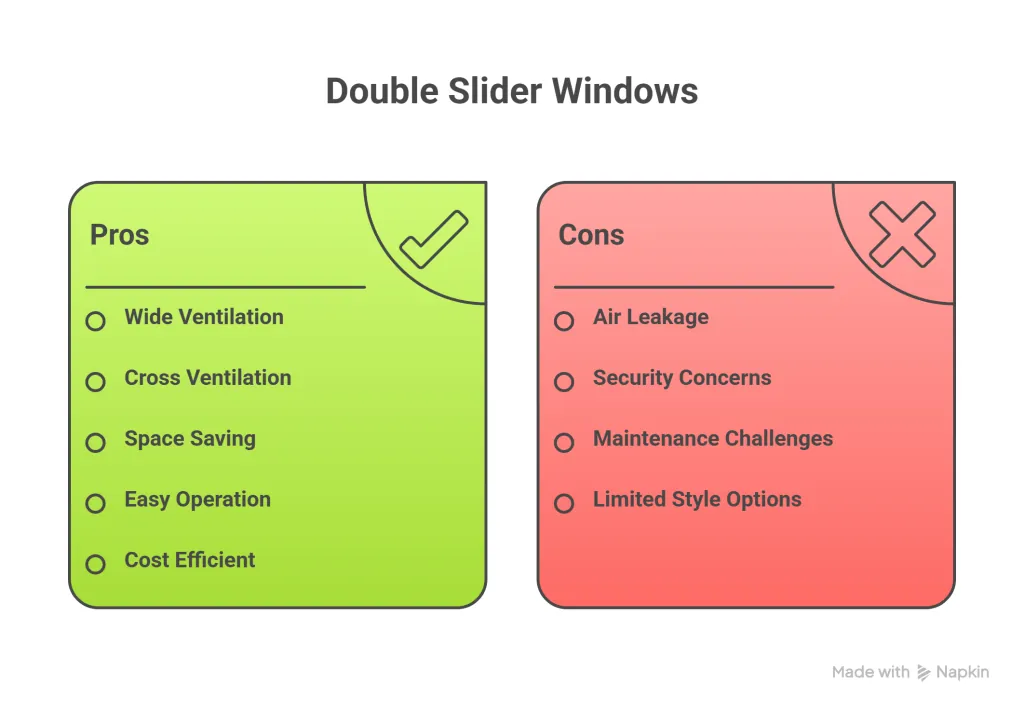
When evaluating the pros and cons of double-slider windows, climate performance must come first. Ontario homes face humid summers, heavy rain, freeze-thaw cycles, and sub-zero winters.
Double-sided slider windows can perform well here, but only when built with proper materials and installed correctly.
Below is a localized breakdown to help you decide if this style suits your property.
Pros of Double Slider Windows in Ontario
Wide Ventilation Opening: Both panels slide open, allowing up to half of the window width for airflow. This improves natural ventilation during warm GTA summers.
Both Sashes Open for Cross Ventilation: Air can enter from one side and exit from the other. In suburban Ontario homes with side yard spacing, this supports effective cross-breeze circulation.
Space Saving Design: Since the window slides horizontally, it does not project outward like a casement. This makes it ideal for areas facing walkways, decks, or tight exterior clearances.
Easy Operation: Smooth roller systems require minimal effort. This is especially practical for bedrooms and basement windows where accessibility matters.
Cost Efficiency: Compared to crank-style casement units, double sliders are typically more budget-friendly while still offering solid functionality.
Good for Wide Wall Openings: Their horizontal format works well in larger openings where vertical height is limited.
Suitable for Bedrooms and Basements: Many Ontario basements use slider windows because of their compact design and easy lift-out maintenance.
Low Maintenance Vinyl Frames: Modern multi-chamber vinyl frames resist warping and reduce upkeep, similar to high-performance energy-efficient windows designed for Canadian conditions.
Cons of Double Slider Windows in Ontario
Understanding the cons of double slider windows is equally important, especially when considering the winter performance Ontario homeowners rely on.
Lower Compression Seal Compared to Casement: Because sliders glide along tracks instead of sealing tightly against the frame, they typically do not achieve the same airtight compression as crank-operated windows.
Slightly Higher Air Leakage Risk: The meeting rail and track system can allow marginally more air infiltration if seals are not high-quality or properly installed.
Track Freezing if Drainage Is Poor: In winter, clogged weep holes or poor sill drainage may allow water to sit and freeze. Proper installation and drainage design are critical.
Maintenance of Sliding Rails: Dirt, debris, and ice buildup can affect smooth operation if tracks are not kept clean.
Not Ideal for Extreme Wind Exposure: Homes in open rural Ontario areas with high wind pressure may benefit more from compression seal window styles.
Many performance issues linked to sliders are not caused by the design itself but by incorrect sizing, weak sealing, or rushed installation. These are common patterns seen in window replacement mistakes, where improper installation reduces long-term efficiency.
Double slider windows can be a practical and affordable option for Ontario homes, but their suitability depends on exposure level, insulation requirements, and installation quality.
Are Double Slider Windows Energy Efficient Enough for Ontario Homes?
Energy performance is the deciding factor for many homeowners comparing styles. When evaluating energy-efficient slider windows Ontario properties require, the conversation must go beyond appearance and ventilation.
Thermal performance depends on glazing, frame construction, and installation accuracy. Double slider windows can meet Ontario efficiency standards, but their specifications determine how well they handle long winters and sudden temperature swings.
Glazing is the first variable. Standard double-pane glass may be sufficient for milder regions, but in colder parts of the GTA and surrounding areas, triple glazing significantly improves insulation.
Triple pane units add an extra sealed chamber that reduces heat transfer and improves condensation resistance during sub zero temperatures.
The performance difference is especially noticeable when comparing overall comfort near the window surface. Homeowners researching the benefits of triple pane windows often apply the same logic to slider styles.
Low-E coatings further enhance efficiency by reflecting interior heat back into the home while limiting solar heat gain in summer. Combined with argon gas between panes, this reduces thermal conductivity.
When reviewing a slider windows U factor rating, look for lower values, as they indicate better insulation performance.
Frame design also matters. Multi-chamber vinyl frames help limit heat loss and manage expansion caused by Ontario’s freeze-thaw cycles. Poor-quality frames can expand and contract unevenly, affecting seal compression over time.
Air infiltration ratings are another critical metric. Because slider windows rely on interlocking sashes rather than compression seals, high-quality weather stripping and tight meeting rails are essential to maintain low air leakage levels.
In practical terms, efficient sliders reduce heating demand, improve interior comfort, and minimize condensation risk during cold months. When properly specified and professionally installed, double slider windows can perform effectively in Ontario’s climate while maintaining affordability and functionality.
How Do Double Sliding Windows Compare to Casement Windows in the GTA?
Homeowners across the GTA frequently compare slider windows vs casement Ontario installations before making a final decision. Both styles are common in residential properties, but their performance characteristics differ significantly. The choice often depends on exposure level, insulation priorities, budget, and room function.
If you are trying to determine the best windows for Ontario homes, it helps to evaluate them side by side based on measurable performance and daily usability.
Below is a technical comparison that reflects real Ontario climate conditions:
| Feature
|
Double Sliding Windows
|
Casement Windows
|
| Ventilation
|
Up to 50% of the opening is available. Both sashes slide horizontally for balanced airflow.
|
Can open nearly 100% of the openings. The crank system allows full outward swing for maximum air capture.
|
| Seal Strength
|
Interlocking meeting rail with weather stripping. Moderate compression at closure.
|
Strong compression seal when cranked shut. Sash presses tightly against the frame for superior airtightness.
|
| Energy Efficiency
|
Efficient with triple glazing, Low E glass, and argon gas, but slightly higher air infiltration than casement.
|
Typically, higher thermal performance is due to a tighter compression seal and lower air leakage rates.
|
| Ease of Cleaning
|
Many models feature lift-out or tilt options for interior cleaning access.
|
Hinged design allows interior access to exterior glass in most configurations.
|
| Cost
|
Generally more budget-friendly due to a simpler hardware system.
|
Slightly higher cost because of the crank mechanism and reinforced hardware.
|
| Security
|
Interlocking sashes with a central locking mechanism. Security depends on lock quality and frame reinforcement.
|
Multi-point locking systems are available. A compression seal increases resistance to forced entry.
|
| Best Use Case
|
Wide openings, bedrooms, basements, and areas with limited exterior clearance.
|
Wind-exposed walls, areas requiring maximum insulation, and primary living spaces.
|
In Ontario’s freeze-thaw climate, seal compression and air leakage ratings play a large role in long term comfort. Casement windows tend to achieve lower air infiltration numbers due to their crank-activated seal.
However, high-quality double sliders with reinforced vinyl frames, warm-edge spacers, and precise installation can still perform reliably in most GTA neighborhoods.
For homeowners prioritizing insulation above all else, reviewing window styles for maximum insulation can help clarify where casement units typically outperform sliding systems. That said, double sliders remain practical, affordable, and effective in appropriate locations.
The decision should be based on exposure conditions, energy goals, and room layout rather than preference alone.
Where Are Double-Sided Slider Windows Best Installed in Ontario Homes?

Choosing the right location is just as important as choosing the right window style. The best rooms for slider windows are typically areas where horizontal space is available and outward clearance is limited.
In many Ontario cities, such as Burlington, Brampton, and Oshawa, home layouts often include wide wall sections and tighter exterior lot lines, making double sliders a practical solution. Below are the most suitable installation areas for this design.
Bedrooms
Double sliders work well in bedrooms because both sashes can open, allowing balanced airflow during warmer months. In suburban neighborhoods where homes are positioned side by side, the horizontal opening helps capture cross breezes without protruding outward.
Basements
Many homeowners choose double slider windows for basements in Ontario properties because of their compact vertical height. The sliding mechanism fits well within foundation openings and allows ventilation without interfering with window wells.
Wide Living Room Walls
In open concept homes across Burlington and Brampton, large wall spans benefit from the horizontal proportion of slider windows. They maintain a clean exterior profile while offering a broad glass surface for natural light.
Low Clearance Exterior Walls
Properties with decks, walkways, or fencing close to the exterior wall often cannot accommodate crank-style windows that swing outward. Sliders eliminate that obstruction risk.
Side Yards and Narrow Lot Lines
In densely built areas such as Oshawa subdivisions, exterior clearance may be minimal. Horizontal sliding windows operate entirely within the frame, making them suitable for tight side yard conditions.
Placement should always reflect ventilation needs, insulation priorities, and wall exposure. For homeowners evaluating multiple window styles within the same property, reviewing how to choose the right windows can help align room function with performance expectations across different areas of the home.
What Is the Cost of Double Slider Windows in Ontario?
Understanding double slider window cost Ontario helps you plan realistically and compare quotes properly.
Costs vary based on size, glazing, frame material, and how the window is installed. In most of the Greater Toronto Area and surrounding Ontario regions, homeowners can expect a range of prices that align with typical replacement window costs in the province.
| Upgrade Type
|
Typical Price Range (per window installed)
|
Value vs Price
|
| Basic double pane double slider
|
$600 to $900
|
Affordable and functional, a good starter option in mild areas
|
| Triple pane energy-efficient upgrade
|
$900 to $1,300
|
Better insulation, lower heating cost over time
|
| Full frame installation
|
$1,000 to $1,800+
|
Highest long-term performance for deterioration-prone homes
|
| Retrofit installation
|
$800 to $1,300
|
Lower disruption, but it depends on the frame condition
|
These ballpark figures include the unit, basic energy-efficient glazing, removal of old windows, and professional installation. More complex full-frame jobs, especially where siding or trim needs adjustment, trend toward the higher end.
Although slider designs often cost slightly less than crank-operated styles like casement windows, upgrades such as triple glazing, low-E coatings, and argon gas fill improve thermal performance and also increase upfront prices.
Investing in better glazing and full frame replacement usually yields long-term savings on heating bills and reduces the chance of drafts or condensation issues in Ontario’s cold winters.
When planning a budget, reference the broader window replacement cost structure to see how sliders compare to other styles in your local project estimate.
Are Double-Sided Slider Windows Secure for Residential Homes?
Homeowners often ask, are double slider windows secure, especially when comparing them to crank-operated styles. Security depends less on the sliding design itself and more on construction quality, locking hardware, and installation precision.
In Ontario neighborhoods where homes sit close together, and ground-floor access matters, the right slider window locking system Ontario contractors install makes a measurable difference.
Here’s what determines security in double-sided slider windows:
Interlocking Sashes: When closed, both panels overlap at the meeting rail. A properly engineered interlock reduces prying gaps and increases structural stability at the center joint.
Multi-Point Locking Options: Higher-quality sliders include reinforced locking mechanisms that engage firmly at the meeting rail. Some systems offer upgraded multi-point locks for added resistance.
Reinforced Vinyl Frames: Multi-chamber vinyl frames with internal reinforcement improve rigidity. A flexible or thin frame can compromise lock engagement and overall resistance.
Laminated Glass Upgrade: Laminated glass strengthens impact resistance and holds together if struck, reducing forced entry risk compared to standard glazing.
Proper Installation and Anchoring: Even the best hardware fails if the frame is not securely fastened to the rough opening. Structural anchoring and correct shimming prevent movement that weakens security over time.
Choosing low-grade hardware, skipping reinforcement, or accepting vague specifications only makes security worse. Weak locks, poorly aligned sashes, and improper anchoring create vulnerabilities that are difficult to detect until a problem occurs.
Many homeowners only start asking about security after experiencing performance issues, which is why reviewing are your windows safe helps clarify how hardware, glazing, and installation all work together.
Security is not about window style alone. It is about selecting high-quality components, verifying locking systems, and ensuring professional installation. When those elements align, double slider windows can provide reliable protection for residential homes.
The next step is choosing a contractor who installs them correctly and backs that installation with accountability.
Why Panorama Windows & Doors Is the Smart Choice for Double-Sided Slider Windows in Ontario
Choosing the right window style is only half the decision. The other half is choosing the company that installs it. Double-Sided Slider Windows perform well in Ontario when they are engineered for local climate conditions and installed with precision.
That is where Panorama Windows & Doors stands apart.
Here’s why homeowners across the GTA trust Panorama Windows & Doors:
Energy Star Certified Window Systems: Designed for Ontario climate zones with verified thermal performance ratings.
Triple Pane, Low E, Argon Options: Higher insulation levels for reduced heat loss and better winter comfort.
Proper Drainage & Sill Design: Engineered weep systems to handle freeze-thaw cycles and heavy rainfall.
Full Frame or Retrofit Assessment: Installation method selected based on structural condition, not convenience.
In-house licensed installers: No rotating subcontract crews. Consistent workmanship and accountability.
Precise Anchoring & Air Sealing: Correct shimming, perimeter insulation, and seal compression for long term durability.
Reinforced Locking & Security Options: Quality hardware aligned and tested before project completion.
Clear Written Quotes & Warranty Coverage: Transparent documentation for product and labor protection.
Ontario Specific Expertise: Experience with GTA weather exposure, wind pressure, and condensation management.
If you are considering new windows, Panorama Windows & Doors’ professional window replacement service in Barrie ensures your investment is protected from consultation to final inspection.
Final Thoughts
Double-Sided Slider Windows can be a practical and cost-effective option for Ontario homes when selected thoughtfully and installed correctly. Their performance depends on glazing quality, frame construction, drainage management, and secure locking systems.
In the right locations, they provide ventilation flexibility, space efficiency, and reliable comfort through changing seasons.
However, product quality alone is not enough. Installation precision, structural assessment, and climate-specific sealing determine how well they perform in real winter conditions.
By combining Energy Star-certified products, Ontario expertise, and disciplined installation practices, homeowners can ensure their window upgrade delivers long term efficiency and durability.
The right window matters. The right installer matters even more.
Written by Alex Soroka, Senior Project Manager.